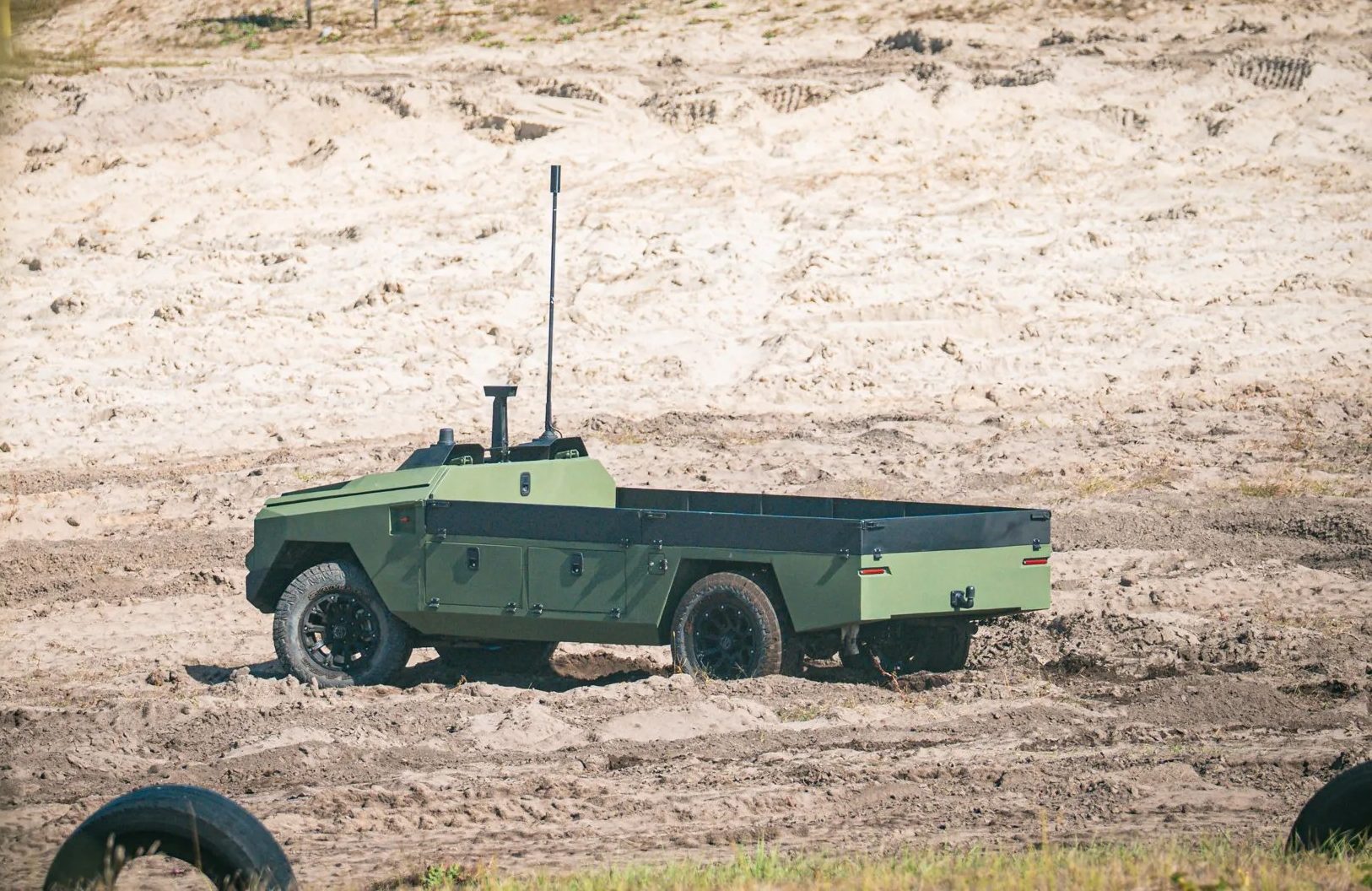
The company "Ukrainian Armored Vehicles" has modernized the Protector ground robotic complex, increasing its maximum cargo capacity from 770 to 1480 kg. The practical benefit of this change is simpler than it might seem: now one robot trip replaces what previously required two missions or several porters.
Why exactly 1480, and not just "more"
To handle increased loads, developers improved the rear suspension — adding pneumatic cushions that compensate for overload on uneven terrain. This is not a cosmetic solution: logistics on the frontline doesn't happen on asphalt, but across vegetation, ravines, and broken field roads, where every kilogram affects the life of the running gear.
The second engineering detail is a backup communication channel. In addition to Starlink as the primary channel, they added LTE. In combat conditions, it is precisely communication redundancy, rather than speed or range, that most often determines whether a robot will deliver cargo or lose control halfway through.
What this means in numbers for infantry
According to the manufacturer, one complex transports over 15 tons of cargo per month, completing up to 20 logistics missions. Converting cargo capacity into practice: instead of 15–20 trips by a person carrying a heavy backpack of ammunition or supplies, a robot would need twice as many missions — meaning half as many episodes where a person physically crosses a dangerous area.
This is exactly the case where a technical specification directly converts to the number of people who won't come under fire during resupply."Ukrainian Armored Vehicles"
Context: logistics robotization is becoming systemic
Protector is not the only example of how ground robots are taking on functions that previously required risk to personnel. Smart Birds demonstrated the Raven unmanned combat vehicle with net-throwing systems against FPV drones, and the Droid TW-7.62 has already captured Russian soldiers and engaged equipment in combat. The trend is clear: Ukrainian robots are evolving from logistics mules to multifunctional platforms.
The question that remains open is: will the industry be able to scale production of such complexes faster than the frontline's need for machine-based logistics to replace human logistics grows?