What happened
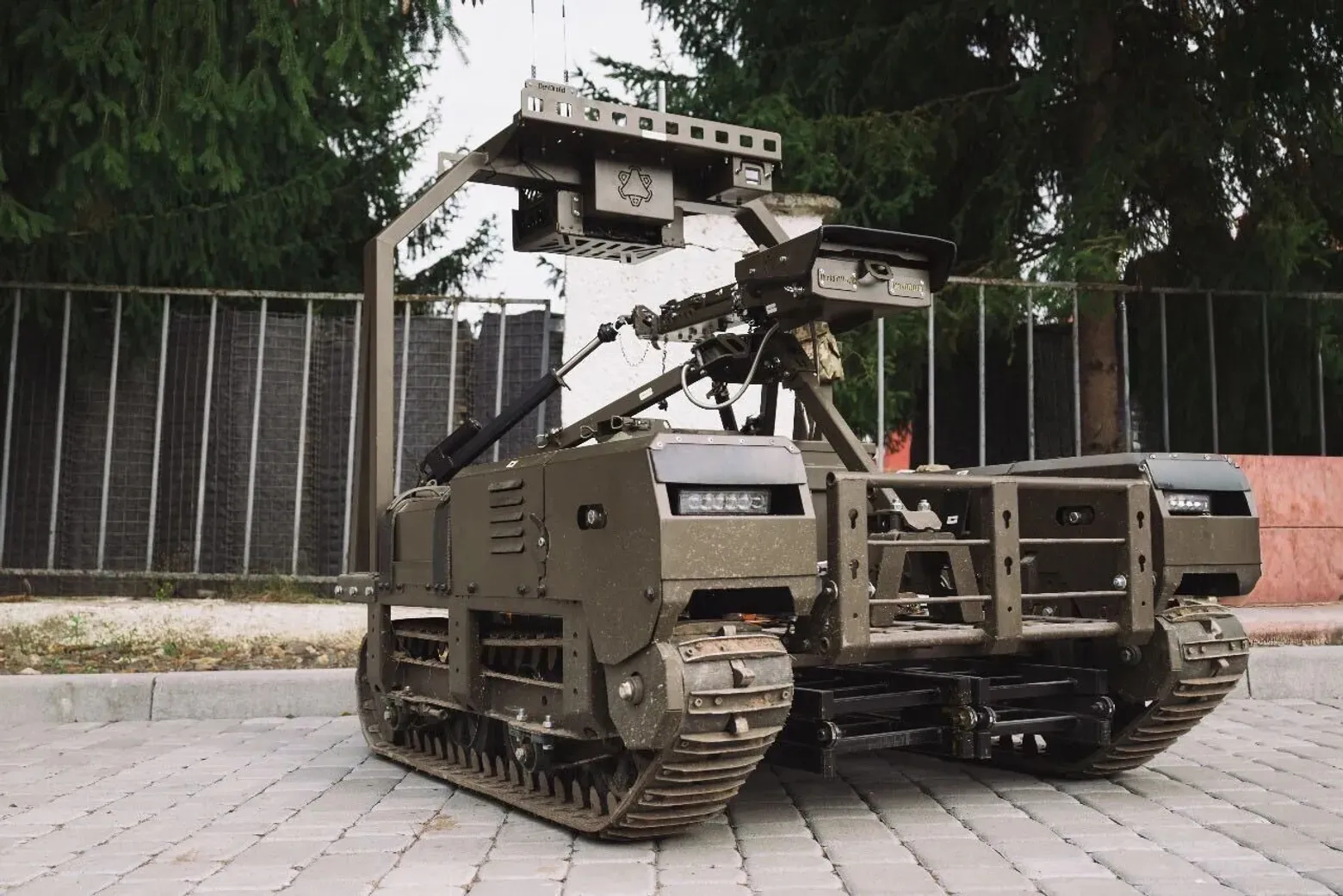
Ukrainian ground robotic systems Droid TW 7.62, Droid TW 12.7 and the combat module Wolly 7.62 from DevDroid have appeared on the Brave1 Market marketplace. According to LIGA.net and the company's press service, orders can be placed either with unit funds or via the "E-points" mechanism.
“These solutions are already being used by units of Ukraine’s Security and Defense Forces. They carry out tasks to engage personnel, lightly armored vehicles and to hold positions without the operator’s direct presence.”
— DevDroid, press service
About the systems
Droid TW 7.62 and Droid TW 12.7 are remotely operated ground strike platforms; Wolly 7.62 is a combat module that can be integrated onto various carriers or used in fixed positions. Control is carried out through a single command system — Droid Box. The platforms support multiple communication channels for operation under EW conditions, and include built-in diagnostic functions and target-detection algorithms.
At the front: what is known
According to the company, the systems have already been used by units of Ukraine’s Security and Defense Forces. Specific incidents: during an operation, Droid TW 12.7 struck an enemy shelter from approximately 300 meters, resulting in the deaths of two Russian servicemen; Droid TW 7.62 was recorded in instances where the system took three occupiers prisoner. The roles claimed include engaging personnel and lightly armored vehicles, holding positions, and creating conditions to compel the enemy to withdraw or surrender without direct contact.
Why this matters
These platforms act as a force multiplier: they reduce risk to personnel, extend the effectiveness of fire positions, and change local tactics. The appearance of such solutions on a marketplace with payment via "E-points" provides an operational supply channel, but at the same time raises questions about procurement transparency, control over use, and compliance with regulatory requirements. Defense analysts note the technology offers an advantage only if logistics, operator training, and integration into the command structure are properly provided.
What’s next
If these systems are scaled up, investments will be needed in personnel training, integration standards and mechanisms to control usage. The practical advantage exists today; whether it becomes sustainable depends on logistics, training and regulatory decisions. Whether partners and Ukraine’s management system can turn this technical innovation into a long-term tactical effect is a question to watch in the coming months.