Briefly
At Mobile World Congress 2026 in Barcelona Samsung Display demonstrated a number of OLED-based concepts — from the miniature PetBot to the modular Bezel-less OLED Wall. These are not just showcases: the technologies presented at the exhibition set directions for consumer electronics, AR/VR headsets and even mobile communications.
What was shown
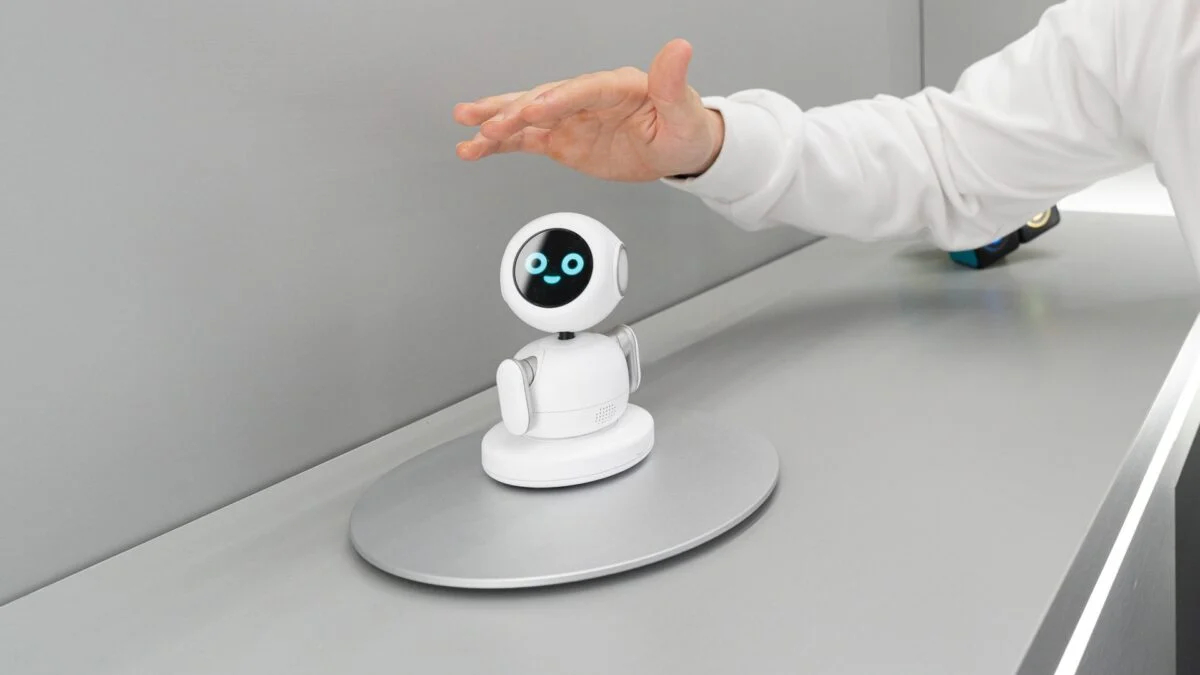
Mini PetBot AI — a device with a 1.34" round OLED that displays animated emotions and responds to voice and touch. It demonstrates how displays are being integrated into home robotics and domestic assistants.
AI Toyhouse — a construct with a 13.4" round display and an 18.1" flexible OLED panel that can change shape and wrap around objects; an imaginary storefront or interactive packaging that shows how flexible panels become components of new forms of interaction.
LEAD 2.0 with Flex Magic Pixel technology, already used in the Galaxy S26 Ultra: here the focus is on the Privacy Display mode — limited visibility at angles — as well as improved brightness and energy efficiency.
The RGB OLEDoS panel with a pixel density of about 5000 ppi is intended for Galaxy XR headsets, and the Bezel-less OLED Wall installation shows how multiple OLED and QD-OLED panels can be joined into an almost frameless surface.
"These developments demonstrate that displays are ceasing to be just a window into content — they are becoming an interface for interaction, privacy and new forms of communication."
— Representative of Samsung Display
Why it matters
First, display technologies shape the interfaces of future devices — from wearables to XR headsets. High pixel density and panel flexibility mean better resolution in virtual reality and more compact form factors.
Second, Privacy Display and energy efficiency are not only conveniences for users: for states and businesses they provide an additional layer of control over information and energy savings in critical conditions.
Third, synergy with mobile functions: Samsung has just confirmed support for satellite communication across the Galaxy S26 series, and modules for XR could become part of solutions for training, remote coordination and medical rehabilitation.
What this means for Ukraine
Satellite communication support in the Galaxy S26 is an important practical step: additional communication channels increase the reliability of communications in areas with limited coverage. For civilians it is a tool for communication during emergencies; for organizations — an opportunity to organize backup data transmission channels.
XR headsets with high pixel density and flexible panels can accelerate the adoption of training simulators, restorative therapy and data visualization — all of which have practical value for military and medical institutions.
Finally, the appearance of such solutions at MWC signals that leading manufacturers continue to invest in supply chains and R&D. For Ukrainian component suppliers and developers, this is a chance to integrate into innovative ecosystems.
Conclusion
At MWC 2026 Samsung Display showed that OLED panels are becoming a universal platform: from personal assistants to professional XR systems and solutions for secure communications. The question for manufacturers and partners is how these technologies will be turned into affordable products and services that actually work in Ukrainian realities?