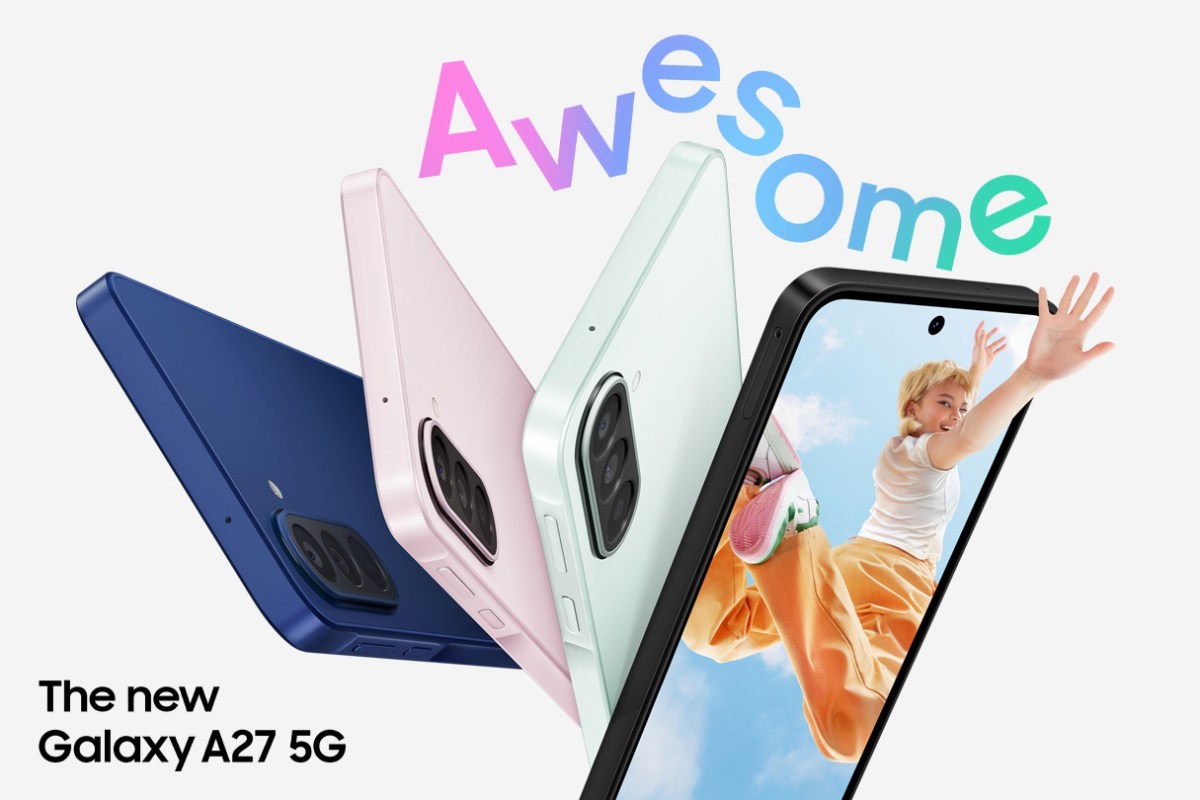
Samsung Galaxy A27 5G appeared on the company's official website in Czechia ahead of the official announcement. The leak turned out to be comprehensive: specifications, colors, memory configurations — everything is in place. The launch date cited by several sources is June 22.
What's inside
Processor — Snapdragon 6 Gen 3 (4 nm, 2024), RAM 6 or 8 GB LPDDR5X, storage 128/256 GB UFS 3.1. Display — 6.7-inch FHD+ Super AMOLED, 120 Hz, 800 nits, punch-hole instead of the outdated teardrop notch. Battery — 5,000 mAh with 25W charging. Main camera — 50 MP with OIS, front camera — 12 MP with 4K/30fps recording. Protection — IP64 and Gorilla Glass Victus+ on the screen.
The smartphone launches directly with Android 16 and One UI 8.5 — and this is the first detail that sets the A27 apart from most competitors in the segment.
Six years: marketing or a real game changer
Samsung promises six years of OS updates and security patches — support until 2032. For a phone priced under €300, this is truly atypical: previously, such a level of support was a privilege of flagship S-series phones.
"Long-term support has become an increasingly important argument in the mid-range market — especially for users who keep their device for several years"
Gizbot
But there's a catch: the A26 5G on Exynos 1380 cost approximately €50–70 less and had a microSD slot. The Galaxy A27 removed the slot — and raised the price. In other words, the buyer pays more for software support but loses hardware flexibility.
Context: how competitors respond
- Nothing Phone 2a and Motorola Edge 40 offer comparable prices with greater storage flexibility.
- Xiaomi Redmi Note 15 5G — a direct competitor in the same price range with a microSD slot.
- None of them currently guarantee six years of support — and this is where Samsung is trying to differentiate itself from the market.
The U.S. launch is expected through Verizon, AT&T, and T-Mobile, but none of the carriers have confirmed the price yet.
The question that will decide the fate of the A27: if Samsung truly delivers on its promise of six-year support for the mass market — is the buyer ready to pay €50 extra now to avoid buying a new phone in 2029?