At the ILA Berlin air show on June 8, 2026, the company Stark presented two new unmanned systems — the Cascade loitering munition and the Gambit attack-reconnaissance quadcopter. These are the first new products following a public failure during military trials in autumn 2025, when the previous Virtus system failed to hit any targets.
Cascade: Container launch, range up to 100 km
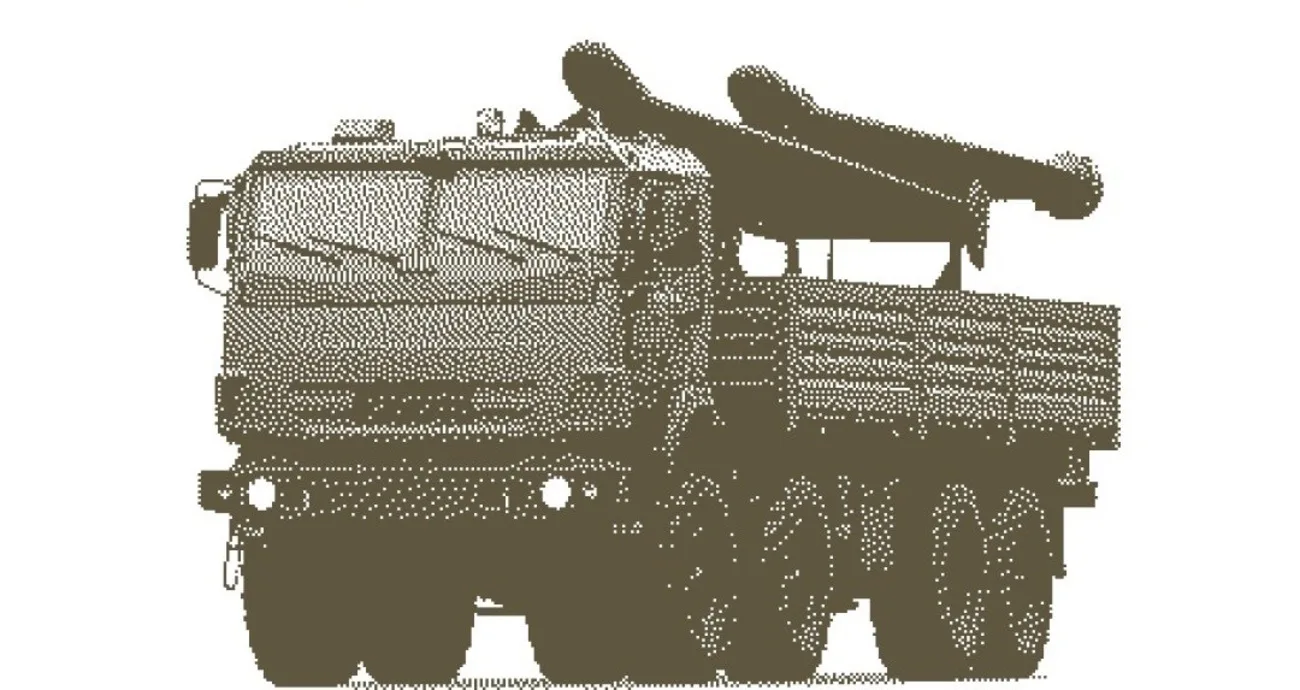
Cascade is a fixed-wing unmanned aircraft with container-based launch. Range varies from 40 to 100 km depending on payload, with a warhead of up to 4.5 kg. The "drone + launch container" kit weighs 20 kg, allowing deployment from a pickup truck bed or boat. The system can operate without GPS using visual navigation, which partially compensates for vulnerability to signal jamming.
Together with British company Force Development Services, Stark is developing a six-cell launcher for salvo deployment of Cascade — simultaneous launch of multiple units against one or several targets.
Gambit: Quadcopter with fiber optics instead of radio communication
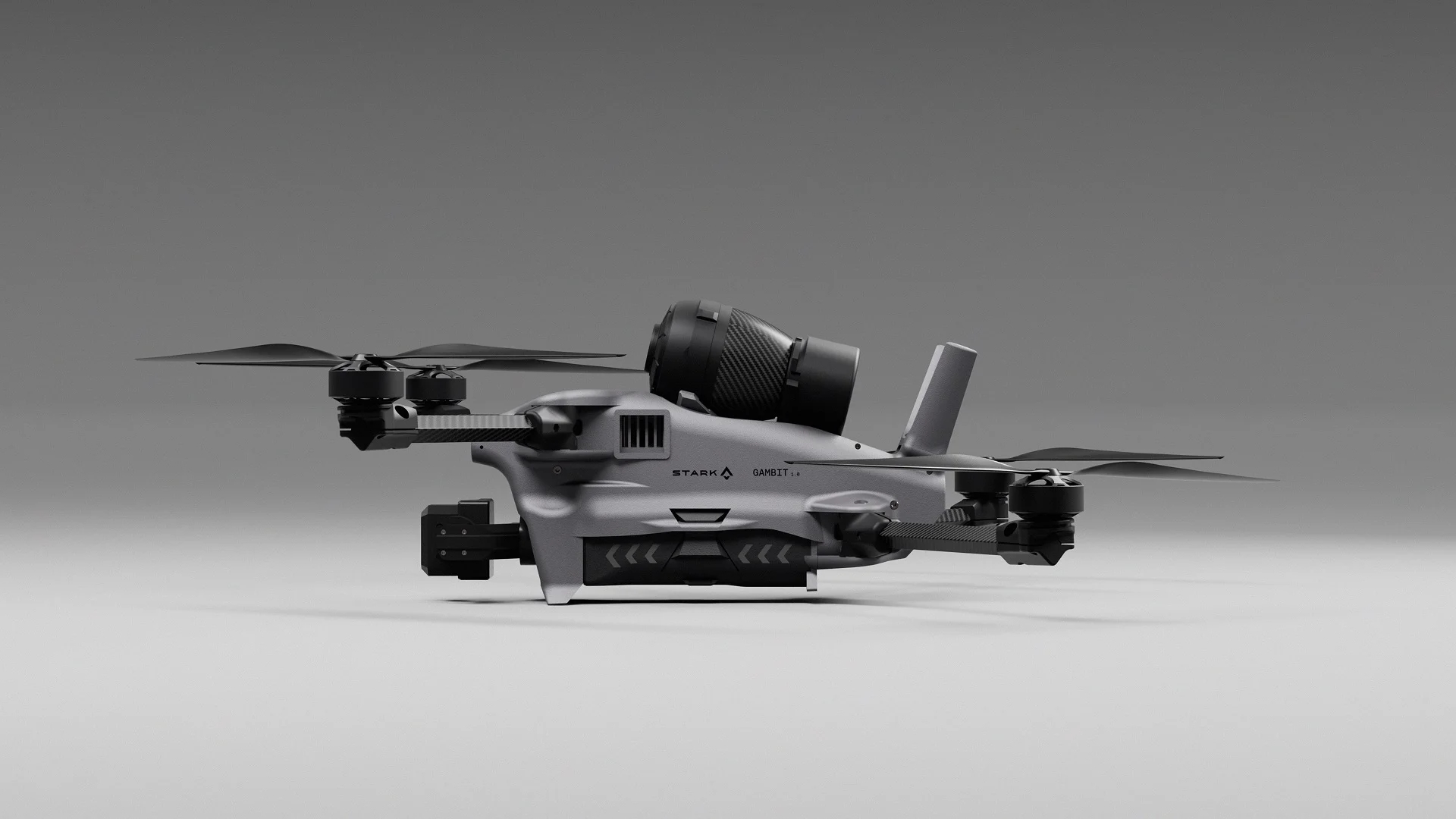
Gambit is a portable quadcopter weighing 6 kg. In standard reconnaissance configuration, range reaches 40 km with flight time exceeding 50 minutes. In the attack variant with payload up to 2 kg, range reduces to 25 km.
The fiber optic spool completely replaces the radio channel — this makes jamming irrelevant.
DroneXL, Gambit specifications analysis, June 2026
Fiber optic control is not new technology: Ukrainian operators have been using it on FPV drones since December 2024. But what began as a field solution in Donbas has now appeared in the catalog of a German defense startup as an option.
Context: From failure to new lineup in eight months
Stark was founded in 2024 by Florian Seibel, former CEO of Quantum Systems. In August 2025, the company raised a round led by Sequoia at a valuation of approximately $500 million. Today it has divisions and production facilities in Germany, Ukraine, the United Kingdom, Sweden, and Greece.
Virtus — Stark's previous loitering munition — received a contract from an undisclosed Northern European NATO country in February 2026. According to Tectonic Defense, the contract terms provided for several thousand systems over two years following successful qualification. That is, qualification had not yet been completed at the time of signing.
- Cascade: range 40–100 km, warhead up to 4.5 kg, container launch, kit weight 20 kg, visual navigation without GPS
- Gambit: range up to 40 km (ISR) / 25 km (attack), weight 6 kg, warhead up to 2 kg, fiber optic control option, return to base
According to DroneXL analysts, Stark's development pace — from public failure to presentation of two new products in eight months — is atypical for the defense industry. But this is also a key risk: specifications have not yet been confirmed by independent testing specifically for Cascade and Gambit.
If Stark passes qualification firing tests for Cascade by the end of 2026, the six-cell salvo complex with its British partner could become a real alternative to significantly more expensive short-range cruise missiles — the only question is whether Gambit's fiber optics will withstand winter field conditions in open terrain.