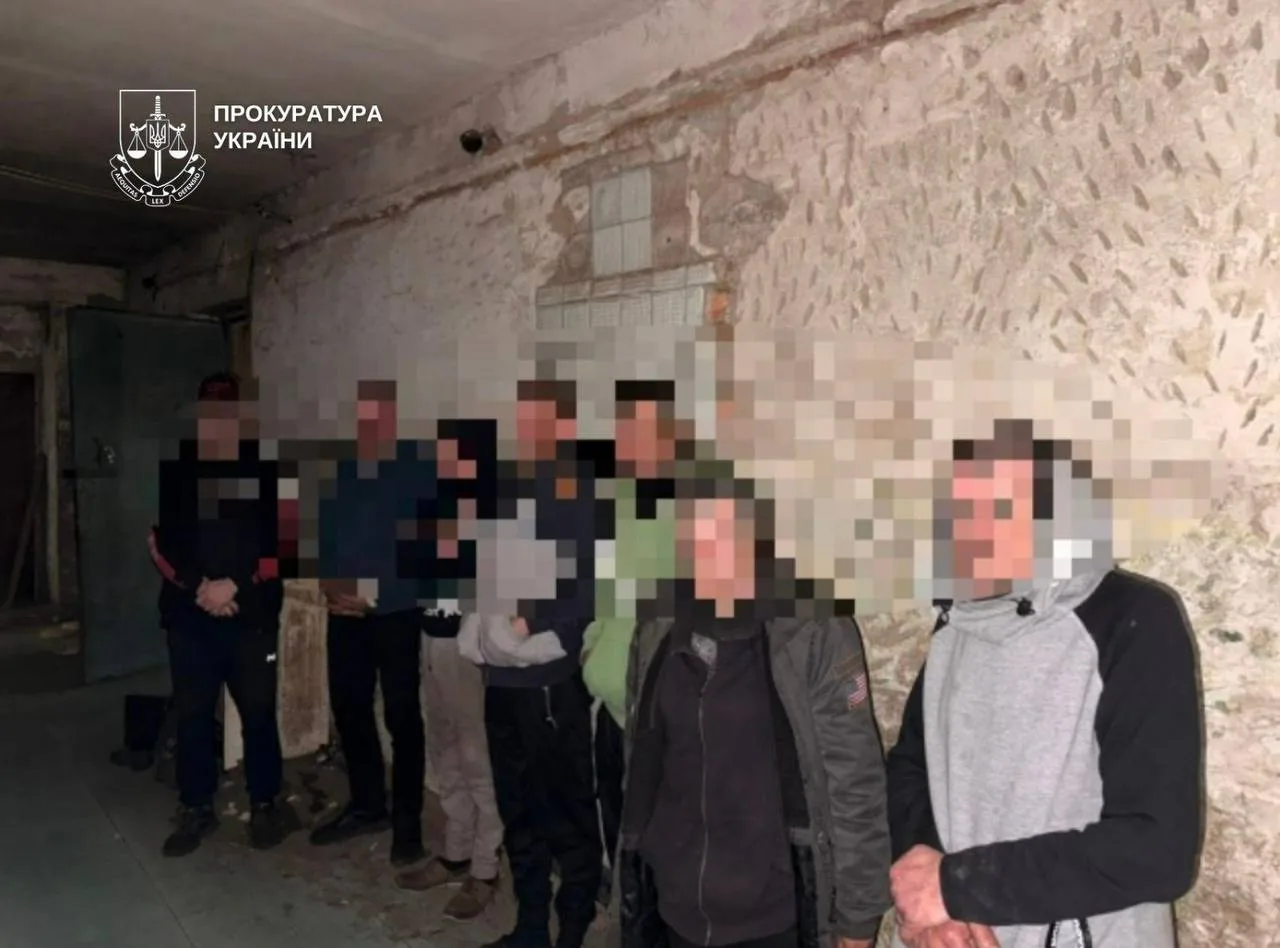
In a woodworking workshop somewhere in Kyiv, 11 people worked without pay, lived in inadequate conditions, and could not leave. Not because they didn't want to — their documents were confiscated. The Office of the Prosecutor General announced suspicions against four organizers of a labor exploitation scheme under articles on human trafficking and unlawful deprivation of liberty.
How it works: recruitment through ads
Victims were lured under the guise of legitimate employment and housing provision — a classic trap for people in difficult circumstances. After "registration," documents were seized, freedom of movement was restricted, and those who resisted were beaten. There was no payment for work whatsoever.
This scheme in Ukraine is neither new nor rare. According to the international organization Campaign A21, over 200,000 Ukrainians have experienced slavery since independence. Internally displaced persons and people in severe social circumstances are the most vulnerable category: they agree to any offer to escape crisis.
What else is known about the case
- Four suspects form an organized group, not isolated incidents.
- The woodworking workshop was a cover that provided a "legitimate" explanation for the presence of people at the facility.
- Victims were held in conditions that violated basic sanitary standards.
- The investigation is being conducted by the Office of the Prosecutor General; details about the location and customers have not been publicly disclosed.
"The number of people granted victim status for human trafficking has increased significantly since 2014"
— Deputy Minister of Social Policy of Ukraine, Radio Free Europe
A pattern that repeats
Parallel to the Kyiv case, an analogous group was uncovered in the Dnipropetrovsk region in July 2025: people were recruited with promises of housing and food, transported to Odesa region, had their phones and documents taken away, and were forced into hard physical labor. The schemes are nearly identical in details, differing only in regions.
Common to all these cases is the absence of systematic protection at the recruitment stage. Victims fall into the trap before any authority receives a signal. Police learn about it after the fact.
If the investigation proves the organized nature of the crime and establishes a chain of customers — not just executors in the workshop — the Kyiv case could become a precedent that changes the practice of qualifying such crimes. But does the prosecutor's office have evidence beyond the executive level?