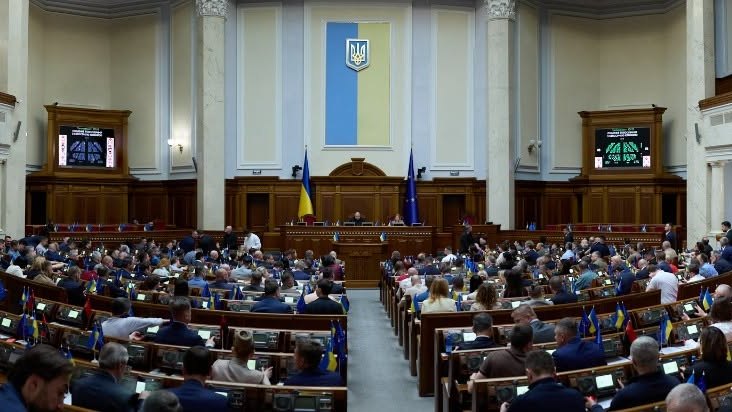
Danylo Hetmantsev, head of the parliamentary committee on finance, announced that the Verkhovna Rada expects the Cabinet of Ministers to submit the final version of the pension reform bill within a month. The concept has already been presented to deputies at the coalition council. The central element is a basic guaranteed payment of 6,000 UAH for each pensioner regardless of work experience.
The problem the reform does not solve
The figure of 6,000 UAH looks like progress only on paper. The actual subsistence minimum for pensioners in February 2025 prices was 6,685.5 hryvnias — and by June was expected to approach 7,000 hryvnias. In other words, the proposed "guarantee" is already below the real minimum at the time the concept was published.
The average pension in Ukraine has increased to 6,410 hryvnias. Meanwhile, the majority of pensioners receive less than the actual subsistence minimum. A basic payment of 6,000 UAH does not fix this situation — it enshrines it.
What the model proposes
The government proposes that the pension consist of two parts: a basic part financed by the state, and an insurance part, the size of which will depend on work experience and paid contributions. Additionally, the government proposes to gradually transfer special pensions to the system of professional pension programs and develop voluntary savings.
Other problematic issues were raised at the coalition council: "elite" pensions for certain professional groups and the size of the unified social contribution.
Where disagreements already exist
The committee's position and the Cabinet's position differ on fundamentals: parliamentarians insist on increasing the minimum pension to the subsistence minimum, rather than to the conditional 6,000 UAH as the Cabinet proposes, and completely eliminate clan pensions.
"The reform is late. But better late than never."
Danylo Hetmantsev
Halyna Tretiakova, head of the Verkhovna Rada Committee on Social Policy, expects the replacement coefficient to reach at least 40% of salary. Currently it is significantly lower.
What comes next
A month before submitting the bill is the deadline for the Cabinet to answer a specific question: if the basic payment is tied to a fixed amount rather than the subsistence minimum, is there a mechanism for automatic review of this amount as inflation rises? If such a mechanism is not in the text — the reform will instead enshrine falling behind for years to come.