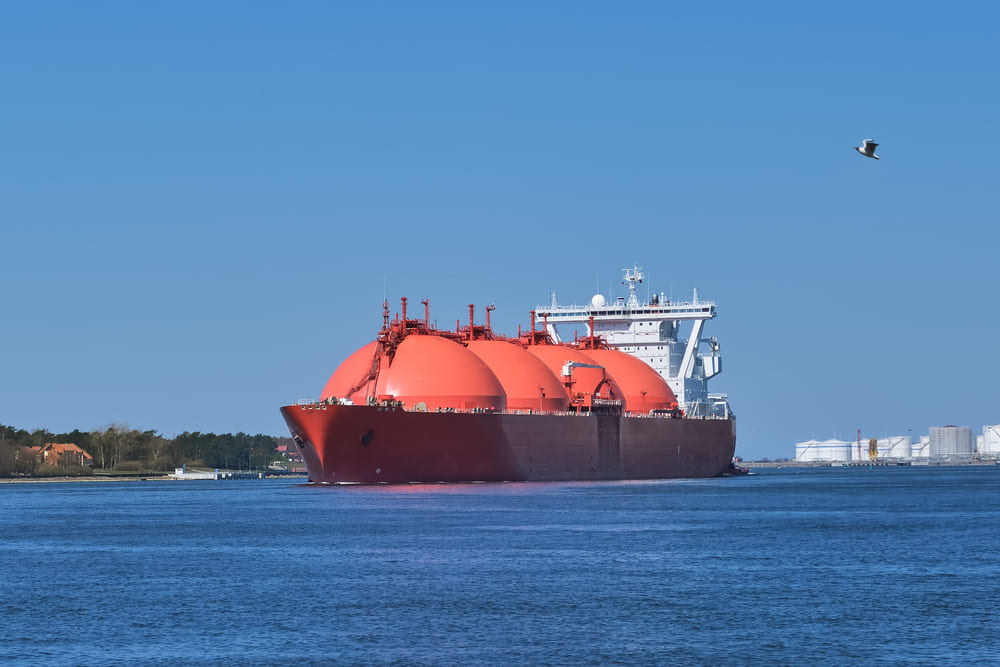
When Naftogaz first delivered American LNG through Klaipéda in February 2025 — 90 million cubic meters in partnership with Lithuania's Ignitis Group — it looked like a one-off demonstration of capability. Capacity reservations through 2044 translate that demonstration into a strategic commitment.
Five players, one terminal
Terminal operator KN Energies has completed a lengthy capacity allocation procedure for 2033–2044. According to the company, over 20 TWh was allocated: 8 TWh through 2044 inclusive, and another 12 TWh through 2040. The available slots went to five buyers: Lithuanian Ignitis, Latvian Latvenergo, Norwegian Equinor, Finnish Gasum — and Naftogaz as the sole newcomer among regional veterans.
The specific volume allocated to Ukraine was not disclosed by board chairman Serhiy Koretskyi. But the very fact of participation in the tender alongside Equinor and Gasum — companies with full-fledged trading portfolios — signals that Naftogaz is counting on a stable LNG flow rather than spot purchases as opportunities arise.
The route exists. Where's the gas?
The Independence terminal in Klaipéda is a floating FSRU facility with a capacity of up to 4 billion cubic meters per year. Most volumes passing through it come from Norway and the USA; there have also been deliveries from Nigeria and Trinidad.
"The new agreement will allow us to receive fuel from producers in the United States and Middle Eastern countries"
Prime Minister Yulia Svyrydenko
The logistics indeed appear well-organized: LNG arrives by tanker at Klaipéda, is regasified, then moves via pipelines through Poland or the Baltic states to Ukraine. Naftogaz emphasizes that it will independently ensure delivery from the terminal to the border — that is, without Ignitis acting as an intermediary, as it did in the February trial shipment.
Why 2033 and not now
The reservation concerns the period after 2033 — a horizon where the current configuration of the European gas market may change substantially. During the previous capacity allocation in 2023, KN Energies offered seven packages of 4 TWh each for the same period — and sold only one: the market was expecting new terminals and new routes. The fact that demand proved higher this time is partly explained by the arrival of new players — Ukraine and Finland.
For Ukraine, the logic of betting on a distant horizon is clear: none of the candidates to serve as a long-term gas supplier — American producers, Qatari contracts, Norwegian pipeline gas — is closed, but none is signed either. Terminal reservation is an option reserve, not a volume guarantee.
If Naftogaz fails to sign long-term LNG supply contracts by 2033, the reserved slot at Klaipéda will transform from an asset into a cost item. Whether the company is conducting negotiations with specific suppliers for this capacity is a question whose answer will determine whether this move becomes part of genuine energy independence.







