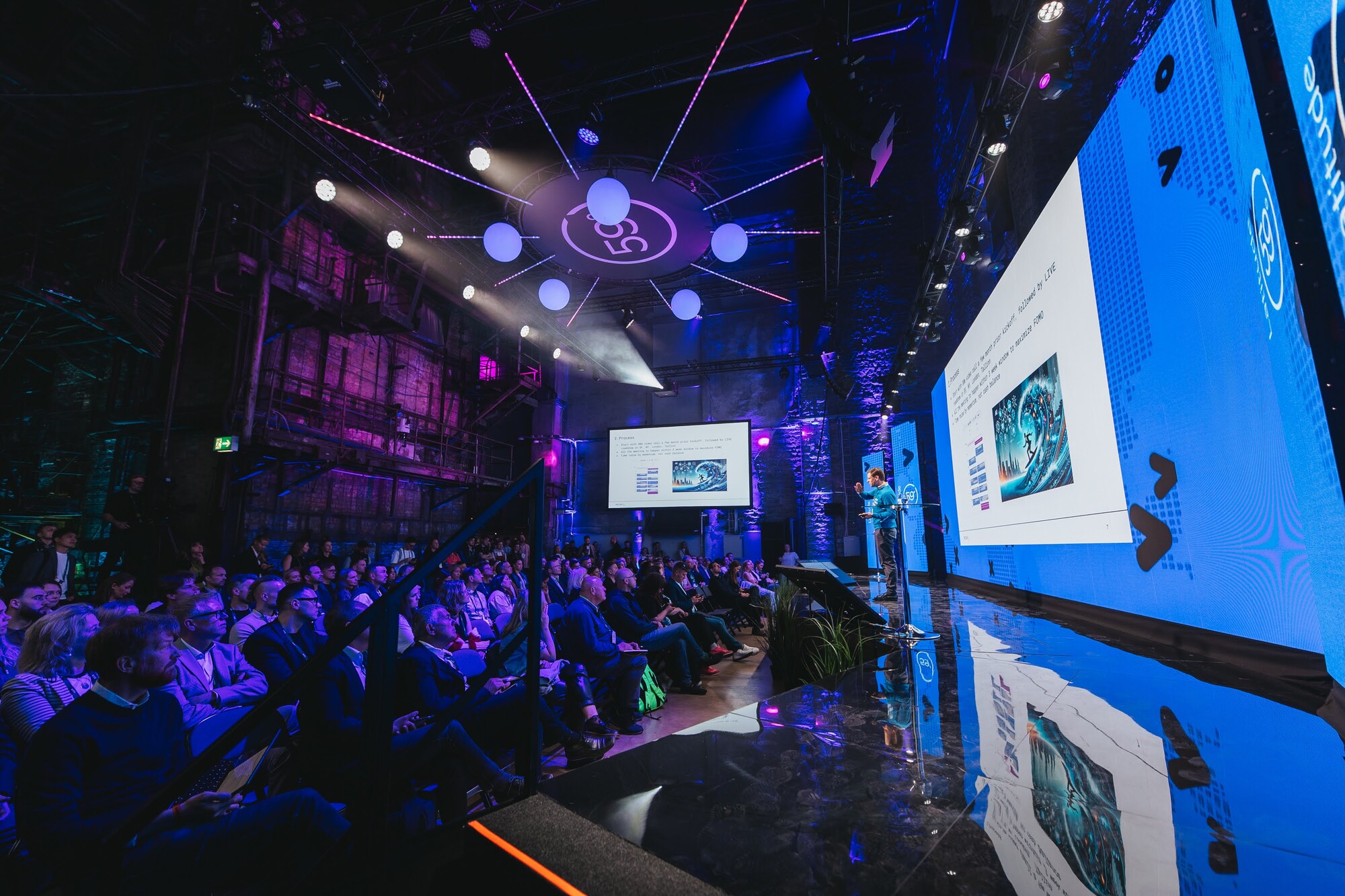
Tallinn, May. On the stage of Latitude59 — an annual technology forum that Estonians have transformed into a regional analog of Slush — a team from Kyiv will appear this year. FPV Battleground, a startup developing a tactical simulator for training FPV drone operators, has passed the selection for the finals of a pitch competition among hundreds of applications from across Europe.
The company's product is not just a gaming simulator. According to the founders' description, it is an environment as close as possible to combat conditions: a pilot works out routes, reaction to obstacles and target engagement scenarios in a controlled digital space, before sitting at a real controller. The demand for such a tool in Ukraine is obvious — the army spends resources training operators, some of whom die or are wounded before they gain the necessary experience.
Latitude59 traditionally attracts investors from Northern Europe, who are actively seeking defense-tech projects after NATO increased pressure on member states regarding defense spending. The pitch competition winner will receive an investment of up to €500,000 — not a grant, but funds with specific growth expectations.
This is not the first Ukrainian defense-tech startup to enter international platforms, but the context has changed: if in 2022–2023 such companies received attention primarily as a symbol of resilience, now investors are asking practical questions — scalability, patent protection, markets beyond Ukraine.
FPV Battleground will have to answer precisely these questions. A simulator tailored to the specifics of one war — is this an asset or a limitation for an investor thinking in a five-year horizon?







