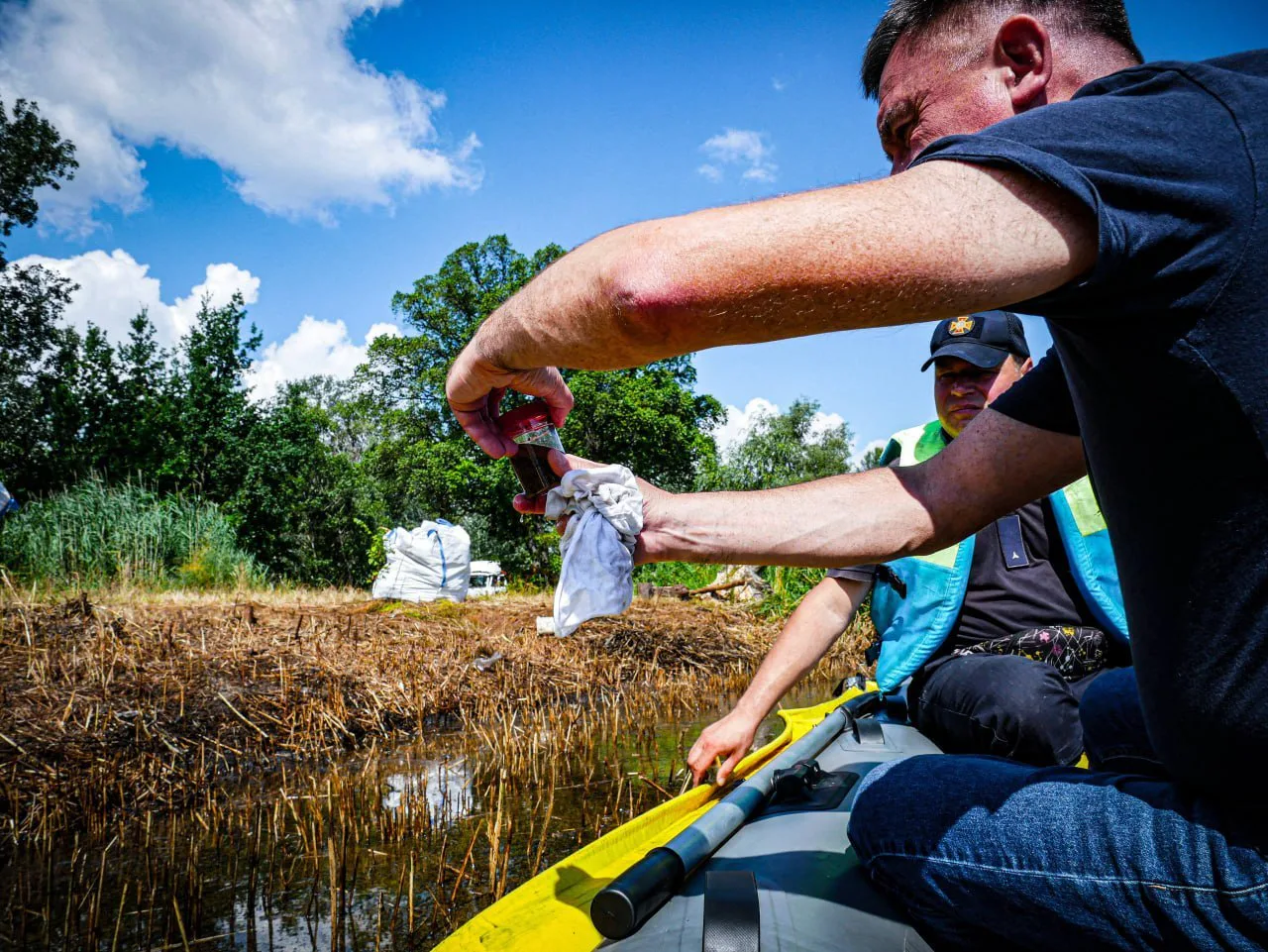
On the night of July 2, a Russian strike damaged an enterprise near Kyrylivske Lake in the Obolonsky District of Kyiv. Over 350 tons of petroleum products and emulsion flowed into the water — a film 1 to 3 mm thick covered the surface of the reservoir. Fish, birds, frogs, and insects died. The smell spread to neighboring blocks.
What they did for two weeks
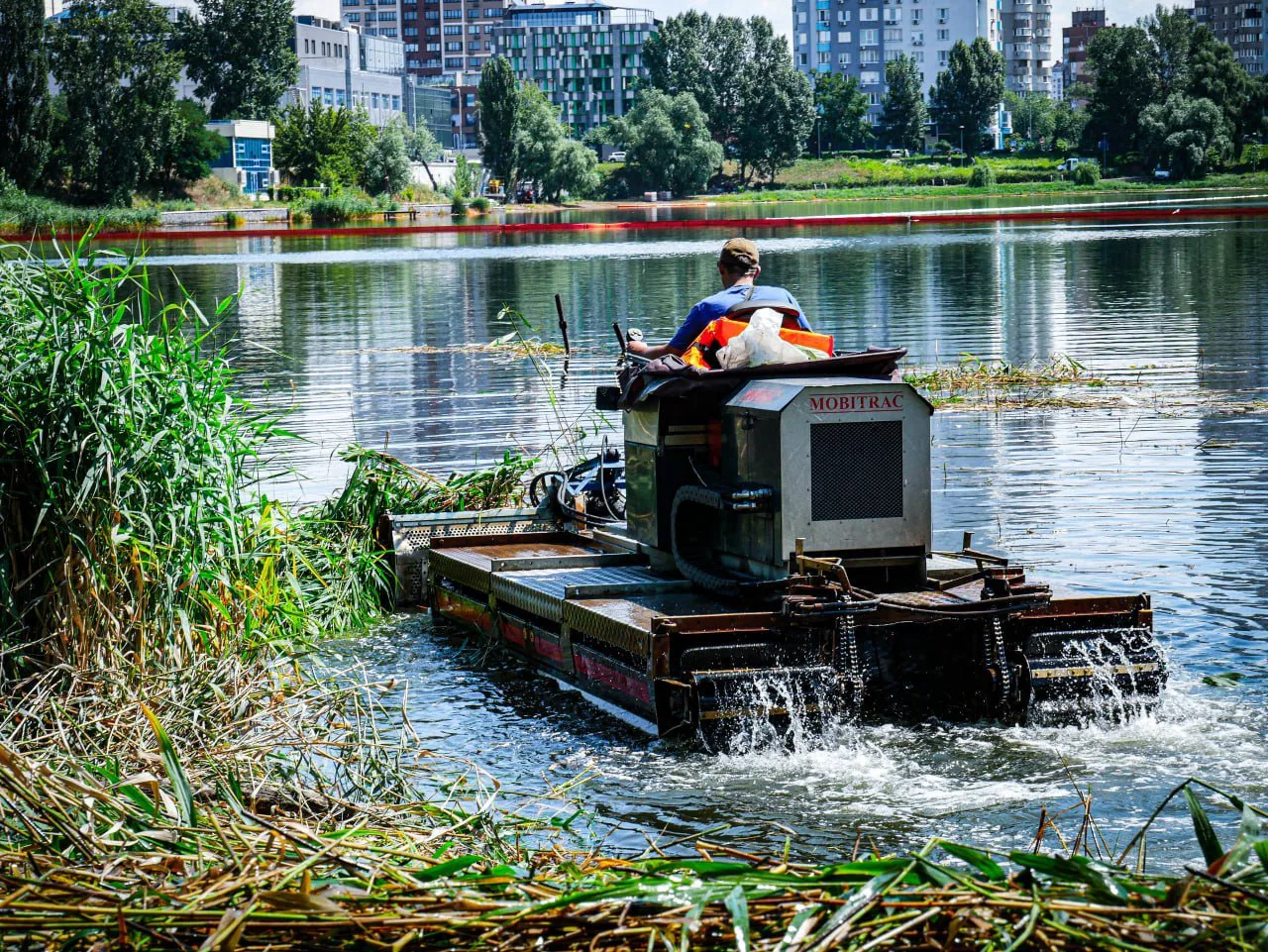
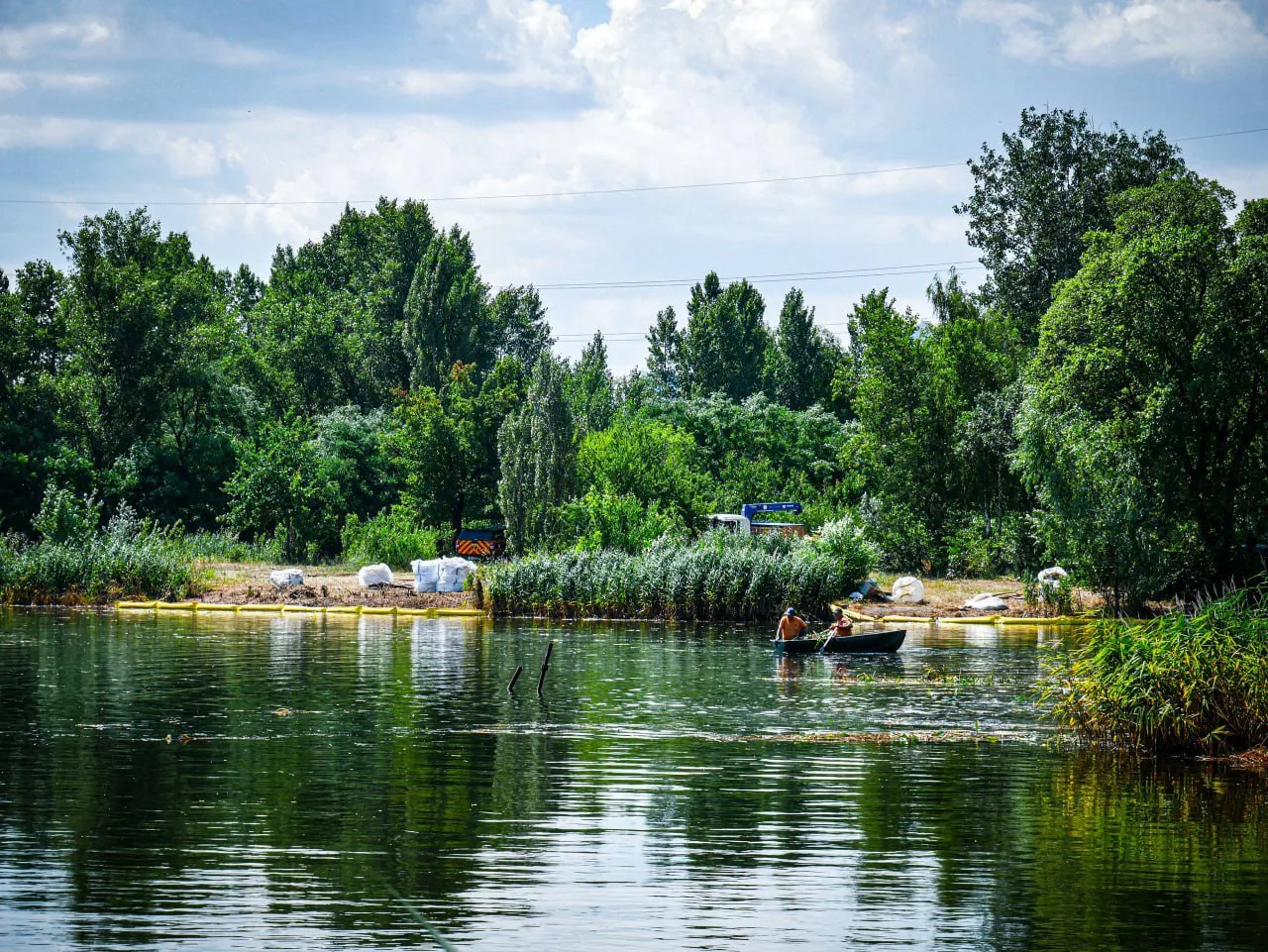
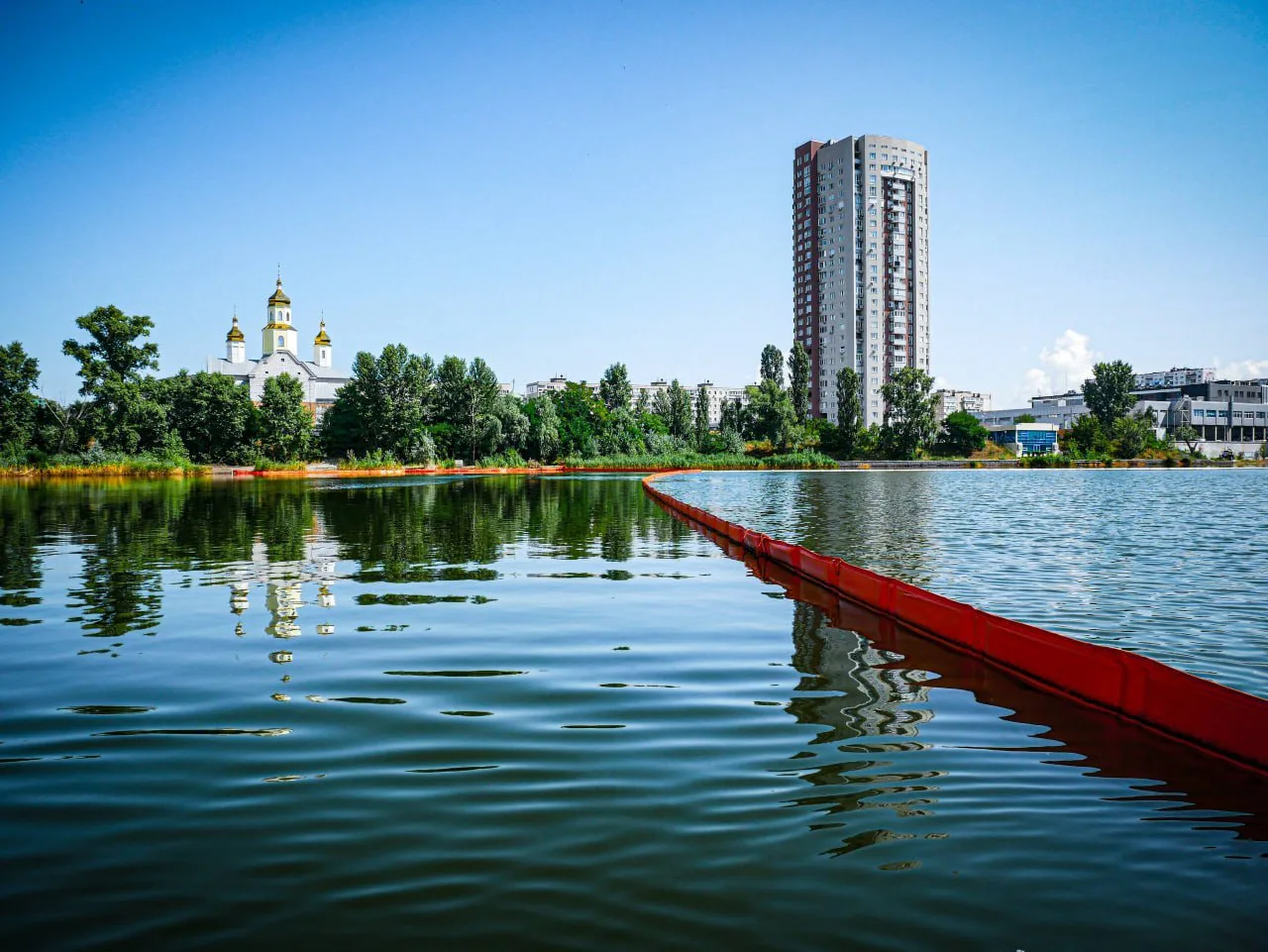
According to the DSNS, 17 units of equipment and 60 rescuers were deployed at the site. Four lines of floating barriers with a total length of 350 meters and 12 lines of absorbent booms — over 700 meters — were installed on the lake. The municipal enterprise "Pleso" deployed an amphibious Mobitrac machine to remove contaminated reeds from the banks.
The spillway between Kyrylivske and the neighboring Yordansky Lake was blocked separately — to prevent oil from flowing during weather changes. According to monitoring results, no traces of petroleum products were found in the Pochaina River: there is currently no threat to the Dnieper.
"Eliminating the consequences of such attacks is not just rapid response, but comprehensive work to assess the state of the environment and its subsequent restoration. The consequences of pollution must not only be eliminated, but the entire lake ecosystem must be fully restored".
Iryna Ovcharenko, Deputy Minister of Economy, Environment and Agriculture of Ukraine
Why "cleaning up the oil" is not the end
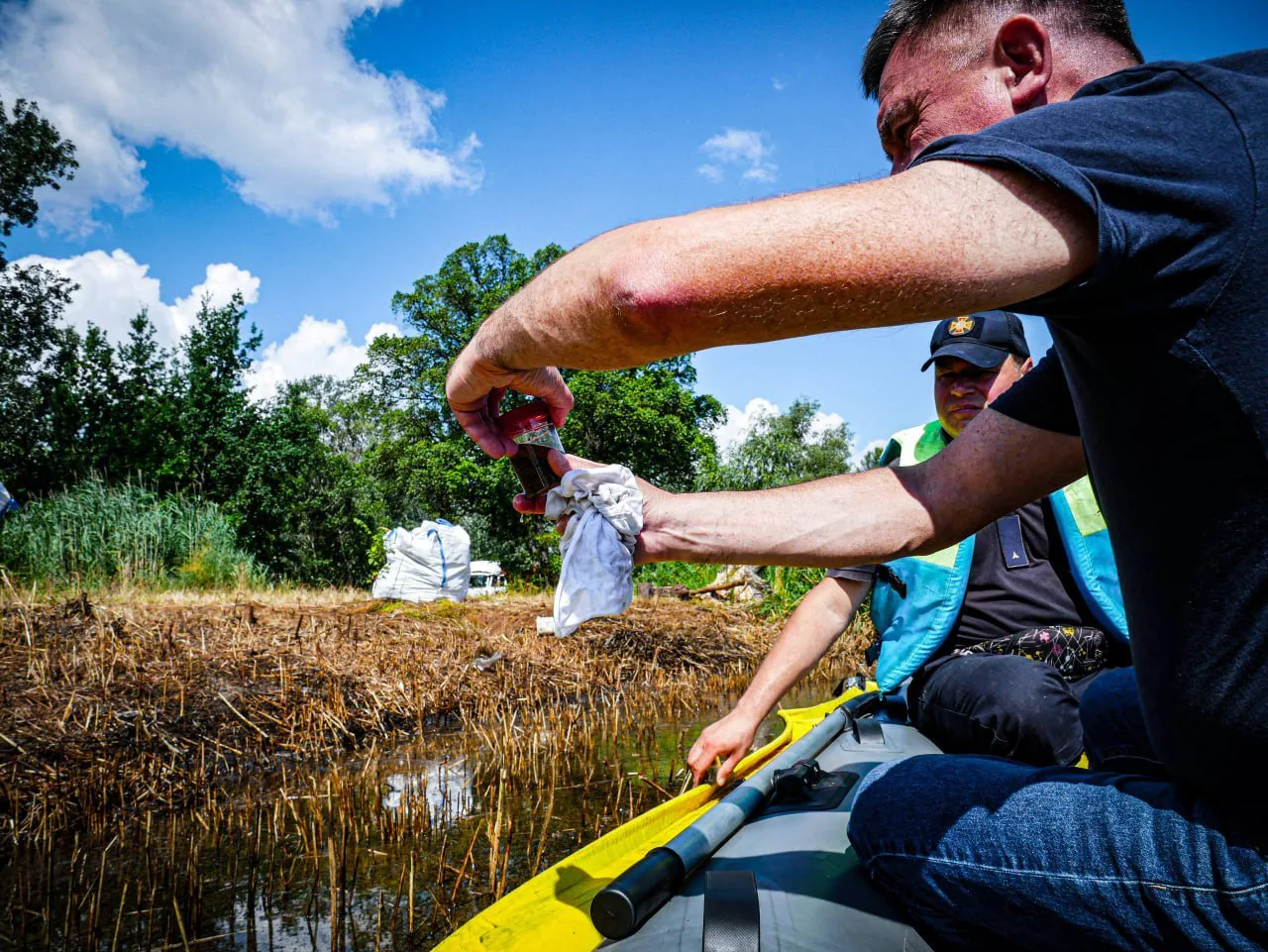
Even after collecting the bulk of the contamination, a film remains that is treated with sorbents — which themselves require degassing. Scientists from the Institute of Hydrobiology of the National Academy of Sciences of Ukraine and specialists from the State Fish Agency are involved in assessing the ecosystem. The municipal enterprise "Pleso" is conducting repeat sampling — the results will form the basis of a comprehensive restoration program.
After the emergency phase is completed, the following will be considered:
- Water aeration — to saturate with oxygen and restore biological balance
- Artificial fish stocking — after confirmation of safe pollution levels
- Monitoring of the coastal zone — reeds and soil absorbed part of petroleum products separately from the water column
It should be noted: Kyrylivske is a technical reservoir where swimming was officially banned even before July 2. Any contact with water and fishing are not recommended for at least the rest of the summer. Residents of neighboring buildings are advised to limit window ventilation until work is completed.
According to ecologists' estimates, complete restoration of the reservoir may take from one to two months — and this is an optimistic scenario, provided that water samples show acceptable levels after the next week of analysis.
If the results of repeat sampling confirm the effectiveness of the work carried out — the city will receive a roadmap for restoration. If not, the timeline "by the end of summer" will become only the first milestone in a much longer process.