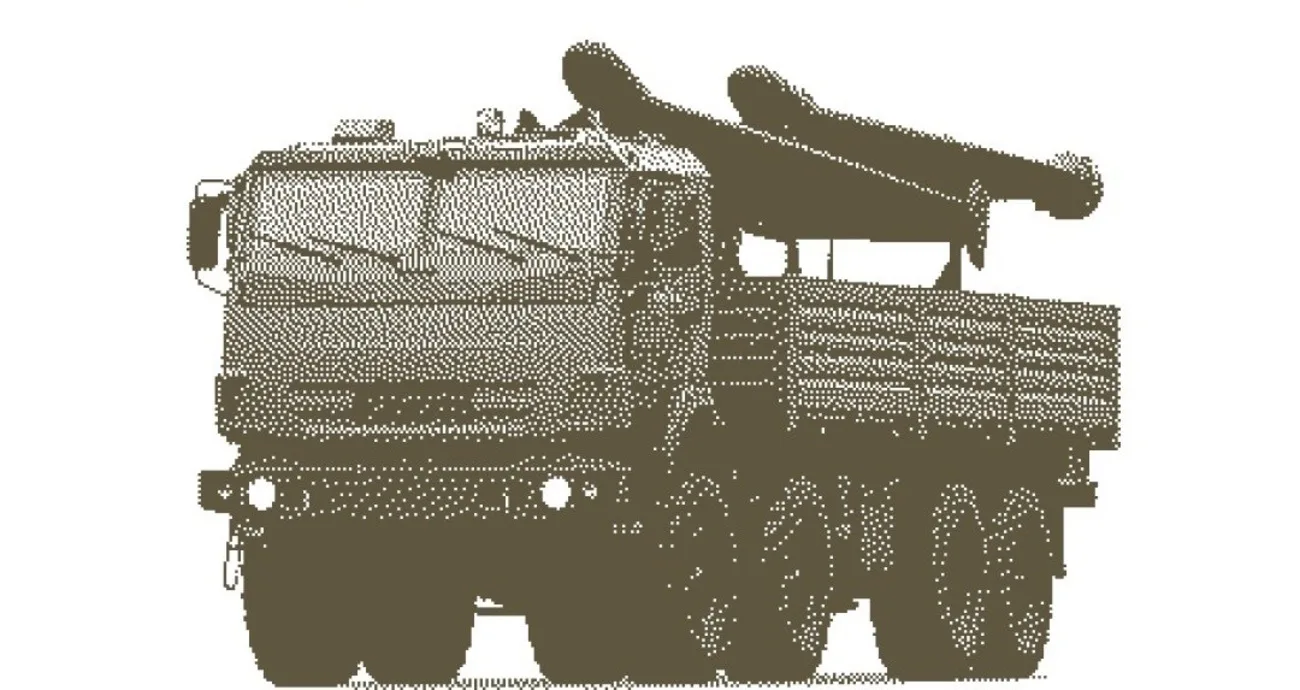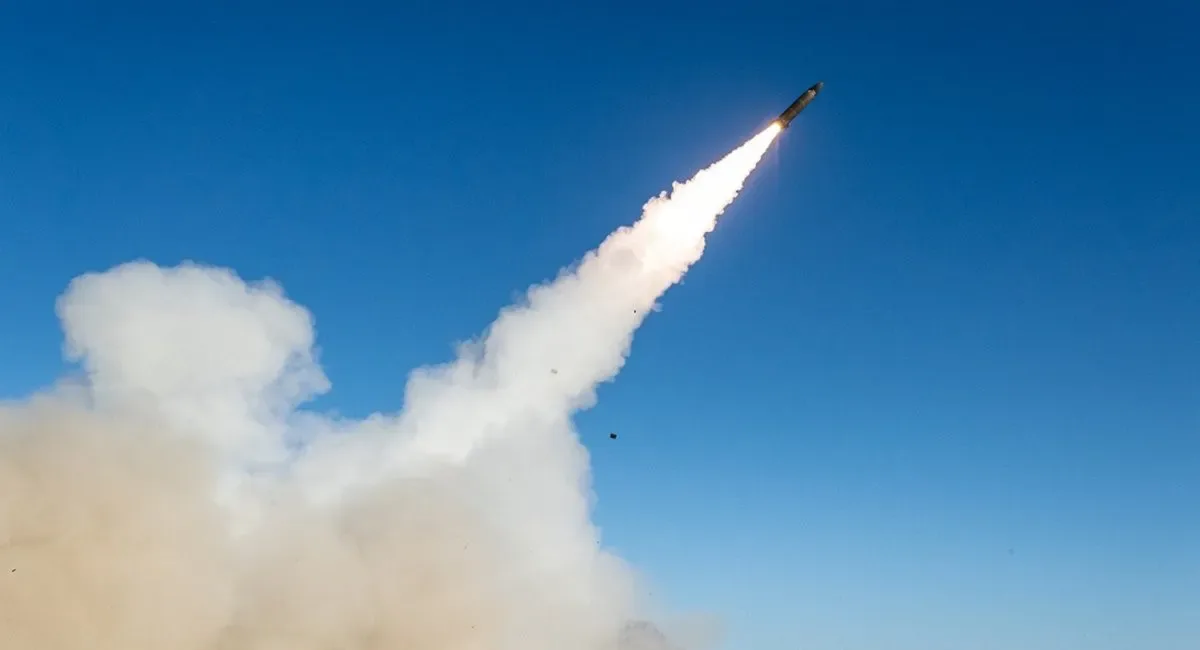
Ukraine is developing two ballistic missile programs in parallel — a state-run and a private one. They share a common goal: to strike targets deeper than drones and cruise missiles can reach. But there is a fundamental difference between "already in production" and "coming soon."
"Sapsan": From Test Range to Combat Launch
The operational-tactical missile complex "Sapsan" (also known as "Grim-2" in export nomenclature) was developed by the Pivdenne Design Bureau and manufactured by Yuzhmash. In July 2024, the first successful tests were conducted. In May 2025, the first combat launch occurred: according to Valentyn Badrak, director of the Center for Army Research, Conversion and Disarmament Studies, the missile destroyed a Russian command post at a distance of approximately 300 kilometers.
Technical specifications of "Sapsan":
- Range: up to 500 km
- Speed: 5.2 Mach (~1769 m/s) — twice as fast as the American ATACMS (3 Mach)
- Warhead: ~480 kg
For comparison: the Iskander-M develops approximately 6 Mach. Sapsan is positioned between ATACMS and Iskander — both in terms of speed and range. In June 2025, Andriy Yermak, head of the Presidential Office, confirmed in a comment to The Times that the missile has entered serial production.
What lies within 500 km of the Armed Forces' positions: Crimea, Rostov-on-Don, Voronezh, Belgorod, Kursk — aerodromes, supply bases, command centers.
Fire Point: Private Initiative with Ambitions for 855 km
In parallel, the company Fire Point is developing two ballistic missiles — FP-7 and FP-9. Their design basis is unconventional: as chief designer Denis Shtileman directly acknowledged, it is a "clone missile" of the Soviet S-400 anti-aircraft 48N6 — but entirely in a composite hull, which makes it lighter and longer-ranged.
- FP-7: range up to 200 km; according to the developers, the missile is ready and the military have submitted a request
- FP-9: stated range 855 km, warhead 800 kg, flight speed — over 1200 m/s
"FP-9 will easily hit targets in Moscow. The Iskander currently has about 800 meters per second, and we'll have more than 1,200. 25% will definitely break through air defense and hit the target."
Denis Shtileman, Chief Designer at Fire Point
However, FP-9 has not yet flown. Currently, engine filling and ground static firing tests are underway — after which flight tests are planned. Codification of the missiles, according to the company's plan, will be completed no earlier than February 2026.
Moscow Within Range — But With Caveats
A missile with a range of 855 km could theoretically reach Moscow — if launched from areas close to the border. The distance from Kharkiv region to Moscow is approximately 1000–1100 km, meaning FP-9 even in its maximum configuration cannot reach the Russian capital from most positions controlled by Ukraine. Accessible targets within realistic range — Bryansk, Orel, parts of the Moscow region from positions of maximum approach to the border.
A separate factor is Moscow's layered air defense network, the densest in Russia. Even high speed (~1200 m/s) does not guarantee breakthrough: according to military analysts' assessments, intercepting ballistic targets over Moscow is technically more difficult than over the front, but not impossible.
Two Programs — Two States of Readiness
The difference between the two directions is fundamental:
- "Sapsan" — actually deployed in combat, transitioning to serial production based at Pivdenne Design Bureau/Yuzhmash
- FP-7/FP-9 — private development, FP-7 declared as ready, FP-9 has not yet undergone flight tests
The emergence of indigenous ballistic capability fundamentally changes the logic of deep rear strikes: a ballistic missile with a speed exceeding 1200 m/s gives an adversary's air defense orders of magnitude less reaction time than a cruise missile or drone. This is precisely why kamikaze drones, despite widespread use, have so far been unable to systematically strike protected targets in Russia.
If FP-9 passes flight tests on schedule and reaches codification by February 2026 — the question will shift from "will it reach" to "will there be enough missiles for systemic pressure": serial production by a private company in wartime conditions depends on resources, factory protection, and the pace of orders from the Defense Ministry.