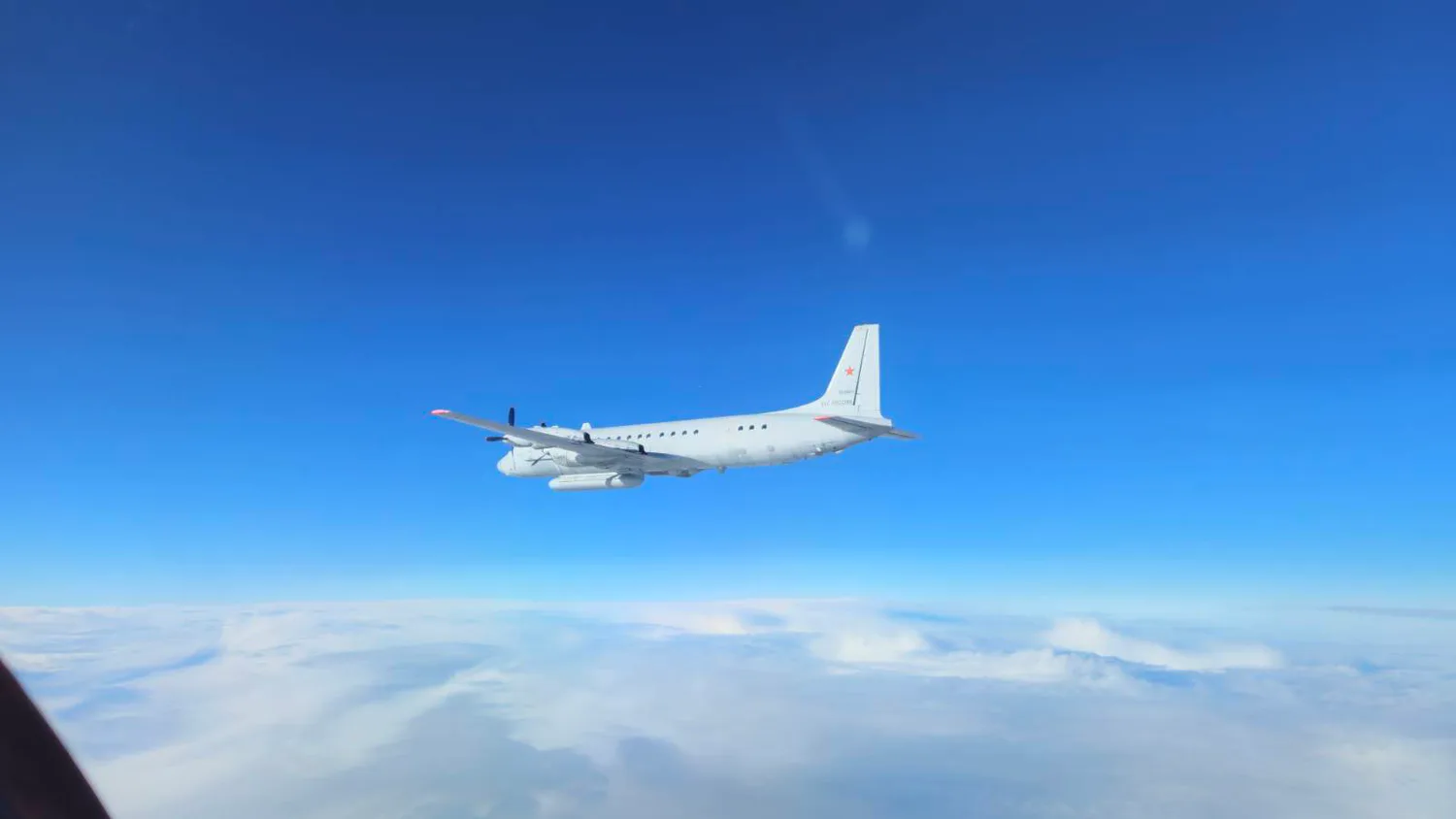
Polish Defence Minister Władysław Kosiniak-Kamysz reported that another pair of Polish aircraft intercepted a Russian reconnaissance Il-20 aircraft 60 kilometers northwest of Leba over the Baltic Sea. No violation of Polish airspace was recorded — the aircraft remained in international airspace throughout.
By noon, 60 kilometers northwest of Leba in the Baltic Sea, another pair of our aircraft intercepted a Russian reconnaissance aircraft Il-20. No violation of our airspace occurred
The key detail here is not geographical but technical: the Il-20 was flying without a filed flight plan and with its transponder disabled — a device that identifies the aircraft to civilian and military radars. Formally this is neither a crime nor grounds for shooting down, but practically it means the aircraft deliberately "disappears" from civilian air traffic control systems, remaining visible only to military radar surveillance.
Why a disabled transponder is a message in itself
For civilian aviation pilots over the Baltic, a military aircraft with its transponder disabled creates a real collision risk: air traffic controllers simply cannot see the object in the usual data stream. This is the reason NATO countries maintain standby aircraft in constant readiness — not only to respond to border violations, but also to routinely track what is flying near commercial routes without identification.
Such flights by Il-20s and similar reconnaissance aircraft over the Baltic and Black Seas are routine practice that has continued for years. What is new here is not the reconnaissance itself, but the frequency with which the Polish side publicly reports interceptions — this is part of Warsaw's communication strategy against the backdrop of domestic political discussion about the Russian threat.
Missile fragments and political context
The report of the interception came simultaneously with news of the resumed search for a fragment of a Russian Kh-101 missile in Tarnawa-Kolonia — laboratory analysis showed that an additional fragment needed to be found, and equipment for deep scanning was deployed. Both stories reinforce the same message from the Defence Ministry: the danger is not limited to isolated incidents with missiles or drones, but manifests itself in the constant presence of Russian aviation near Polish borders.
This is directly connected to domestic discussion in Poland: after the airspace violation on July 31, the Defence Ministry publicly accused the opposition of treating "Russia as no longer an enemy." Regular reports of reconnaissance aircraft interceptions in this context work not only as security information but also as an argument in the political debate about how seriously the country should take its neighborhood with Russia.
The forward-looking question is simple: will the growing frequency of such flights without transponders lead to a change in NATO's rules of engagement — for example, stricter identification requirements for military aircraft in international airspace over the Baltic, or will everything remain at the level of individual interceptions and public statements?