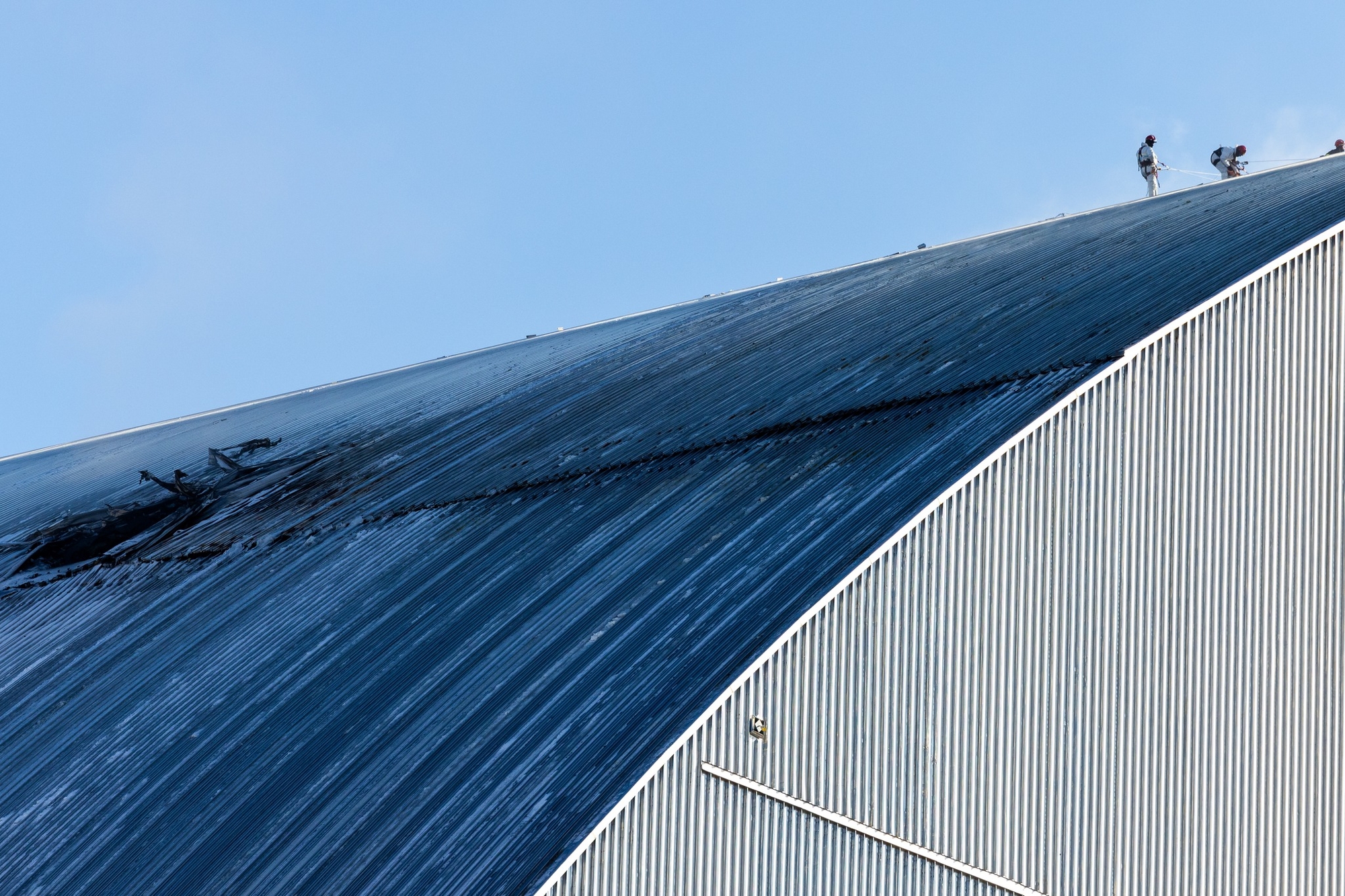
On Sunday, May 24, Russia delivered one of the largest strikes on Kyiv since the full-scale war began: more than 600 drones and 90 missiles of various types, including the hypersonic ballistic Oreshnik, deployed against the Kyiv region. Two people were killed in the capital, two more in the suburbs; over 80 people were wounded, including three children. The strike covered all districts of the city, but Lukyanovka suffered the most damage.
What was destroyed in Lukyanovka
The Kvadrat shopping and entertainment center was completely destroyed by direct hit — only a charred frame remained of the building. The Lukyanovka market nearby was completely destroyed; the above-ground vestibule of Lukyanovska metro station was damaged and had to be temporarily closed. Strikes were recorded in close proximity to the Embassy of Azerbaijan — the blast wave blew out the windows of the diplomatic mission. Buildings of the Cabinet of Ministers were damaged, and — for the first time since World War II — the Ministry of Foreign Affairs of Ukraine.
"Looking at the broken windows this morning, I can say with full confidence on behalf of our entire diplomatic team: Russian terrorists will not force us to stop"
Andriy Sybiha, Minister of Foreign Affairs of Ukraine
Diplomatic response: in person, not by video
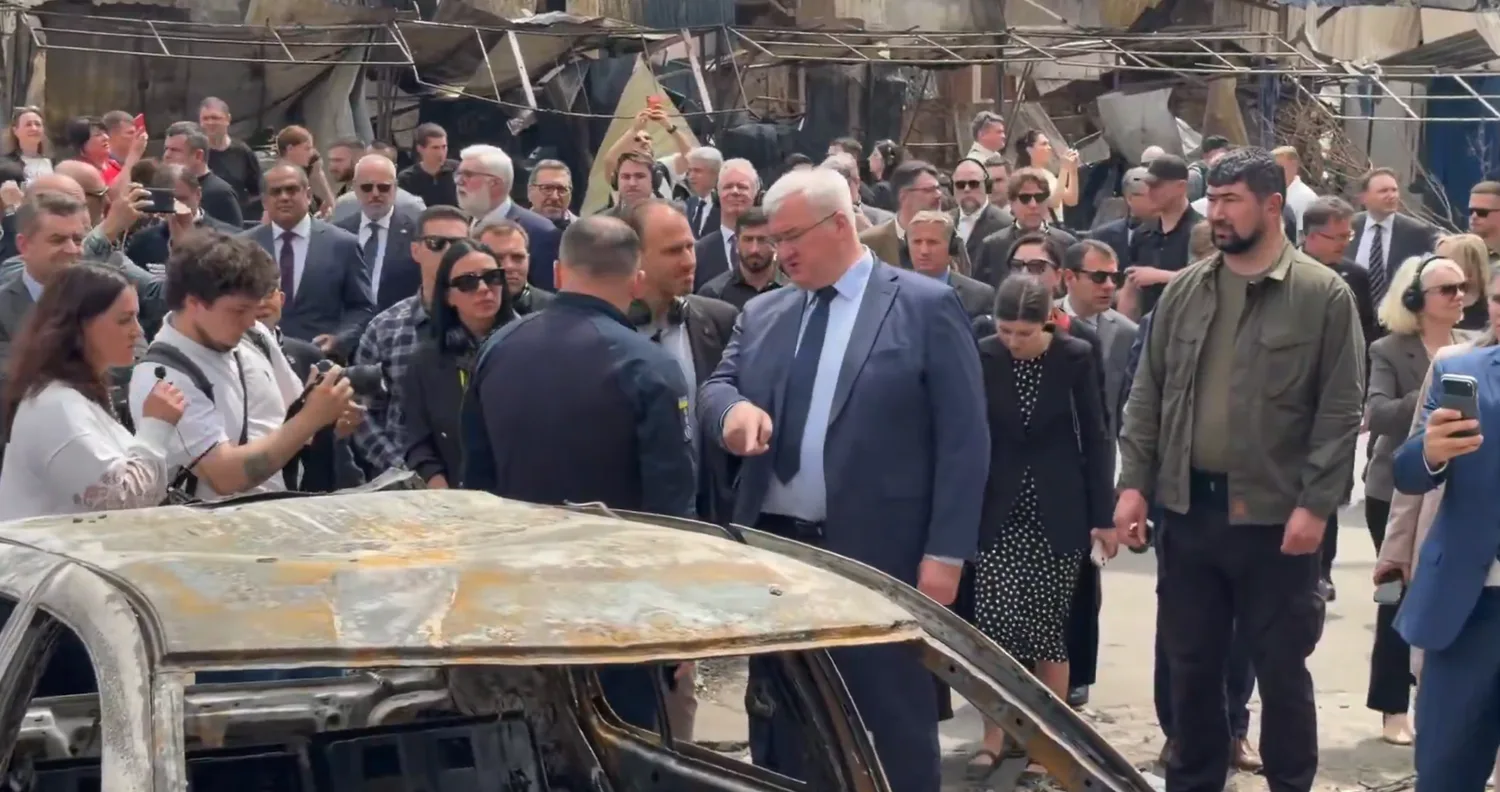
The day after the strike, Sybiha visited the sites of destruction in Lukyanovka together with representatives of over 70 foreign diplomatic missions. Participants laid flowers to honor the memory of the dead. Present were Prime Minister Yulia Svyrydenko and Minister of Internal Affairs Ihor Klymenko, who briefed diplomats on casualties and cleanup efforts.
This is not the first such event: after strikes on Kryvyi Rih (April 2025, 9 children killed), Sybiha took 32 ambassadors there; after the August strike on Darnytsky district in Kyiv — 55 heads of missions; after the September strike on the Cabinet of Ministers — 60. Each time the format was the same: not a press release, but physical presence at the scene of the crime. This time, the number of missions was a record.
What Kyiv is demanding
According to Sybiha, Ukraine has mobilized all available multilateral mechanisms in response to the strike:
- Convening an emergency meeting of the UN Security Council and an OSCE session
- Engaging the Council of Europe and UNESCO in condemning attacks on cultural heritage
- Providing Ukraine with additional air defense systems
- Strengthening sanctions pressure on Russia
As the minister stated, "Putin is trying to intimidate Ukraine by attacking civilians and destroying residential buildings, museums, schools and critical infrastructure," while simultaneously testing the unity of allies by striking ballistic missiles at peaceful cities. In response, Sybiha instructed all missions at international organizations to "make full use of multilateral tools."
Moscow, for its part, claimed that the strikes were a response to Ukrainian attacks on civilian objects in Starobilsk. Kyiv denies this, insisting that the targets were exclusively military.
The question that remains open: will this record diplomatic demonstration convert into concrete commitments to supply air defense systems — or will visits to sites of destruction remain a symbolic gesture without binding deadlines for implementation?