Council of the EU: what happened
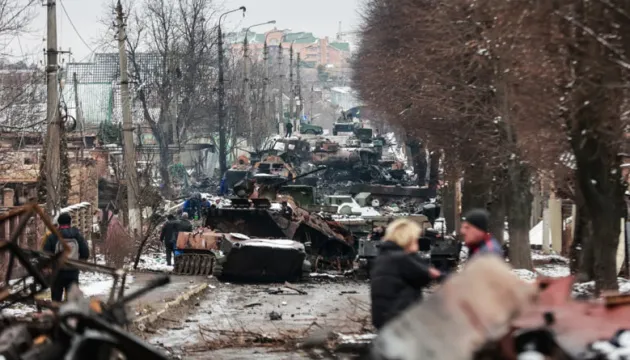
On the fourth anniversary of the Bucha tragedy, the Council of the EU adopted personal restrictive measures against nine individuals who, according to the office, played a key role in crimes against the civilian population during the 2022 occupation. The decision was published by the Press Service of the Council of the EU as a step toward holding the perpetrators accountable.
"On the occasion of the fourth anniversary of the massacre in Bucha... The Council of the EU today adopted restrictive measures against nine individuals who played a key role in these events."
— Press Service of the Council of the EU
Who was sanctioned
The list includes, in particular, Colonel‑General Oleksandr Chaika — the former commander of the Eastern Military District of the Russian Federation and the highest‑ranking Russian officer on Ukrainian territory at the start of the full‑scale invasion. According to the Council of the EU, the sanctioned commanders led units involved in killings, looting and torture in Bucha, Hostomel, Irpin and Borodyanka. It was also noted that one of the individuals is implicated in the adoption of a child deported from the occupied part of Donetsk oblast.
"Forces under their command also took part in looting, torture and forcing civilians to collect the bodies of dead Russian soldiers..."
— Press Service of the Council of the EU
What measures were applied
The Council of the EU froze the assets of the sanctioned individuals within EU jurisdiction, prohibited EU citizens and companies from providing them with funds, and introduced a ban on entry and transit through Member States. This is the standard set of personal accountability measures aimed at restricting their financial and mobility space.
Why this matters for Ukraine
First, the sanctions have symbolic and practical significance: they identify those responsible for the crimes and make those names public. Second, such measures create additional legal and economic pressure that facilitates international coordination of investigations and can support further steps — from requests for legal assistance to extradition procedures. Experts point out that sanctions will not replace a trial, but they strengthen accountability mechanisms.
What’s next
The Council of the EU’s decision is an important, but not final, element of the accountability system. Ukraine needs consistent documentation of evidence, coordination with international tribunals and pressure on cooperating partners to carry out legal procedures. This decision narrows the space for impunity, but full accountability will require further legal steps by the international community.
Brief conclusion: The Council of the EU’s sanctions send a signal: the international community is recording the crimes in Ukrainian cities and acting in concrete ways, but the path to fully bringing the perpetrators to trial remains open.