Missile over Poland as an argument
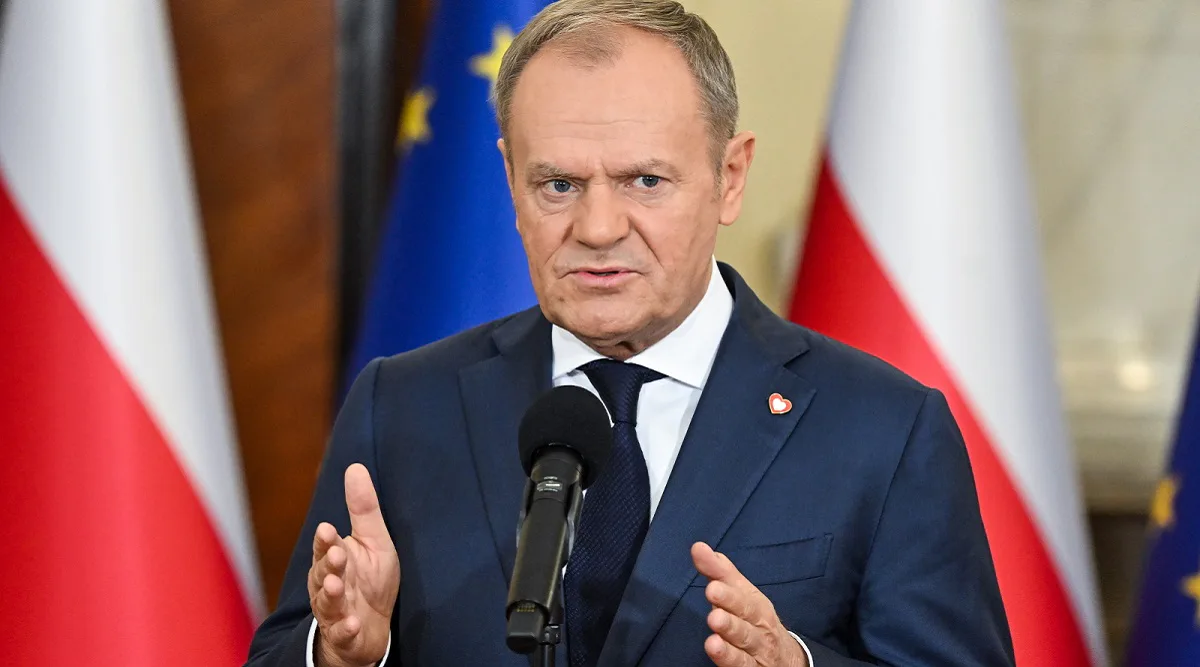
Donald Tusk's statement about "100 days that could determine the outcome of the war" did not appear in a vacuum — it came immediately after a Russian ballistic missile was detected over Polish territory. And the prime minister used this incident not to talk about Poland's own defense, but to explain a direct connection: the weaker Ukraine is in the air, the higher the danger for Poland.
"Poland's security directly and unconditionally depends on effective actions by Ukrainian military, including in the air. If Ukrainians had much more of what they have been asking for all this time, perhaps this ballistic missile would not have been launched toward Poland," Tusk said.
This is not rhetoric about solidarity — it is an argument by contradiction: underfunded Ukrainian air defense becomes a security problem for a neighboring NATO country.
Who really decides
The most revealing part of the statement — not the 100-day timeframe itself, but whom Tusk named as key players. US President Donald Trump — as expected. And next to him — Elon Musk, the head of the private company SpaceX.
This is an acknowledgment of a reality that is rarely spoken aloud: the fate of the war depends not only on decisions made by governments and parliaments, but also on whether Starlink will function, or whether a specific billionaire will make a decision about supplies. Formal diplomacy here goes hand in hand with the informal influence of private business on military operations.
"The question is absolutely clear: the next 100 days could determine the outcome of this war, and it's a 50/50 chance," Tusk said, recounting a conversation with Zelenskyy.
What this means in practice
The phrase "50/50 chance" is not a forecast of victory or defeat, but an acknowledgment that the outcome is still undetermined and depends on specific decisions in the coming months: the volume of weapons supplies, political will in Washington, technological infrastructure such as satellite communications.
For Poland, this is also a signal to its NATO partners: if Ukraine does not receive sufficient air defense means, next time a missile could fall not in a field, but in a populated area. Tusk has already announced a review of increasing aid to Ukraine — the question is whether this incident will become a catalyst for concrete decisions or remain just another statement at a press conference.
If the next three months truly become decisive, as Tusk says, then the key question is whether Ukraine's partners will manage to translate political rhetoric into real supplies faster than Russia adapts its strike tactics.







