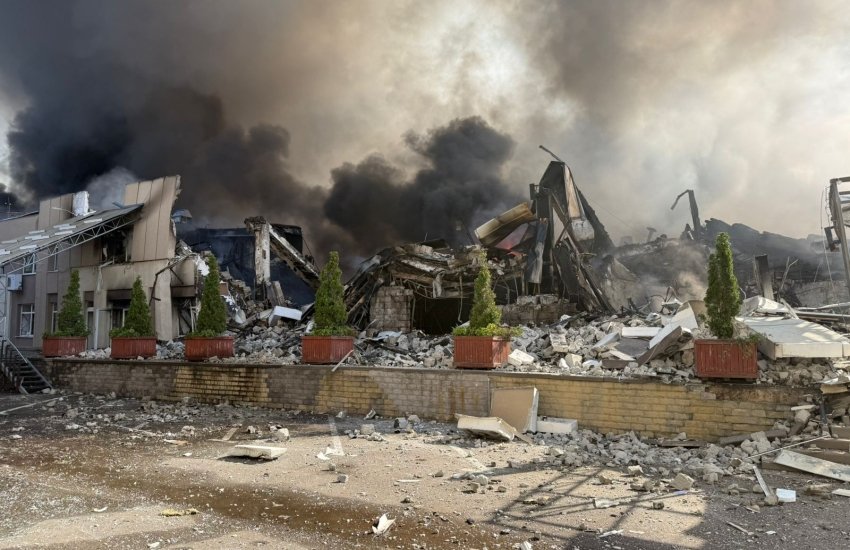
When a warehouse burns, it's not just a building that disappears — it's a link between the manufacturer and the store shelf, between a humanitarian hub and the front line. Russia seems to understand this better than anyone.
According to a logistics sector study, losses from the destruction of Ukraine's warehouse infrastructure are approaching 2022 levels — when approximately 300,000 square meters of warehouse space was destroyed in the first six months of full-scale invasion. What's alarming about the current situation is different: similar figures have been recorded in just the last two months.
More than just square meters
300,000 square meters is approximately 40 standard covered football fields. This space stored goods, spare parts, food, and medicine. Each destroyed facility means redrawn logistics routes, increased insurance costs, additional detours, and ultimately higher prices for the end consumer.
The logistics sector in wartime serves a dual function: it serves both the civilian economy and defense needs. Strikes on warehouses are not collateral damage but a deliberate strategy of attrition.
Why the pace has accelerated
2022 was chaotic: Russia struck at everything that moved or stood still. The current pace of destruction is more precise. Analysts are registering a shift in fire toward major logistics hubs and distribution centers that serve several regions simultaneously. One accurate strike — and the system takes weeks to rebuild.
The insurance market reacts first: premiums for warehouse coverage in central and western regions have risen so much that some operators are effectively abandoning insurance altogether, shifting the risk to cargo owners. This further squeezes investment in new facilities.
Reconstruction under fire
The paradox of the situation is that attempts to rebuild what was destroyed happen in parallel with destruction. Several international logistics operators have expressed interest in building modular warehouses — quick-assembly, partially underground, dispersed. But investment decisions in the sector have a 7-10 year horizon, and no one can guarantee the safety of any specific point on the map.
A state program for compensating business losses exists, but its scope is incommensurate with the scale of losses: compensation covers only a portion of actual damage, and the procedure for obtaining it stretches over months.
What's next
If the current rate of destruction continues, by the end of the year Ukraine could record record losses of warehouse infrastructure for the entire period of full-scale war. The question is not whether the sector will be rebuilt — it will be. The question is what portion of logistics will be moved underground or abroad, and whether it will return after a ceasefire if insurance rules and the investment climate don't change fundamentally.