The Bureau of Economic Security and the National Police announced the liquidation of an underground tobacco production network that spanned two regions and operated on an industrial scale. Seven individuals were charged with tax evasion and illegal business operations.
How the scheme worked
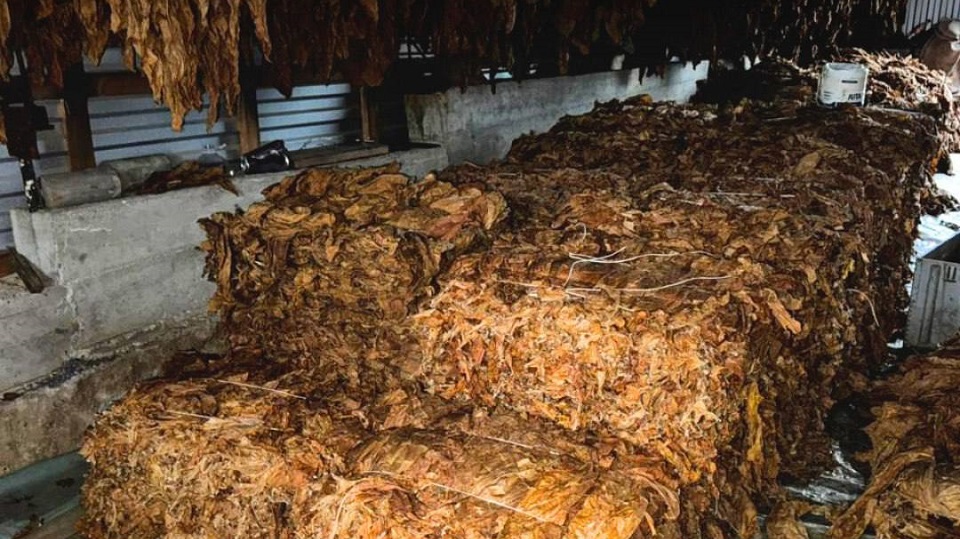
The organizers—residents of Odesa and Ternopil—built a complete production cycle: raw materials were grown in specially constructed greenhouses in the Ternopil region, where they were dried and processed. The finished tobacco was transported to Odesa, where an underground workshop packaged cigarettes. According to the investigation, production capacity allowed for up to 50,000 cigarettes per day—approximately 2,500 packs daily from a single workshop.
Distribution was organized throughout Ukraine. Law enforcement did not specify distribution channels, but the typical scheme for such networks involves sales through legitimate retail outlets with counterfeit excise stamps.
Why such networks are becoming more common
The Odesa case is not an exception. The BEB liquidated similar workshops in Volyn, Zakarpattia, and Chernivtsi regions over just the last few months. The systemic cause lies in the numbers.
"The forecast for unpaid tax revenue to Ukraine's budget in 2025 is 24.2 billion hryvnia, exceeding the 2024 estimate"
CASE Ukraine research, data from the Ministry of Digital Transformation
For comparison: this amount would be sufficient for half of the annual drone production budget—which was 43 billion hryvnia in 2024. The shadow market, according to KANTAR Ukraine research, has resumed growth after a prolonged decline: if the illegal share was 12.6% in October 2024, it reached 17.8% in October 2025.
The catalyst was an increase in excise taxes. President Zelensky signed bill №11090, which significantly increased rates on tobacco products—a pack was supposed to become more expensive by approximately 40 hryvnia. This is positive for the budget, but for the shadow market, it provides additional incentive: the higher the legal price, the more attractive the margin for underground producers.
Where the system is vulnerable
According to analysts from the "No to Contraband" initiative, the vast majority of illegal cigarettes are manufactured by local "semi-legal" producers and end up in legitimate retail outlets—meaning consumers often don't even realize they're buying excisable goods without paid excise. There's also a reputational dimension: counterfeit Ukrainian cigarettes are detected in EU markets, damaging the country's international image during European integration negotiations.
- Industrial greenhouses for tobacco cultivation were discovered—not just repackaging, but a complete cycle from seed
- Seven individuals were charged, including foreign nationals (other similar BEB cases record participation of non-residents)
- Equipment and finished products were seized; the investigation is clarifying the damage amount to the state
The real question in this case is not about the seven suspects, but whether liquidating one workshop will stop the demand generated by the price difference between legal and illegal cigarettes. If excise continues to rise without parallel strengthening of stamp control in retail trade, each newly discovered production facility will simply make room for the next one.