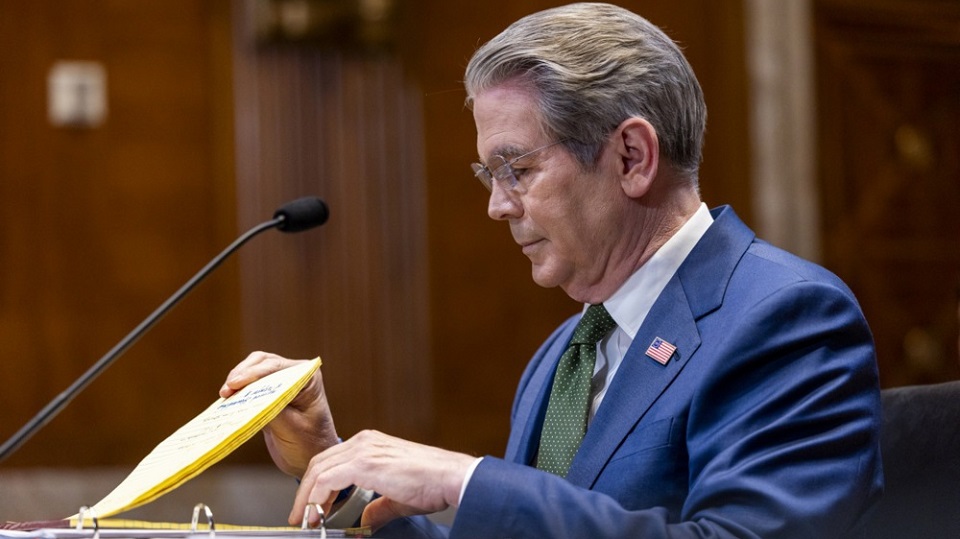
On Friday, U.S. Treasury Secretary Scott Bessent said in an interview with Associated Press that there would be no third extension of sanctions exemptions for Russian and Iranian oil. His formulation regarding Iran is categorical: "completely ruled out." But to understand the weight of these words, it's worth knowing what he said two weeks ago — and then signed an extension anyway.
Timeline of the reversal
The U.S. first issued a permit to purchase Russian oil at sea in March — after oil exceeded $100 per barrel following Iran's closure of the Strait of Hormuz in response to strikes by the U.S. and Israel. The first permit expired on April 11.
On Wednesday, April 23, Bessent publicly stated at the White House: there would be no extension — neither for Russia nor for Iran. Two days later, the Treasury Department issued a second permit — until May 16 at 12:01 p.m. Washington time.
"This is a shameful decision and a 180-degree reversal — two days after Bessent promised not to extend sanctions exemptions for Russia"
Senators Shaheen, Schumer and Warren — in a joint statement
Why they extended it anyway
Bessent provided his explanation after signing — at Senate hearings and in an interview with AP. According to him, during spring meetings of the IMF and World Bank, representatives of more than ten of the poorest and most energy-dependent countries approached him with requests for assistance. The permit, according to the minister, was specifically addressed to them — not Moscow.
Bessent dismisses the argument about benefits for Russia: saying that Russian oil sells at a discount, and a general decline in global prices negates Kremlin's additional revenues. However, Financial Times calculated that Moscow earns up to $150 million per day in additional budget revenues — and called Russia the "main winner" of the Middle East conflict.
What's next
- The second permit is valid until May 16: any oil loaded onto a tanker by Friday can be sold without sanctions.
- Bessent claims that "oil from the first wave has already been largely picked up" — meaning the economic need for a third permit has disappeared.
- Iranian oil is a separate category: the U.S. has announced a de facto blockade and expects production to halt "within two or three days."
- Democrats in the Senate have already called the previous extension a gift to Putin and are demanding explanations.
The Strait of Hormuz remains closed, the oil market is under pressure, and the second permit expires on May 16. If by then prices jump above $100 again, and another ten governments come to Bessent with the same request — will his "no" carry more weight than last time?







