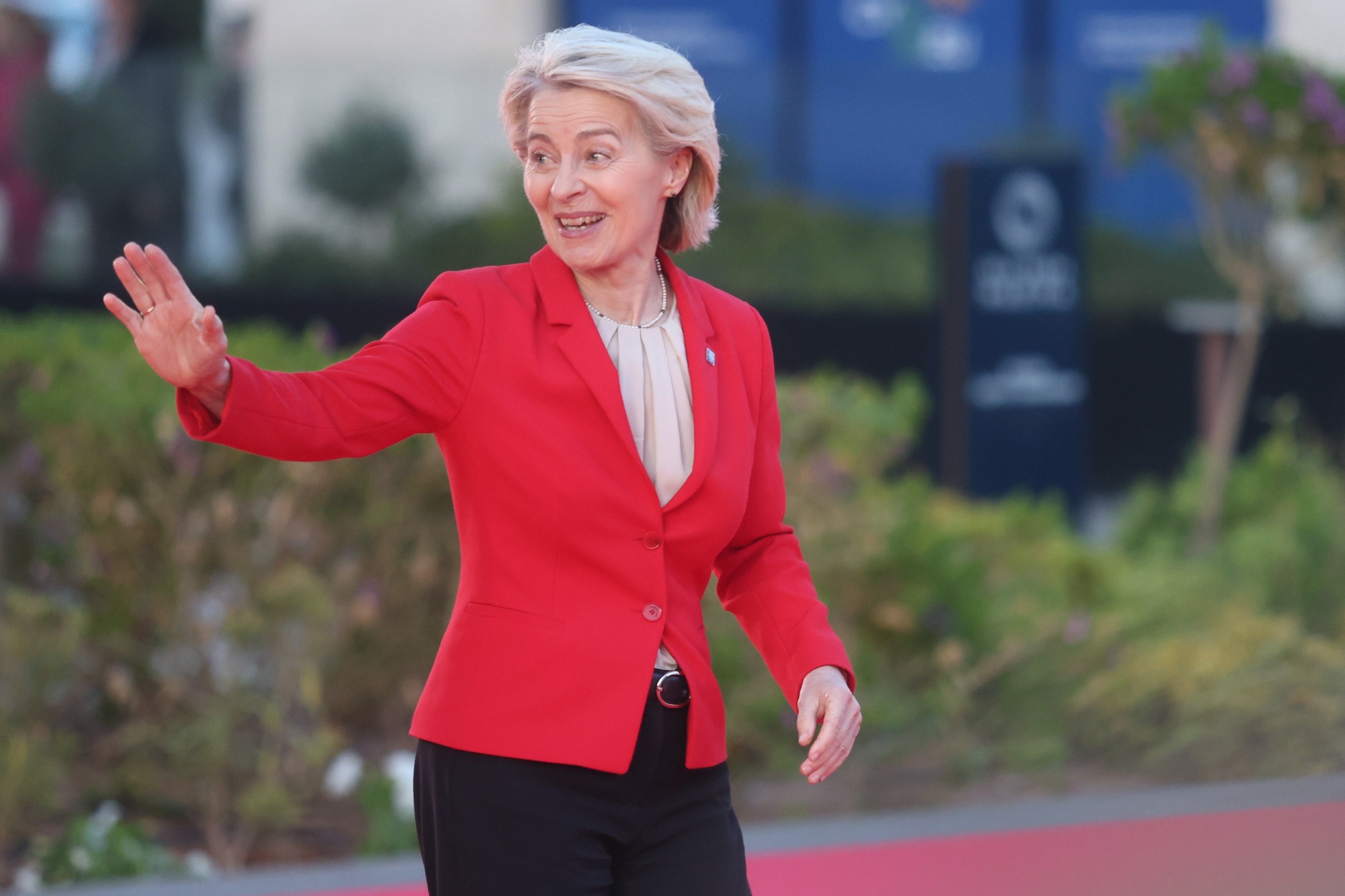
In April 2025, Cyprus became the first country to host an informal summit of EU leaders. President Nicos Christodoulides chose the topic deliberately: the island itself lives under conditions of partial occupation and knows what it means to rely on external security guarantees that have failed.
An Article That Exists — But Doesn't Explain "How"
Article 42.7 of the Treaty on European Union obliges member states to provide each other assistance "by all the means in their power" in the event of armed aggression. The wording almost literally echoes NATO's Article Five — but without an enforcement mechanism. The provision has been activated only once throughout its entire existence: in November 2015, France appealed to EU partners following terrorist attacks in Paris.
"The Treaty is very clear about what should be done. But it does not explain — when, and who does what specifically."
Ursula von der Leyen, President of the European Commission, at the summit in Nicosia
This very gap — between legal obligation and practical readiness — became the main subject of discussion in Cyprus. According to Politico, leaders discussed scenario exercises as a way to practice responses to crises before they emerge.
Pressure from Two Sides
The problem is not merely technical. Cyprus and frontline countries — Poland, the Baltic states — want clear definitions, but simultaneously fear undermining NATO's Article 5. Any clarification of 42.7 risks either duplicating the Alliance (and provoking the question: why NATO then?), or proving weaker — and thus not worth the paper it's printed on.
The context is the actions of the Trump administration, which has publicly questioned the automaticity of American guarantees under Article 5. The EU's High Representative for Foreign Policy Kaja Kallas was to present a concrete plan at the summit on how 42.7 could work in practice.
What It Costs
Legal clarity is only part of the equation. Defence Commissioner Andrius Kubilius previously stated that a single European "shield" of air and missile defense alone could cost €500 billion. Overall, according to European Commission estimates, the EU needs at least €500 billion over the next decade to close key defense gaps.
Economist Guntram Wolff from Brussels think-tank Bruegel explains the dilemma directly: "In the short term, there is no alternative to debt financing — but it cannot be a permanent solution." For most EU countries bound by the Stability Pact requiring them to keep the deficit at 3% of GDP, this means either rewriting budget rules or crowding out spending on health and education.
From Text to Manual
Christodoulides formulated the summit's goal clearly: the EU must move beyond "situational agreements" and create a clear algorithm of action. "When the sovereignty of one member state is under threat — the question is not whether to respond, but how quickly," he said.
In practice, this means: scenario exercises, coordinated command chains and, most importantly, political will from those EU states that are not NATO members — Austria, Ireland, Malta — to take on real commitments, not merely declarative ones.
If the EU presents a concrete operational protocol for Article 42.7 by the end of 2025 — this will be the first time the provision acquires teeth. If not — the discussion in Cyprus will remain just another summit with beautiful quotes and a deferred decision: precisely what the Alliance was criticized for years before Russia invaded Ukraine.





