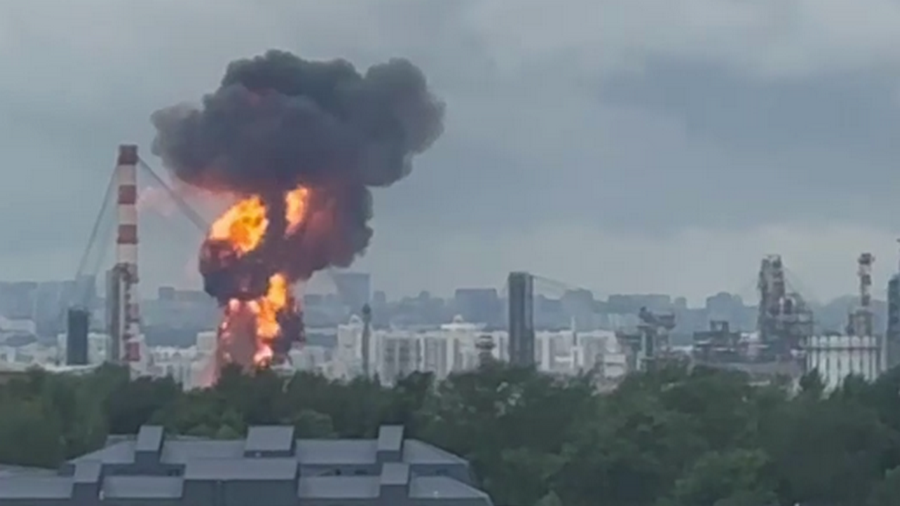
Oil refining in Russia has fallen to 3.6 million barrels per day — the lowest level since May 2022, according to Bloomberg's calculations. The reason is a series of Ukrainian strikes against Russian oil refineries, tankers, and pipeline infrastructure throughout July.
According to the agency, Ukraine attacked Russian oil facilities at least 30 times in a month. This is the second-largest figure since the beginning of the full-scale invasion. Bloomberg did not include eight attacks on tankers near the KTK terminal in the Black Sea in this figure — responsibility for them has not yet been officially confirmed.
Two waves of strikes
In the first half of July, the main targets were refineries. Among them was the Omsk Refinery, the largest in Russia, located more than 2,500 km from the Ukrainian border. Plant utilization fell to a 24-year minimum, forcing Russian producers to increase crude oil exports instead of refined fuel.
In the second half of the month, the focus shifted to tankers — this gave the refineries a pause to recover. By the end of July, strikes on refineries resumed.
Scale of pressure
According to Financial Times data, from the beginning of 2026 through July, at least 194 attacks on Russia's oil refining infrastructure have been recorded — this is 11 times more than in the same period last year. This represents systemic pressure on a source of war financing: oil revenues remain the main source of income for the Russian budget.
The question is whether Russia can rebuild its crude oil export logistics faster than Ukraine can sustain the pace of strikes on refining capacity.







