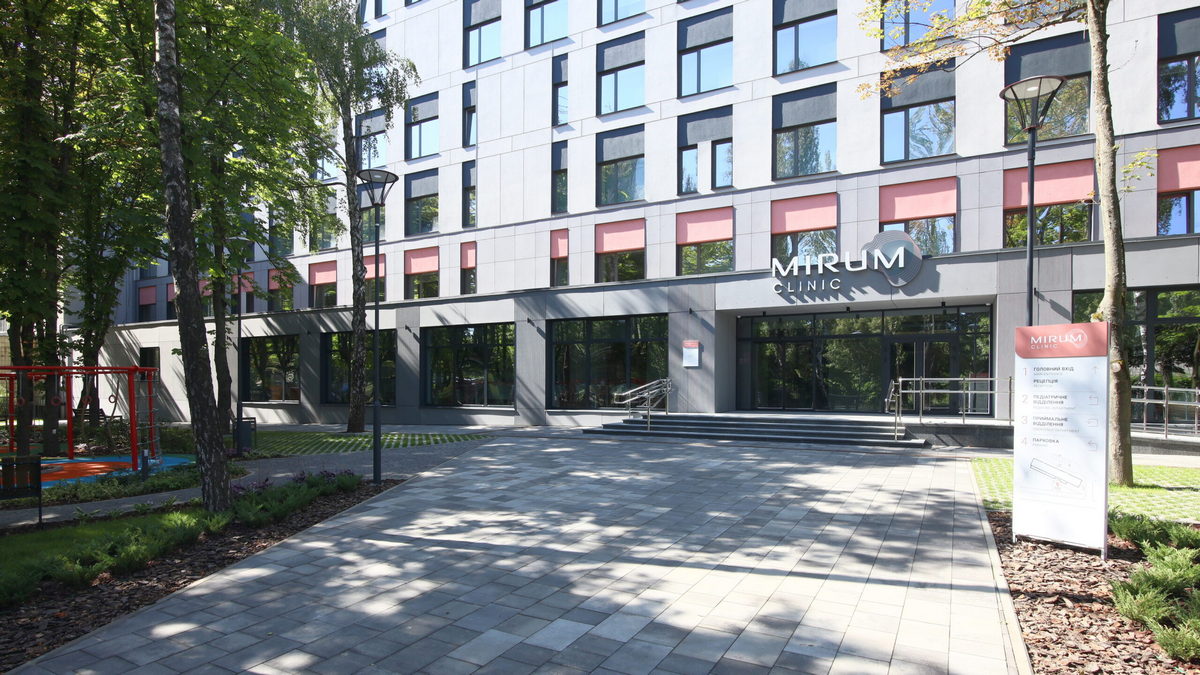
Mykola Nadtochii owns 99.93% of LLC "Mirum" — a clinic on Viktor Nekrasov Street in Kyiv. Now LLC "Dobrobut-Poliklinika" wants to acquire this stake. The intention became known not from a press release by the network itself, but from the website of the Antimonopoly Committee of Ukraine, which received two applications on July 3 related to this transaction and published information about them only on August 13.
The difference between these dates is itself a hint: submitting an application to the AMCU does not mean the deal has already occurred or will even happen. It is a formal start of a procedure whose outcome may stretch over months and end in either approval, refusal, or additional conditions.
Two applications — two different obligations
The first application concerns permission for LLC "Dobrobut-Poliklinika" to acquire control over LLC "Mirum" — this is a classic concentration control procedure that the AMCU conducts for deals that may affect market competition. The second application is separate: it concerns a non-competition clause between the parties for a period of five years.
This is an important detail. A non-competition clause is not an automatic attachment to the purchase of a stake, but a separate subject for the AMCU's consideration, because in theory it alone can restrict competition in the private medicine market, rather than merely protecting the buyer from the seller opening a similar business next door tomorrow. The Committee must evaluate both elements separately — and approval of the first application does not guarantee automatic approval of the second.
Why "filed" does not yet mean "bought"
Dobrobut already has experience with this procedure not always moving quickly. In 2019, the network purchased the "Boris" clinic through Cypriot structure Satumco Limited — and the Antimonopoly Committee of Ukraine began reviewing a case concerning the acquisition by Cypriot company Satumco Limited, the owner of Dobrobut, of the "Boris" clinic. But the deal did not close immediately: actual operational integration, including the merger of emergency services at "Boris" and "Dobrobut," began only after the completion of the antimonopoly procedure, which lasted more than one week.
So the mechanism is as follows: application → AMCU review (possible extension of deadlines, request for additional information, conditional approval with obligations) → decision → and only after that — actual deal closure and clinic integration. At each of these steps, the deal can change form or stop. So far, only the first step is publicly known.
Who responds and why this is not a private matter between two companies
"Dobrobut" is not just another player buying a clinic. The network encompasses about 20 medical centers and two multidisciplinary hospitals in Kyiv and Kyiv region, as well as emergency services, diagnostics, surgery, and family medicine services, and already in 2021, in an interview with LIGA.net, a co-owner of Dobrobut said the network plans to grow tenfold over ten years. Mirum will be far from the first acquisition: before it, the network already absorbed medical company Doctor Sam in 2020, and a year earlier closed a deal to purchase 100% of the "Boris" clinic.
That is why each new Dobrobut application to the AMCU is not routine corporate news, but a signal about the degree of concentration in the private medicine market in Kyiv, where patients already have fewer and fewer alternative networks of such service level. Market response from competitors and self-regulation through pricing have not yet manifested publicly — they will become visible only when the AMCU makes a decision and the deal either happens or does not.
The question for the coming months is not whether Dobrobut wants to buy Mirum — this is already evident from the two applications. The question is whether the AMCU will agree to the five-year non-competition clause without reservations, and what this will mean for prices and clinic choice in Kyiv if the country's largest private medical player continues consolidation at this pace.