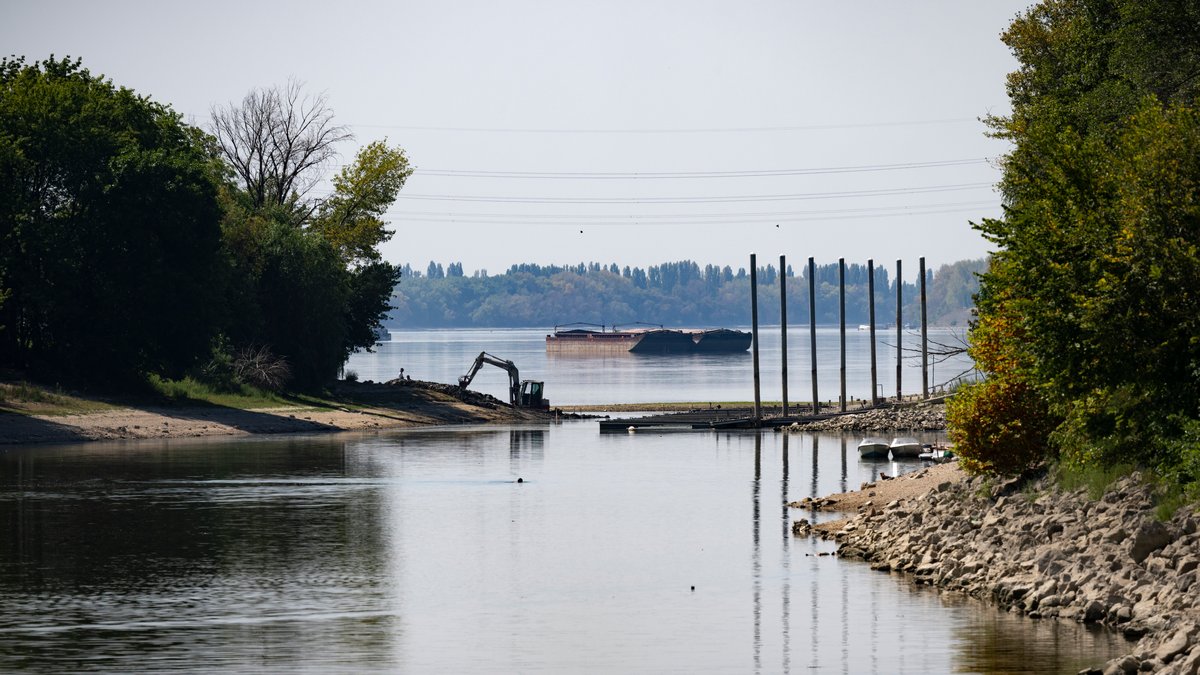
A week ago, the Danube water level fell to a record minimum — and the nuclear power plant that provides nearly half of Hungary's electricity was operating at only 10% capacity. On Monday, water levels rose by 19 centimeters, and Prime Minister Peter Mádár announced with relief: the second turbine is being restored. The difference between the country's energy crisis and its absence turned out to be thinner than a palm's width.
When a river becomes the bottleneck of the entire economy
The Paks nuclear power station was built in the 1980s, when no one calculated climate change risks as a factor in energy security. The VVER-440 reactors require Danube water for cooling, and as long as the river is full, this is an unnoticeable detail. But the heat and drought of recent weeks have shown: dependence on a single river means dependence on weather. Mádár himself admitted that "the Hungarian economy cannot operate for months without" this power station — meaning it's not about an emergency reserve, but about the backbone of the energy system.
The Paks-2 paradox
The most interesting part is that the crisis hit precisely when Hungary is planning to double the station's capacity through Rosatom's project. The new VVER-1200 reactor units will have the same cooling design — that is, the same dependence on the Danube's water level. Mádár has already announced that the government is reviewing the station's expansion. This creates an awkward situation: Hungary defended the Rosatom contract before Brussels for years, blocking sanctions against Russia's nuclear sector, and now the very technology it lobbied for may prove vulnerable to the same climate that caused the current crisis.
Wind as insurance, not replacement
Meanwhile, the government is announcing a tender for wind power plants with a capacity of 700 MW by the end of August, with plans to increase wind generation to 4 GW by 2030. This is an order of magnitude less than what Paks provides, and wind doesn't solve the base load problem. But the very fact that a nuclear-dependent state suddenly remembered diversification is symptomatic: a single energy source, however reliable it seemed for decades, remains vulnerable to one factor that cannot be controlled by political decisions.
The question for the coming years: will the Danube's shallowing become a one-time episode of a hot summer, or a regular risk that will force Budapest to reconsider not only Paks-2, but also the very logic of concentrating half of its energy production at a single point on the map.