Home slippers are not included in any critical infrastructure list. They have neither military nor dual-purpose use — they merely warm feet. This is precisely why the strike on the Belsta factory in Bilhorod-Dnistrovskyi in Odesa region deserves attention no less than attacks on energy infrastructure: it exposes the logic by which Russia selects targets deep in the rear.
What was destroyed
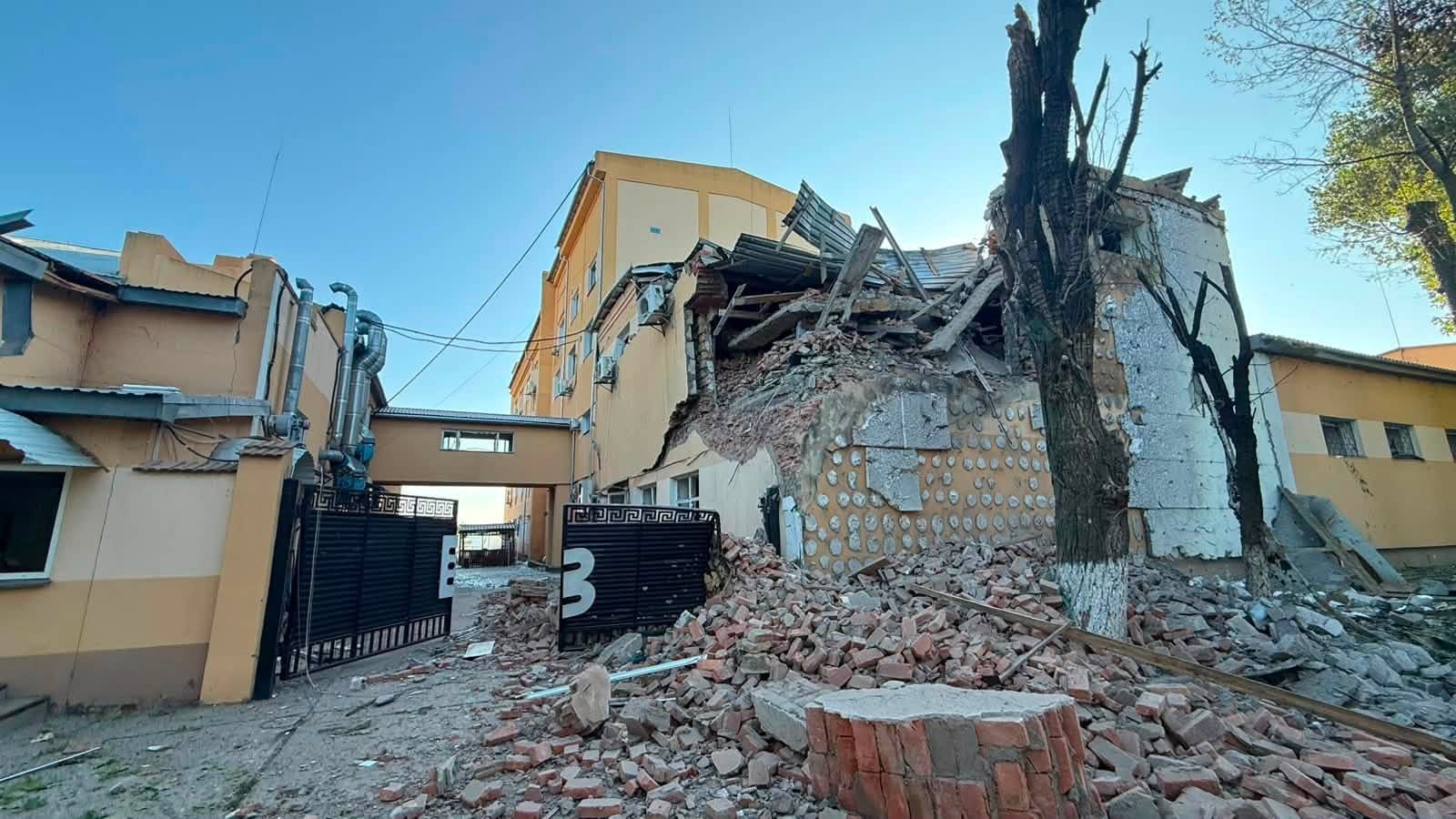
The enterprise produced up to 2.8 million pairs of shoes per year — one of the largest producers in the country. After the August 15 strike, a substation with cable networks was completely destroyed, a cafeteria burned down, an embroidery workshop with expensive equipment is beyond repair. Hundreds of windows were blown out, ventilation and roofs damaged, solar panels installed a year ago were destroyed — the company's own energy independence, which the enterprise had invested in after previous attacks on the grid.
Alla Hinак, the factory's founder, posed a question to which no one will officially provide an answer: why target a workshop where the vast majority of workers are women and the product is home slippers.
"Why destroy an enterprise that manufactures home footwear? Why did the factory become a target, where the vast majority of workers are women?" – Alla Hinак
The logic of a rear strike
The classical explanation of "accidental target" doesn't work here — the factory is not located near military facilities and has no dual purpose. Instead, different arithmetic applies: the enterprise represents hundreds of jobs, wages, taxes to the local budget and, importantly in the border region of Odesa oblast, the stability of civilian life. Putting such production out of operation means striking at the economic capacity of the community to sustain itself precisely when the region is already under pressure.
This fits a broader picture: on August 11, metallurgical giant Zaporizhstal was struck, on August 12 the Epicenter shopping center in Zaporizhzhia caught fire. Different-scale objects, but they share one common feature — this is not front-line infrastructure, but what civilian economy depends on.
What's next
People managed to descend to shelters, there were no casualties — this is the main result of the night. Hinак announced her intention to resume production, although the embroidery workshop and substation will have to be rebuilt practically from scratch, and this means months and significant investments under conditions where a repeat strike cannot be ruled out.
The question that remains open is: will the attack on an inconspicuous shoe factory become another episode in statistics, or will it force businesses in front-line regions to reconsider the very feasibility of resuming production on site, rather than relocating deeper into the country.
- On the night of August 12, the Epicenter shopping center in Zaporizhzhia caught fire as a result of a Russian strike.
- The Zaporizhstal metallurgical plant became one of the main targets of a massive combined strike that Russia carried out on Zaporizhzhia on the night of August 11.