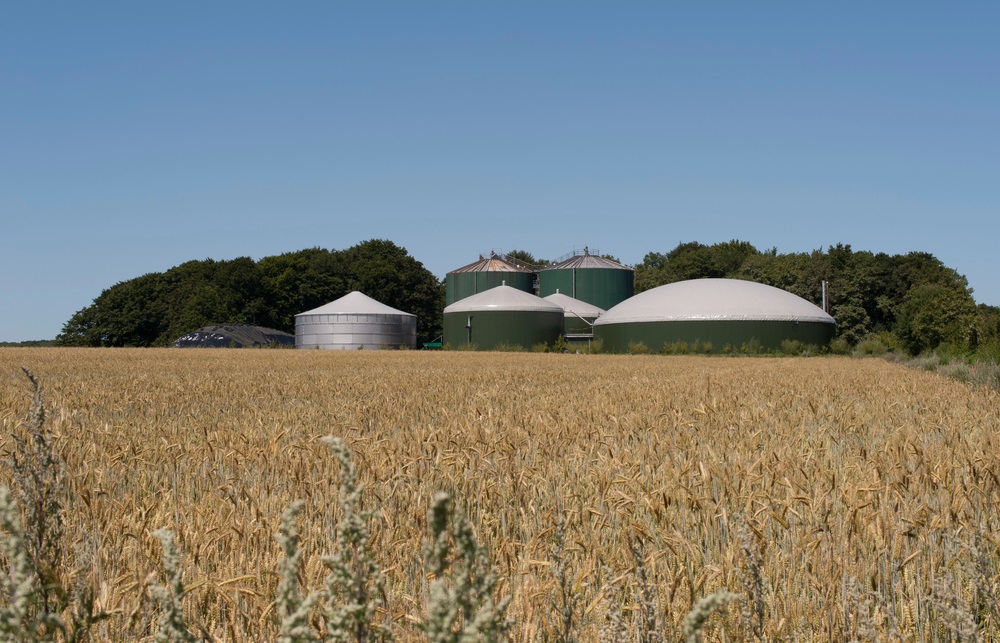
In Mohyliv-Podilskyi district of Vinnytsia region, plans are underway to build a bioenergy complex for the production of biomethane and electricity. The customer is UPI-Energy, registered in Kyiv in 2025. The company is part of the agro-industrial group "Ukrprominvest-Agro", whose ultimate beneficial owner since October 2019 has been Oleksiy Poroshenko — the eldest son of Ukraine's fifth president.
Why now
The timing is no accident. In 2024, the Verkhovna Rada adopted a law allowing biomethane exports to Europe, which the president signed in May. Already in February 2025, the company Vitagro carried out the first test shipment — 67–68 thousand cubic meters to Germany. According to estimates by Heorhiy Heletukha, chairman of the board of the Ukrainian Bioenergy Association, at an average export price of €0.9 per cubic meter, biomethane could bring Ukraine up to €20 billion per year.
The country's potential is over 20 billion cubic meters per year. This is four times more than current EU production and exceeds Ukraine's natural gas extraction volume in 2024. The sales market is nearby and ready to buy: Europeans are willing to pay a premium of 300 euros per thousand cubic meters above the natural gas price.
What Vinnytsia offers
"Ukrprominvest-Agro" comprises sugar plants, livestock farming, a land bank of over 108 thousand hectares, and more than 4,600 employees. The sugar and livestock sectors specifically generate organic waste — the classic raw material for biogas. The complex is planned to be located near Yampil, where the holding already has a production presence.
"We can produce over 20 billion m³ of biomethane, thereby becoming the main supplier of this gas to Europe and capturing 20% of the market. The country has the resources for this, a developed gas network, specialists, and a scarce market nearby"
Heorhiy Heletukha, chairman of the board of the Ukrainian Bioenergy Association
Who's already in the game
UPI-Energy is not entering first. Vitagro produces 3 million m³ per year and has already shipped gas to Germany. MHP has two biogas plants with combined production of 30 million m³. "Hals Agro" launched a plant in November 2024. This means that by the time the complex in Vinnytsia passes environmental impact assessment, receives permits, and is constructed, competition within the country for access to the gas transmission system and contracts with the EU could become significantly more intense.
- Raw material advantage: own livestock farming and sugar plants — ready organic base without dependence on suppliers
- Regulatory risk: the project is registered in the EIA registry — environmental impact assessment is mandatory, timelines are unpredictable
- Market goal: production of both biomethane and electricity is stated — the company has not publicly clarified which is the priority
If UPI-Energy is focused on an export model, the critical factor will be not so much the construction of the complex as the moment of connection to the GTS — since quotas for transporting biomethane to the EU will be distributed among an increasing number of applicants. Whether the Poroshenko-junior holding will manage to establish itself on the market before competitors secure advantageous positions will depend on how quickly the company moves through the regulatory chain, which is already quite lengthy.







