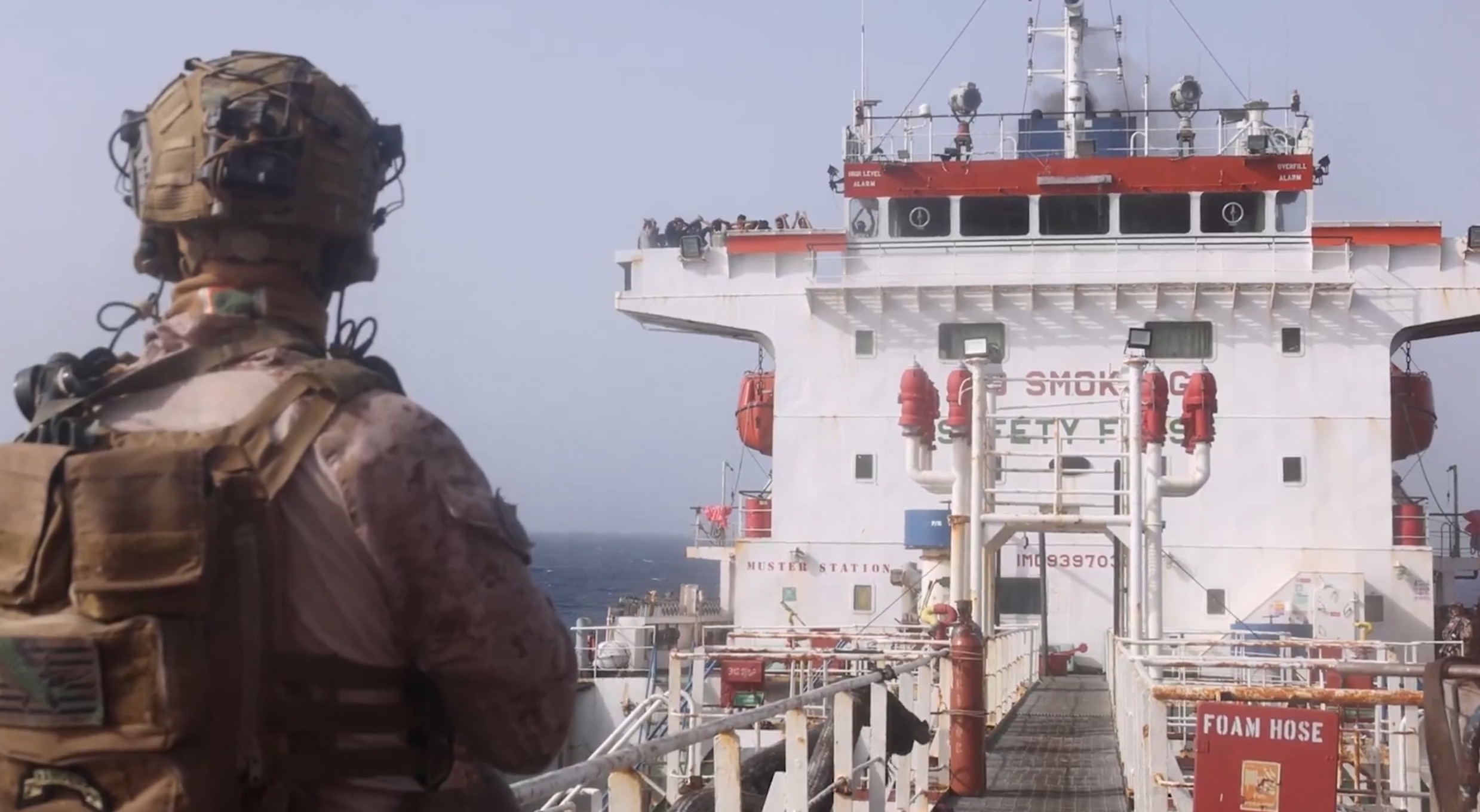
On May 20, 2026, U.S. Marine Corps personnel from the 31st Marine Expeditionary Unit (31st MEU) boarded the Iranian oil tanker M/T Celestial Sea in the Gulf of Oman. The vessel was heading toward an Iranian port, circumventing the naval blockade that Washington had imposed on April 13. After searching the crew, they were ordered to change course; there were no casualties, and the vessel was released.
What is this blockade and why isn't Celestial Sea the first
The blockade covers Iran's entire coastline — from Persian Gulf ports to the Arabian Sea. According to the Chairman of the Joint Chiefs of Staff General Dan Kane, it extends even to ships that departed from Iran before the blockade began. That is why operations continue not only in the Gulf of Oman but also in the Bay of Bengal.
At the time of the Celestial Sea incident, CENTCOM had already redirected 91 commercial vessels. Four ships were forcibly disabled — after their crews ignored warnings. The first forceful precedent occurred on April 19: marines from the same 31st MEU rappelled from helicopters onto the Iranian cargo ship M/V Touska — after six hours of refusing to comply, the destroyer USS Spruance opened fire on the engine room.
"American forces continue to fully enforce the blockade and have redirected 91 commercial vessels to date"
CENTCOM, May 20, 2026
Scale: what the blockade means for Iran
Oil revenues account for over 40% of Iran's exports. According to Pentagon estimates, in just the first weeks of the blockade, Iran lost $4.8 billion in oil revenues. Meanwhile, TankerTrackers analyst Samir Madani documented at least 26 Iranian vessels that circumvented the blockade by hugging Pakistan's and India's coasts toward the Strait of Malacca — meaning a leakage scheme already exists.
- 91 vessels redirected from April 13 to May 20
- 4 vessels forcibly disabled
- 10,000+ American military personnel deployed on day one of the operation
- $4.8 billion — estimated Tehran's losses in oil revenue
Iran's response: between rhetoric and real action
Tehran officially called the blockade "piracy" and illegal under international law. The Khatam al-Anbia command warned of "retaliation." Meanwhile, no symmetrical action followed the capture of Celestial Sea — Iran continues to block the Strait of Hormuz, through which 25% of global maritime oil trade and 20% of LNG passed before the crisis began.
In parallel, President Trump on May 19 publicly suggested readiness for new airstrikes on Iran if diplomatic ceasefire negotiations reach a dead end. This is the first public signal of this kind since the ceasefire regime began.
Celestial Sea was released — unlike Touska, which was seized. The difference in approaches remains unexplained officially: if the U.S. applies seizures selectively rather than systematically, what exactly determines the line between "redirecting course" and "boarding with seizure"?





