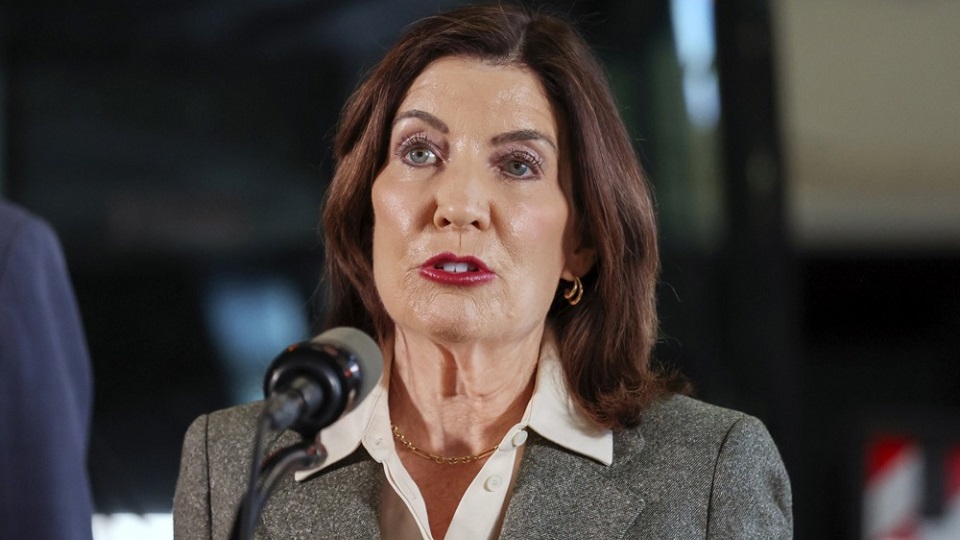
On July 14, New York Governor Kathy Hochul signed an executive order that suspends the issuance of environmental permits for the construction of new data centers with a capacity of more than 50 MW for one year. New York became the first state in the country to make such a decision — although similar moratoriums have been proposed in at least a dozen other states and have not passed.
Why now and why this is not just about the environment
According to research by Bloom Energy, the aggregate energy consumption of data centers in the US between 2025 and 2028 will nearly double — from 80 to 150 gigawatts. This is like adding a country with Spain's energy appetite to the grid in three years. In New York, the scale is even more specific: according to state lawmakers' calculations, data centers already proposed for construction could collectively consume nearly twice as much electricity as all households in the state combined.
The problem is not just about megawatts. Electricity bills for Americans overall are rising twice as fast as inflation — and data centers are one of the reasons. The mechanism is simple: new infrastructure — substations, transmission lines, backup generators — is financed through tariffs, meaning it falls on all consumers, not just the corporations building servers.
"If a data center eventually closes or consumes less electricity than projected, the bill goes to ratepayers, not the data centers themselves"
Lincoln Institute of Land Policy
What Hochul proposes instead
The moratorium is not a permanent ban. Hochul publicly formulated the condition for lifting it: according to the governor, she plans to require hyperscale data centers to contribute to a special fund supporting the state's energy grid. In addition, the executive order provides for:
- construction only in places where local communities approve it themselves — with no zoning exceptions;
- standards for water consumption, emissions, and energy efficiency that regulators must develop within a year;
- elimination of tax subsidies for data centers;
- requirements for wages and local hiring in projects that receive permission.
Opposition and the real cost of the pause
Criticism came from two sides. Republican Bruce Blakeman, Hochul's rival in the gubernatorial race, believes that decisions should be made by local authorities, not the state. The Data Center Coalition industry association warned that hundreds of billions of dollars in investments, jobs, and tax revenue will now go to other states. As Dan Diorio, vice president of the association, noted, the moratorium "guarantees that these investments will flow somewhere, but not to New York".
Interestingly, the state legislature passed its own bill with a similar moratorium a month ago — but Hochul refused to sign it, calling it "complex" and needing refinement. Instead, she chose an executive order that took effect immediately and gives her greater control over the parameters of new regulation.
For comparison: Maine this year rejected a similar moratorium — in part because it would have blocked a data center in a town that has not yet recovered from the closure of a local factory.
A precedent that is being replicated
In 2026, lawmakers in more than 30 states have already introduced various restrictive proposals regarding data centers. New York is the first to move from words to a signed document. This makes the state a testing ground: if over the course of a year, regulators really establish a mechanism where Big Tech finances the grid rather than consumers — the scheme could become a template for others. If not — the moratorium will become just a barrier to investment without a systemic result.
The key question for the next twelve months: will Microsoft, Google, and Amazon agree to new conditions in New York — or will they simply move their next campus to Texas or Virginia, where there are no moratoriums?