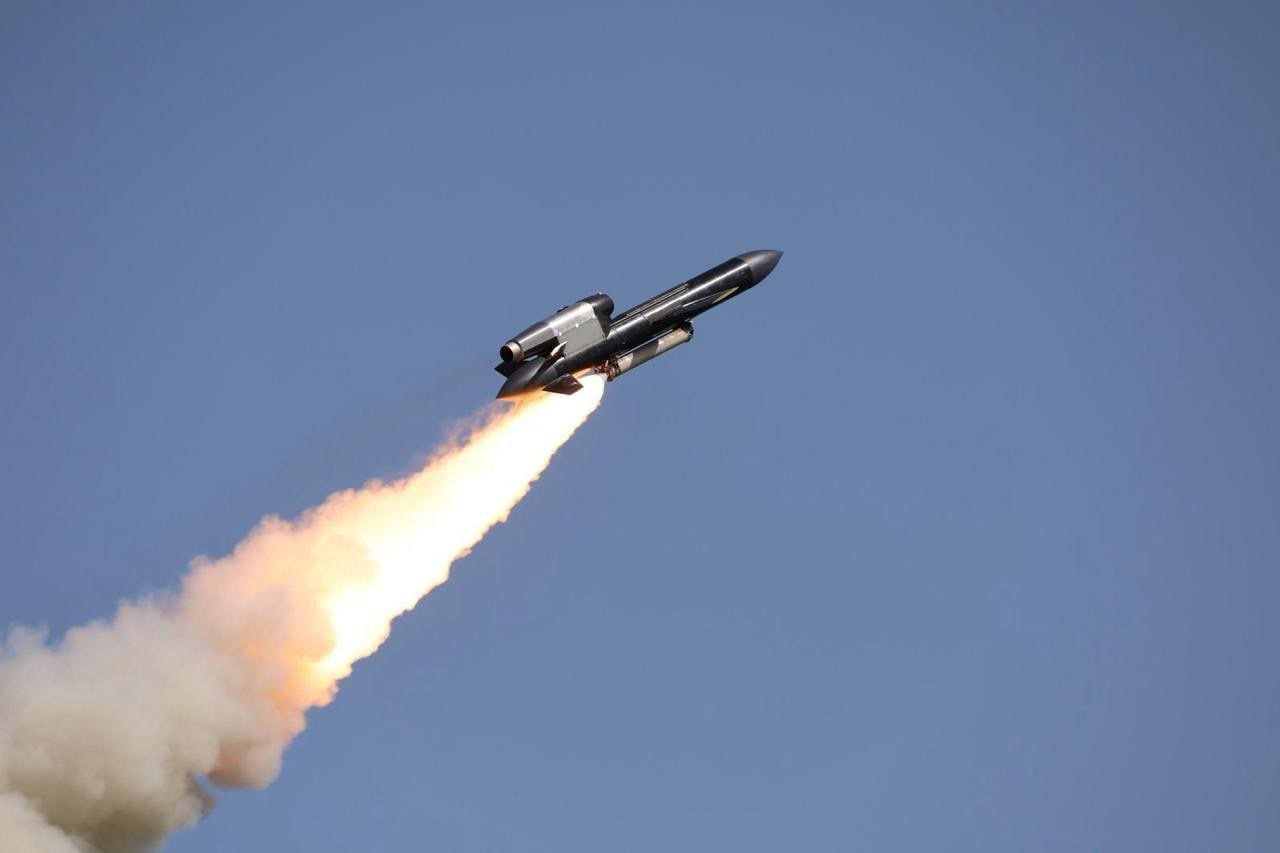
Ukrainian company Fire Point is building a solid rocket propellant plant in Denmark — near Skrydstrup air base, where F-35 fighters of the Royal Air Force are based. According to the company's CEO and CTO, Iryna Terekh, partial production will start by the end of 2026, with full capacity in 2027.
This is not just an offshoring of production. Denmark has become the first NATO country to host on its territory a plant of a Ukrainian defense enterprise — a precedent that did not exist in the alliance before. The agreement between Copenhagen and Kyiv was signed in June 2025 on the sidelines of the NATO summit.
What and why they are producing
The plant in Skrydstrup will not be limited to propellant. As Terekh explained in an interview with Defender Media, rocket engines, airframes and interfacing components will be manufactured there. Solid propellant is needed for the boosters of the cruise missile "Flamingo" (FP-5, range up to 3,000 km), as well as for the solid-fuel engines of the ballistic rockets FP-7 and FP-9.
"It is important to understand that we are opening a chemical plant in the most environmentally conscious part of Europe. This is the first Ukrainian investment of this kind: a chemical plant, hazardous materials, defense industry. A lot of things are happening for the first time."
Iryna Terekh, CEO and CTO of Fire Point — UNIAN
She also noted that obtaining permits — environmental, waste management — turned out to be more difficult than in Ukraine, but not critical: "For the European system this is also a challenge — to adapt to wartime tempos to which we are accustomed."
Why Europe is dependent on this
Solid rocket propellants and propellant charges are one of the documented bottlenecks in the rearmament of the European Union. According to the European Parliament Committee, the EU still produces only 50% of the required volume of ammunition, and the shortage of components — in particular propellant charges and solid fuels — remains the next structural constraint after the shell deficit.
Denmark responded with an investment: a separate package of 500 million Danish kroner (~€67 million) was allocated to accelerate the development of the Ukrainian defense industry on its territory. Business Minister Morten Bødskov called it "the contribution of Danish business to the defense of Europe."
Fire Point: from startup to precedent
The company became known to a wide audience after August 2024, when President Zelensky called "Flamingo" "the most successful Ukrainian missile" with a range of over 3,000 km and combat use against Russia. At the same time, Fire Point is conducting flight tests of the FP-7 — a tactical ballistic missile with a range of up to 200 km and a speed of 1,500 m/s, which was planned to be adopted into service before the end of 2025. The FP-9 — a ballistic missile with a range of up to 855 km — is under development.
Expanding production abroad is part of a deliberate strategy: to reduce vulnerability to strikes against Ukrainian enterprises and to gain access to Western supply chains. In June 2025 Zelensky reported negotiations on joint production with Denmark, Norway, Germany, Canada, the United Kingdom and Lithuania.
If by 2027 the plant reaches full capacity and indeed closes a significant part of Europe's solid fuel deficit, it will change not only the logistics of supplies for Ukraine but also Kyiv's bargaining position in future defense agreements with partners. But for now the key question is technical: will the pace of construction meet Denmark's environmental licensing standards — without which the plant simply will not start operating on time.







