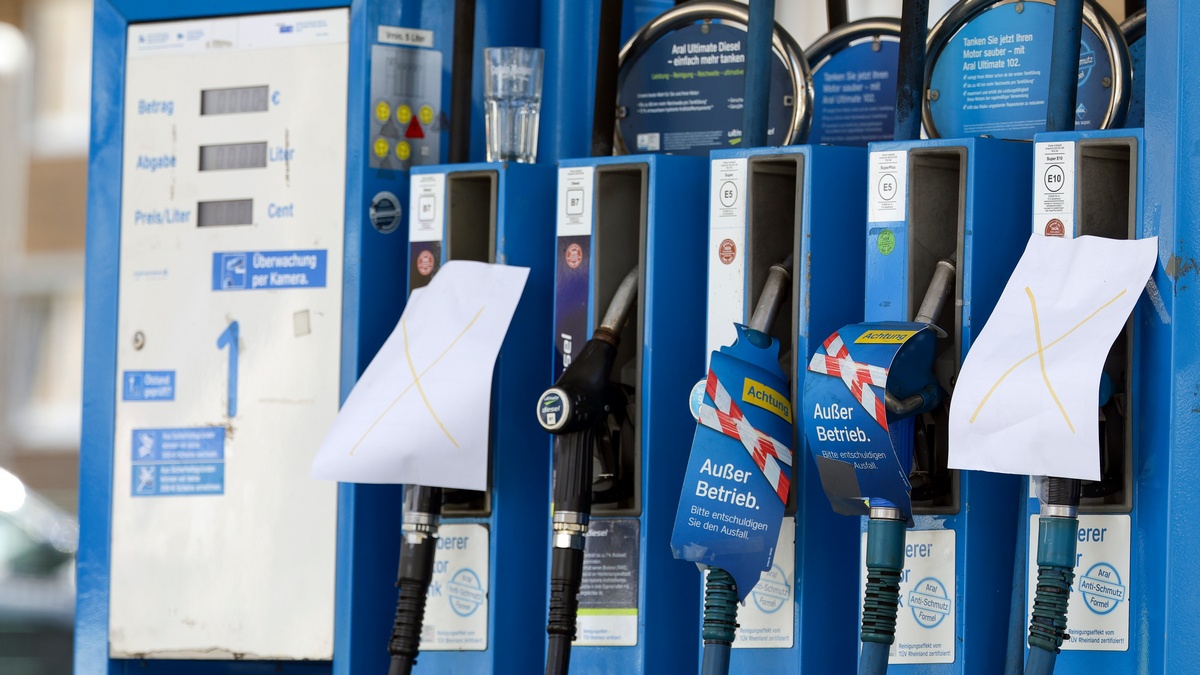
On April 4, five EU finance ministers sent a joint letter to the European Commission: introduce a tax on the windfall profits of energy companies. The trigger was a sharp rise in fuel prices — caused by the escalation in the Middle East and the closure of the Strait of Hormuz, which Citi Research analysts describe as one of the sharpest trade shocks for the euro area in recent years.
The same instrument, a different crisis
This proposal is not new. In October 2022, after Russia's invasion and the jump in gas prices, the EU Council already introduced a mandatory "solidarity contribution" for oil and gas companies. The European Commission then forecast that the mechanism would raise up to €25 billion. According to the European Commission's 2025 report, €26.15 billion was actually collected — a figure formally higher than planned, but with striking disparities between countries.
More importantly: the Commission's own report recommended phasing out these measures — due to "significant investor uncertainty" caused by different implementation approaches across member states. A European Parliament study added that in the past windfall taxes negatively affected investment in the energy sector.
"Those who profit from the consequences of war should take on part of the burden borne by society."
From the letter of the finance ministers of Germany, Italy, Spain, Portugal and Austria to the European Commission, Reuters reports
Why not all 27
The five signatories are less than a quarter of EU members. Rates in different countries are diametrically different: in 2022–2023 the range varied from a minimum of 33% to 75% in Ireland. Some states — Spain, Hungary, the Czech Republic, Lithuania, Slovakia — even extended the windfall logic to the banking sector and prolonged the mechanisms' duration to 2025–2027, despite the fact that energy windfalls had already disappeared along with prices.
In other words, part of the EU still operates in the 2022 logic, another part is trying to exit it — and the new crisis is once again dividing the bloc.
What is in the letter and what it does not contain
The ministers call on the European Commission to "swiftly develop" a contribution mechanism. But the letter contains neither a concrete rate, nor a definition of the tax base, nor a time frame. It was precisely the vagueness of these parameters that became the main reason for the failure of the 2022 mechanism — as the European Commission's report explicitly stated in 2025.
- 2022 precedent: 16 of 27 countries applied the "solidarity contribution", another 8 used their own analogues. There was effectively no harmonization.
- New initiative: a letter without figures and without a control mechanism — so far it is only a political signal, not a legislative proposal.
- Market context: gas prices in the EU have risen by roughly 70% amid the Middle East escalation — but have not reached the peaks of 2022.
The European Commission has not officially responded to the letter. If it does develop a proposal without a clear definition of "windfall profit" and a single rate — will this instrument be more effective than the previous one, which the Brussels apparatus itself deemed problematic?