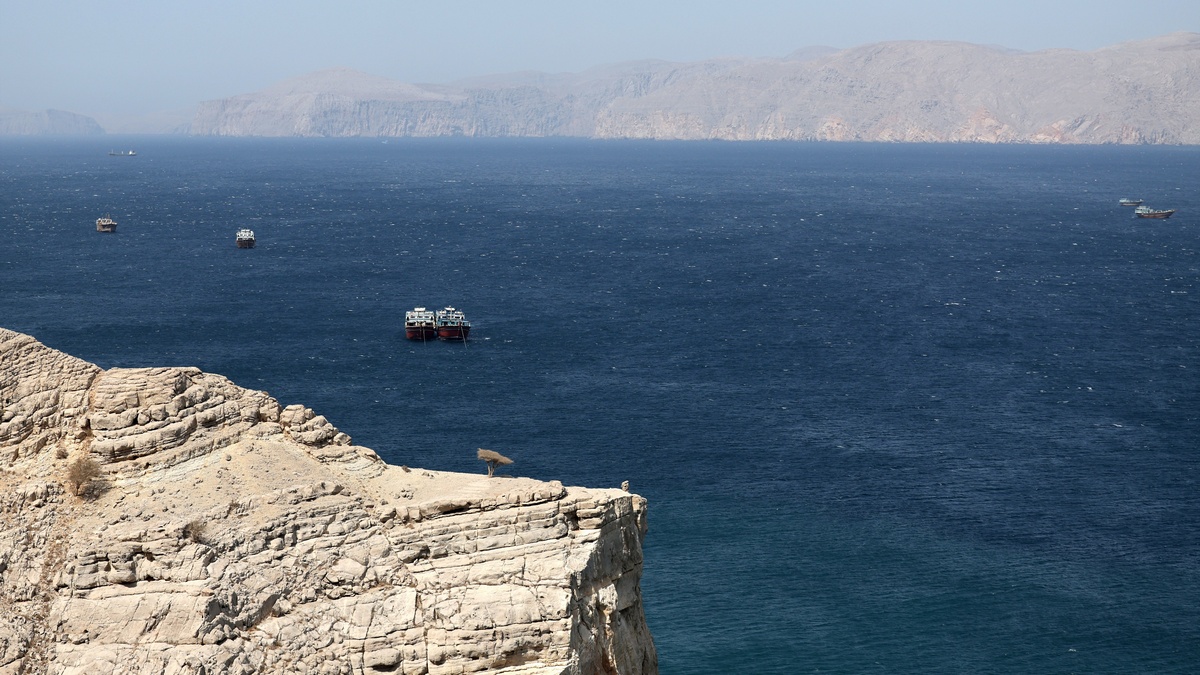
On Friday, April 3, Donald Trump wrote on Truth Social: "Give it a little more time — and we'll easily OPEN THE STRAIT OF HORMUZ, TAKE THE OIL AND MAKE A FORTUNE". The next day Reuters, citing three sources in the intelligence community, published a piece that directly contradicted that optimism.
What the analysts Trump didn't consult are saying
According to Reuters, U.S. intelligence warns that Iran is unlikely to open the strait in the near term, because control over it is virtually the only real lever Tehran has over Washington. As long as that lever remains in Iran's hands, it has a reason to negotiate. Once it disappears, so does the point of any dialogue.
Defense News analysts outline the military dimension: today's capabilities of Iran's coastal defenses make an operation to open the strait "qualitatively more difficult" than in 1988 during Operation Praying Mantis. Back then the U.S. destroyed a significant portion of the Iranian navy in one day. Now the calculus is different.
"This is a simple military operation with little risk"
— Donald Trump, Truth Social, April 3, 2026. NATO allies, whom he called "cowards" for refusing to help, did not agree with the assessment.
Mine danger is a separate problem. As the Christian Science Monitor found, the U.S. Navy has been cutting funding for minesweepers for years: the rearmament program for Littoral Combat Ships failed as far back as 2022, according to a GAO report. Now allies are in no hurry to fill that gap.
The strait is closed — who is counting the money
About one-fifth of the world's oil passes through the Strait of Hormuz. Since the conflict began on February 28, traffic has effectively stopped. Dubai crude hit a record $166 a barrel on March 19; Brent prices have stabilized above $114.
Russia has been the biggest beneficiary. According to Euronews, in the first two weeks after the strikes began Moscow earned €7.7 billion from fossil fuels — €513 million per day versus €472 million in February. The research center CREA calculated that 24 days after the conflict began Russia's daily export revenue rose by 20% compared with the pre-war February level. The Financial Times explicitly called Russia "the biggest winner" of the Iranian war.
It's a paradox Washington solved itself: to cool the markets, the Trump administration temporarily lifted sanctions on 30 Russian tankers carrying roughly 125 million barrels of oil. At the same time, the U.S. and its allies announced a record release from strategic reserves — 400 million barrels.
- Daily Russian oil revenues rose by about $150 million after the start of the conflict (Financial Times)
- Russia's federal budget deficit at the start of 2026 stood at roughly $35 billion — the Iranian "tailwind" allows Putin to postpone unpopular spending cuts
- The Federal Reserve Bank of Dallas estimates that a closed strait will reduce global GDP growth by 2.9 percentage points annualized in Q2
Iran is bargaining — but with what?
Former Iranian foreign minister Mohammad Javad Zarif, who negotiated the 2015 nuclear agreement with the Obama administration, published an article proposing that Tehran limit its nuclear program and open the Strait of Hormuz in exchange for the lifting of all sanctions. Foreign Policy describes this initiative differently: an attempt to convert military defeats into diplomatic gains through a narrow bilateral U.S.–Iran deal that sidelines the interests of the Persian Gulf states.
In other words, the structure of the negotiations is this: the strait is not a concession by Iran, but its main commodity on the negotiating table. The longer it remains closed, the higher the price of opening it will be.
What this means for Ukraine
For Kyiv the arithmetic is simple and grim: each day the strait remains closed translates into an additional €1 billion per week into the Kremlin's coffers. Those funds allow Putin to finance the war without the domestic political upheaval that would follow cuts to social spending. The Atlantic Council has explicitly called on the West to increase sanctions pressure on Russia in parallel with the Iranian conflict — otherwise the window to squeeze Putin's budget closes along with the diplomatic efforts around Hormuz.
If Washington strikes a deal with Tehran on Zarif's terms — the strait would open, oil would get cheaper, and Russia would lose its Iranian premium. But if talks drag on or collapse, and the strait remains closed for months, the Kremlin's budget will receive a boost that the 2022–2025 sanctions never managed to fully choke off.
The question is not whether the U.S. can open Hormuz by force. The question is whether Tehran will agree to open it itself — and at what price: if Trump is willing to lift sanctions in exchange for nuclear limits, that deal could turn out to be more advantageous for Iran than for any other party to the conflict.







