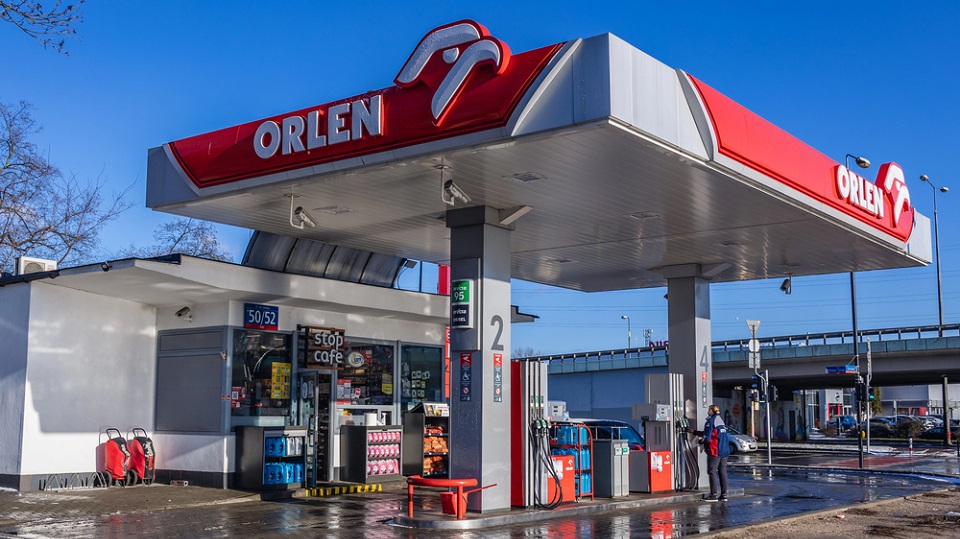
A driver in Krakow stops at a petrol station and sees the display: 6.16 zloty per liter for 95-octane petrol. Not because the chain decided to run a promotion — but because charging more is prohibited by law.
On March 30, Poland's Minister of Energy, Miłosz Motyka, signed an order setting maximum fuel prices. From the next day, March 31, the limits came into effect nationwide.
What and at what price
The limits are: 95-octane petrol — no higher than 6.16 zloty per liter (about 73 hryvnias), 98-octane petrol — 6.76 zloty (about 80 hryvnias), diesel — 7.60 zloty (about 90 hryvnias). For comparison: just a few weeks ago diesel at Polish petrol stations sometimes approached 8 zloty.
Why now
Poland's Ministry of Energy explained the decision as "a response to the global crisis in the oil and fuel market, connected, among other things, to the war in the Middle East." Brent crude has indeed fallen from its 2024 peaks, but retail prices reacted to the decline more slowly than to increases — a classic asymmetry that governments across Europe are trying to smooth out by administrative measures.
Who will monitor
Enforcement is assigned to Poland's National Tax Administration. The penalty for exceeding the limit is a fine of up to 1 million zloty, i.e., more than 10 million hryvnias. For a small private petrol station this is effectively a threat of bankruptcy from a single inspection.
The mechanism looks tough, but there's a caveat: the order does not set a minimum margin for operators. If wholesale prices rise again, petrol stations will find themselves between the purchase cost and the retail price ceiling, where profit disappears. That is what forced some networks in France to temporarily close loss-making outlets after similar restrictions were introduced in 2023.
What this means for Ukrainians in Poland
By various estimates, between 800,000 and 1.5 million Ukrainians are in the country. For those who own a car and commute to work daily, even a few dozen groszy per liter is hundreds of zloty a year. The price cap applies equally to everyone — regardless of citizenship and type of petrol station.
The open question is: if world oil prices rise again after another escalation in the Middle East — will Warsaw raise the ceiling along with the market, or will it hold it until operators' margins become negative?







