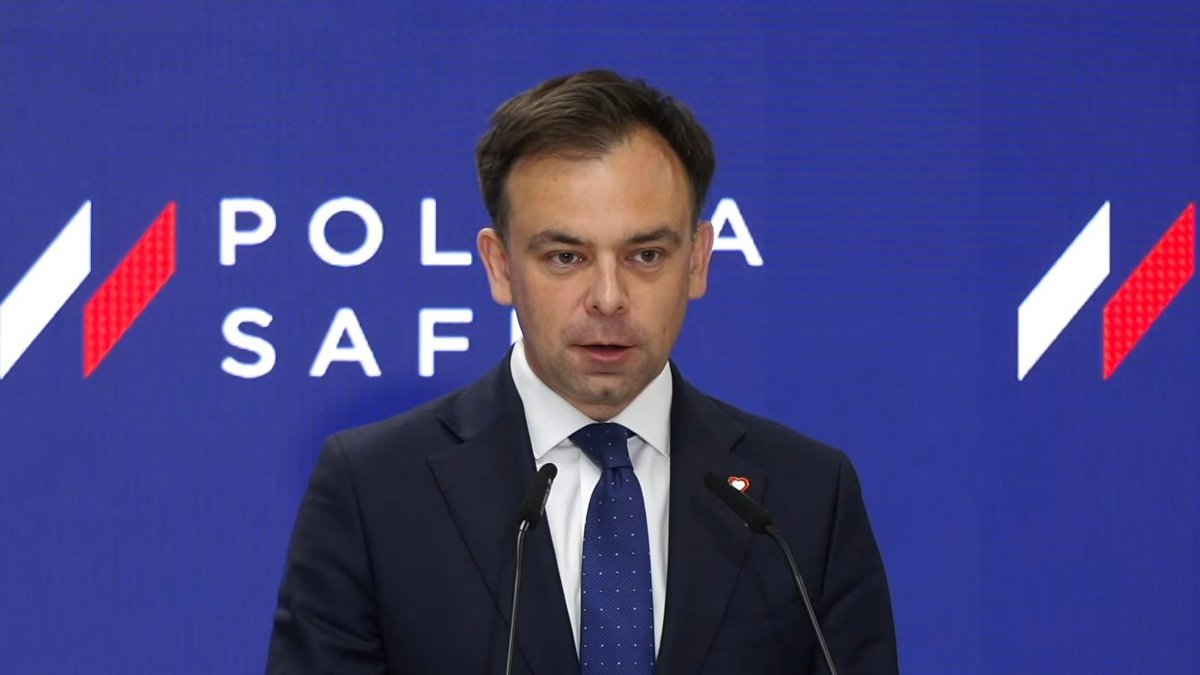
On May 22, Poland's Minister of Finance and Economy Andrzej Domański came to Kyiv for bilateral negotiations — and raised the conflict surrounding Lviv's waste processing plant as a separate agenda item. A local dispute between the city and the contractor officially became a matter of interstate economic relations.
"We discussed a rather unfortunate situation that has developed in Lviv and was related to the construction of a waste processing plant, as it was a very large investment."
Andrzej Domański, Minister of Finance and Economy of Poland
According to Domański, the Ukrainian side "took a sympathetic approach to this situation." No specific commitments as to what this "understanding" means in practice were publicly disclosed.
What happened to the plant
Construction of a mechanical-biological waste processing complex on Plastova Street began in September 2021. Polish Control Process S.A. won the tender, with the contract worth approximately €35 million, financed by an EBRD loan (€25 million) and environmental fund grants (€10 million). The contractor was to complete the facility by October 2025.
Deadlines were extended several times. Eventually, as Mayor Andriy Sadovyi explained, Control Process refused to perform part of the work and demanded an additional €17 million from the community — for work that, in the city's opinion, was already included in the contract. The municipal enterprise "Zielone Miasto" (Green City), with EBRD approval, terminated the agreement; official contract termination is scheduled for April 2026.
Before the termination, in August 2024, Lviv City Council appealed to Polish Prime Minister Donald Tusk asking him to influence the contractor. Sadovyi called Control Process "the most difficult contractor the city has ever dealt with."
The contractor's version: debts, arbitration, and OLAF
Control Process denies any fault. According to the company's project director Krzysztof Habyaer, delays were caused by the client's own actions: the city failed to complete external work, imposed unlawful fines, and refused to pay for already completed and approved work. The company claims that Lviv's debt to it amounts to millions of euros and that the plant is 95% ready.
Seven independent FIDIC (Geneva) arbitration decisions, according to the contractor, confirmed violations by "Zielone Miasto." The municipal enterprise, in turn, refused to comply with them. In parallel, Control Process filed a complaint with OLAF — the European Anti-Fraud Office. The next step is arbitration at the International Chamber of Commerce in Paris.
Diplomatic dimension: between business and alliance
Poland's Deputy Foreign Minister Marcin Bosacki called the contract termination an "extremely negative step" that "negatively affects Polish-Ukrainian relations" before the negotiations and demanded that Sadovyi reconsider the decision. First Deputy Mayor Andriy Moskalenko responded by stating that the contractor's actions "bear all the hallmarks of political pressure."
The precedent is sensitive: Poland is a key ally and one of Ukraine's largest trading partners. Any escalation over Polish investments complicates an already difficult discussion about post-war reconstruction conditions — and sends signals to other foreign contractors considering Ukraine as a venue.
Meanwhile, Lviv has already conducted a new tender through the EBRD. The winner is a Dutch-Lithuanian consortium WTT-Axis, with the new project costing approximately €23 million and a construction period of two years.
The question remains open: if arbitration in Paris orders Lviv to pay Control Process compensation — who will cover the difference, given that the project was financed from European funds under city guarantees?







