What happened and why it matters
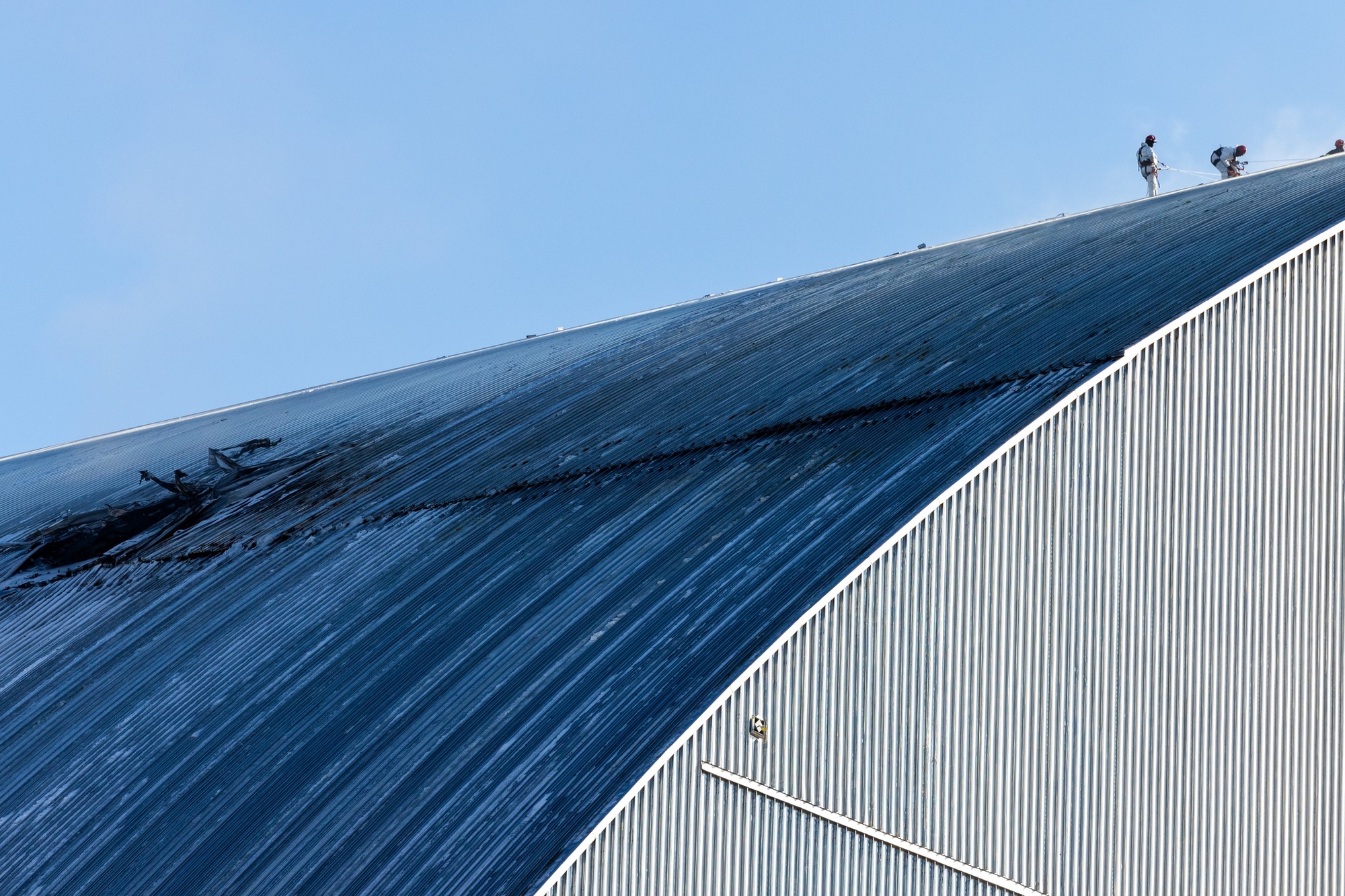
The European Bank for Reconstruction and Development (EBRD) has published an estimate for the cost of repairing the arch of the New Safe Confinement (NSC) over Unit 4 of the Chernobyl NPP — €500 mln. That is roughly five times more than figures previously cited by Ukraine’s Ministry of Finance. The estimate concerns restoration of damaged elements of the cladding following the strike by a Russian attack drone on 14 February 2025.
Key facts
The strike created a breach of about 15 sq. m in the inner and outer cladding of the arch. The structure has lost its airtightness and can no longer guarantee maintaining humidity below 40%. Engineers estimate that without a full repair, metal corrosion will begin in approximately 4 years, which will significantly complicate further maintenance and increase risks to the stability of the sarcophagus.
What’s inside and the threat it poses
Under the arch sits the unstable 1986 concrete sarcophagus containing hundreds of tonnes of radioactive material, including uranium and transuranic elements — the Financial Times reported, citing site inspections. Damage to the external shell increases the risk of metal corrosion and loss of sealing, which in a worst-case scenario could lead to the spread of radioactive particles beyond Ukraine’s borders.
"As 1986 showed, radiation does not recognize borders. The wind will carry these transuranic elements across Europe. This is not a 'Ukrainian problem', it is a threat to the entire continent that is being ignored"
— Serhii Tarakanov, director of the Chernobyl NPP
Why the price rose: experts’ explanation
The reasons are logical and clear: work in a high-radiation environment requires specialized equipment and methods, access to critical zones is limited, and complex engineering solutions demand expensive materials and international contractors. Additional costs are driven by security risks in a combat zone, logistical difficulties, and global inflation in the sector for major infrastructure projects.
Who is coordinating and what are the next steps
The EBRD is coordinating international efforts together with the Government of Ukraine, the plant’s administration and the NSC developers — Bouygues Travaux Publics and VINCI Construction Grands Projets. Temporary protection for the breach was installed in early October 2025 — a shield against rain and snow, but it is only a temporary solution. Priority work to seal small punctures and partially restore the membrane is planned to be completed in 2026; full restoration of the containment’s functions is a far more complex and costly stage.
What this means for Ukraine and Europe
The figure of €500 mln is not just a budget line. It signals that restoring Chernobyl is no longer a local technical task but a matter of continental security. Accordingly, financing, technological assistance and political coordination must be organized as a long-term programme, not as one-off emergency measures.
Conclusion
The rest is up to partners: declarations of support must be turned into signed contracts and clear work schedules. This is an investment not only in Ukrainian infrastructure but in the safety of all Europe. Without adequate funding and technical coordination, risks will grow, and the issue will stop being abstract — it will affect the air millions breathe.
Sources: EBRD, Financial Times, comments from the Chernobyl NPP management.







