A student writes an essay to reach the required word limit. A blogger checks the counter before publishing. An SEO specialist aims for the "magic" mark of 1500 words. All three measure what's easy to count — and miss what actually matters.
A figure that guarantees nothing
A Backlinko study that analyzed 11 million search results once fueled the myth: longer articles rank higher. But this is correlation, not causation. Long text often covers more subtopics — this is what the algorithm values, not the sheer volume itself.
Today, Google's position has changed significantly. As analysts tracking algorithm updates note, natural language processing systems evaluate semantic relevance and reader value — and when content fully addresses a query, greater length becomes a neutral or even negative factor.
Where readability actually breaks down
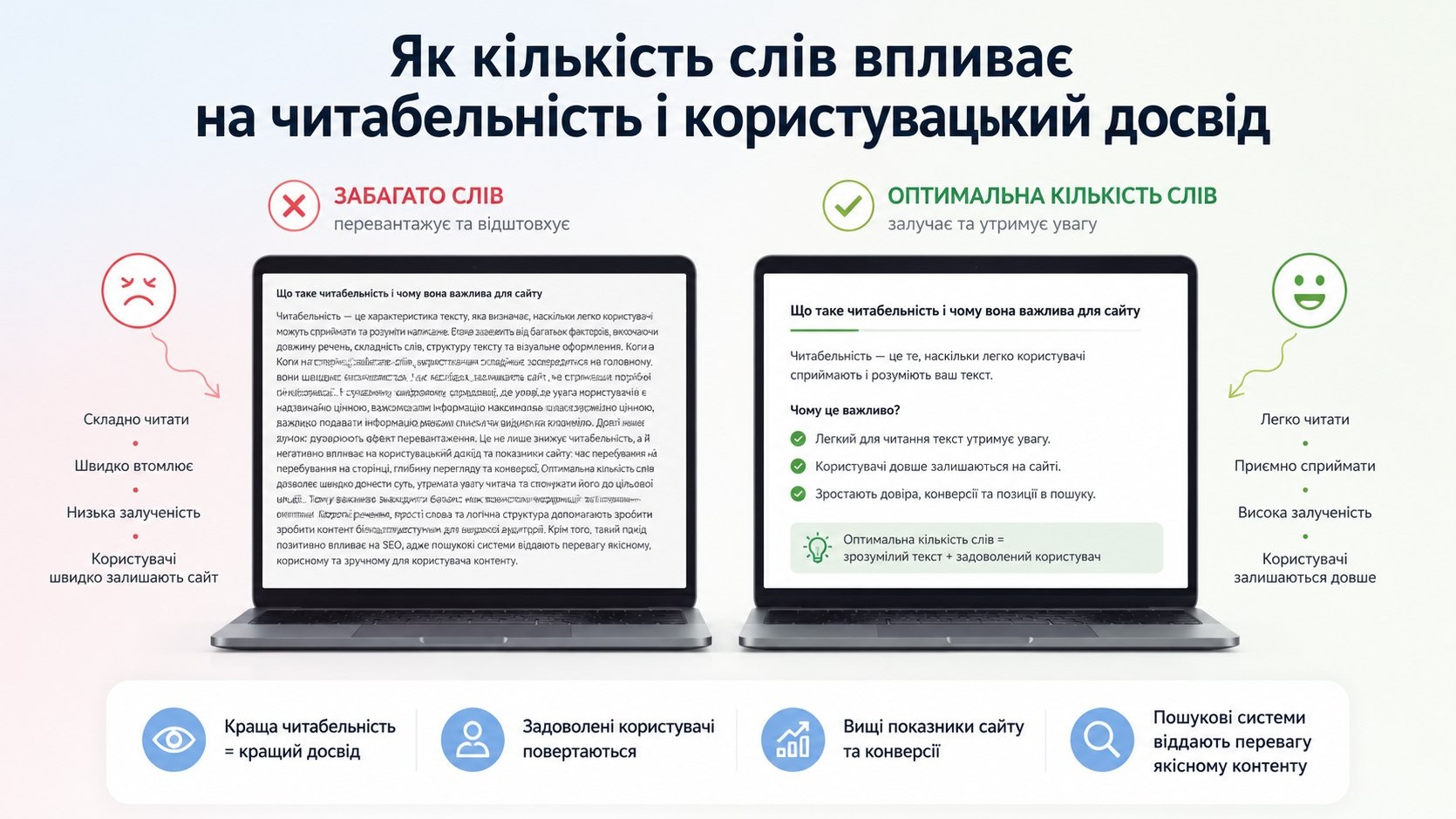
Typography research establishes specifics: the optimal line length for reading is 50–75 characters, including spaces. Eye-tracking data confirms that beyond this range, readers spend more cognitive effort finding the start of the next line — and imperceptibly begin scanning the text instead of reading.
"For readers with dyslexia, shortening lines to 30–40 characters increases reading speed by 27% — simply by reducing visual load".
Typography Best Practices, 2026
This means that the same 800-word article can be easy or painfully difficult to read — depending on layout, not word count.
What actually determines whether text will be read to the end
- Reader intent — is the person looking for a quick answer or deep analysis? Text that doesn't match this intent is abandoned in the first paragraph regardless of length.
- Information density — how many new ideas per paragraph. Empty "connectors" between ideas increase word count and decrease attention.
- Scanning structure — subheadings, lists, highlights: readers scan first, and only if the structure looks solid — do they read.
- Line length and line spacing — technical parameters that affect readability more strongly than total word count.
The editing paradox
Most authors edit by adding — clarifying, expanding, "developing the idea". But experienced editors know the reverse rule: if a sentence can be removed without losing meaning — it should be removed. Not because brevity is trendy, but because every unnecessary sentence forces the reader to make a micro-decision "is this worth reading" — and statistically they more often say "no".
If your text gets better after removing every fifth paragraph — it was written for the counter, not for the reader.
The question to ask before publishing: if you remove 30% of the text, will readers get less — or just reach the same answer faster?