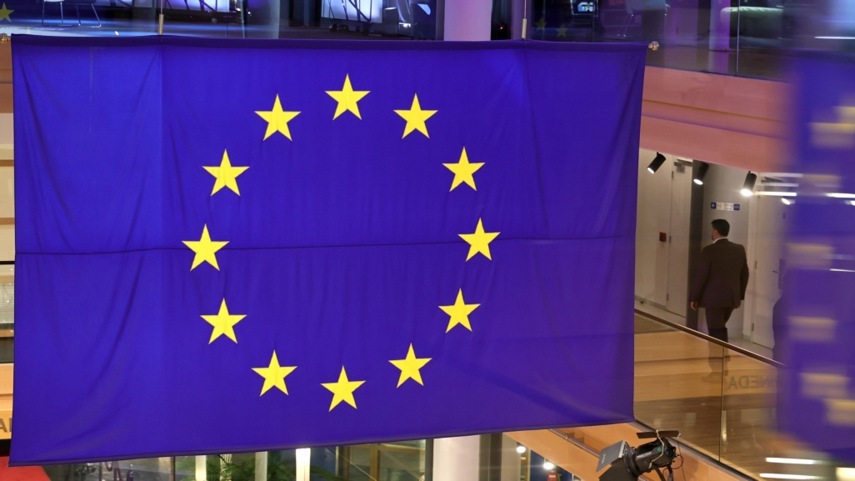
On July 13, the EU Council adopted a decision: €120 million from the European Peace Facility (EPF) will go toward a medium-range air defense system for the Armed Forces of Moldova. This is a record one-time payment through this mechanism — larger than any other country has received from the EPF, except Ukraine.
The figure in context
Moldova's GDP in 2025 was approximately $20 billion. Its own defense spending stands at 0.65% of GDP, or roughly $130 million per year. This single package nearly equals the country's annual defense budget. According to globalmilitary.net, Moldova's military strategy for 2025–2035 envisages a gradual increase in spending to 1.5% of GDP — but for now, the EPF essentially closes the gap between ambitions and capabilities.
Total support for Moldova through the EPF since 2021, including the new package, has reached €317 million. The previous tranche — €20 million for air defense — arrived in April 2025.
Where this package came from
On May 7–8, 2026, EU Foreign Policy Chief Kaja Kallas visited Chișinău. At a press conference, she announced a proposal to double annual support:
«I will propose to member states to double annual funding — an additional €120 million. This will be the largest assistance ever provided through this mechanism, except for Ukraine».
Kaja Kallas, May 2026
The EU Council voted on this on July 13 — less than two months after the visit. The speed of the decision reflects how seriously Brussels takes the security situation surrounding Moldova.
Why medium-range air defense specifically
Moldova is a neutral state with a constitutional ban on membership in military alliances. But neutral status has not protected its airspace: according to Small Wars Journal, Russia regularly used the Moldovan corridor to launch missiles and drones toward Ukraine. In June 2025, Chișinău proposed a law on airspace security — a de facto acknowledgment of the problem.
The new assistance complements already-delivered equipment. In December 2025, Moldova received the French Thales GM200 radar — an active 3D system with a detection range of up to 250 km. In 2026, the passive ERA radar of Czech manufacture is being deployed. The medium-range system will be the next level — interception, not just detection.
A separate factor is Transnistria. According to Kyiv Post citing the GUR, Russia is increasing mobilization of reservists there, drone production, and intelligence operations. In the assessment of CISES analysts, this raises risks simultaneously for both Moldova and Ukraine.
What remains outside the scope of the decision
The EPF is a mechanism of contributions from 27 member states, not EU budget financing. That means the money is real, but depends on consensus among countries. As noted by Kyiv Independent, it remains unclear whether another tranche for Moldova will be proposed in the second half of 2026 — Kallas spoke of €120 million per year, whereas the July package covers the vast majority of this amount in a single decision.
The specific medium-range air defense system has not been officially named. The choice of supplier — a separate tender procedure — will determine whether Moldova receives something like NASAMS, IRIS-T SL, or another solution, and how long deployment will take.
If the EU truly intends to allocate €120 million annually — the next tranche should appear by the end of 2026. Its absence would mean the July decision was a one-time gesture rather than a systemic change in the approach to Moldova's security.