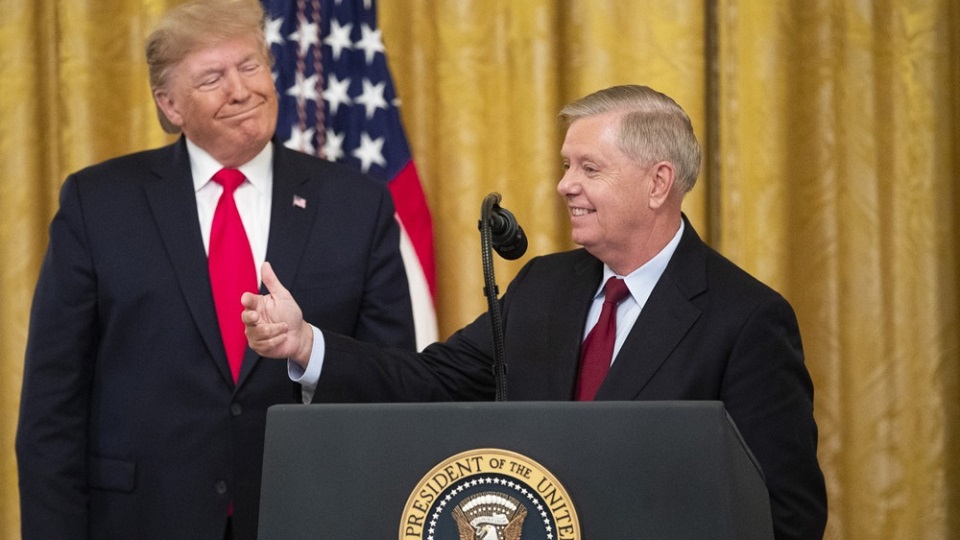
US President Donald Trump has called on the Senate to pass the Digital Asset Market Clarity Act — a bill that defines which cryptocurrencies are "securities" under SEC control and which are "digital commodities" under CFTC oversight. The occasion was prompted by the death of Republican Senator Lindsey Graham.
"In honor of Senator Lindsey Graham, a great supporter, the US Senate should pass the Clarity Act. China and many other countries would like to gain full control over this financial phenomenon. Don't let China win!"
— Donald Trump, Truth Social
However, there is a nuance that undermines the image of Graham as a key defender of the bill: according to The Hill, the senator was not a member of either of the two committees that developed the crypto legislation. Graham chaired the Budget Committee and served on the Appropriations, Judiciary, and Environment Committees. His public support for the Clarity Act did exist — but at the level of rhetoric, not legislative work.
Where the bill is actually stuck
The Clarity Act passed the House of Representatives in July 2025 with a bipartisan result of 294 votes in favor to 134. In May 2026, the Senate Banking Committee advanced it — 15 to 9, with two Democrats supporting the bill with reservations.
But there are still several steps before the president's signature — each of which is non-trivial. According to analysts at Yahoo Finance and CryptoTimes, the bill requires:
- a cloture procedure — 60 votes to begin debate;
- reconciliation with the Senate Agriculture Committee version;
- merger with the text passed by the House;
- Trump's signature.
The current arithmetic: Republicans have 53 seats, but senators Josh Hawley and Rand Paul are expected to vote "no." This means the GOP needs at least seven Democrats — and there are currently only two real candidates: Ruben Gallego (Arizona) and Angela Alsobrooks (Maryland), and both have set conditions.
Who opposes and why
Senator Elizabeth Warren remains the most consistent critic of the bill in the Banking Committee. Separately, the Alliance to End Trafficking in Persons (AEHT) has appealed to Senate leadership demanding a review of Section 604, which removes liability from developers of decentralized applications for crimes committed by users of these platforms.
The banking sector also opposes it: according to CNBC, banks warn that the bill will allow crypto organizations to pay interest to stablecoin holders, which would drain deposits from traditional banks.
In parallel, the bill is shadowed by a conflict of interest: the Trump family has earned billions from memecoins and crypto venture World Liberty Financial, and several senators view this as an obstacle to honest voting.
Four weeks remain
As Cointelegraph notes, only four weeks of session remain before the August parliamentary recess in the Senate. Stifel strategist Brian Gardner openly states: if the bill doesn't pass by the end of July — chances of passage in 2026 drop sharply, and if the 119th Congress concludes without a result, the entire process starts over. Polymarket estimates the chances of passage in the current year at 42%.
Graham's death is a genuine loss for Trump the ally, but not a technical loss for the Clarity Act: the senator from South Carolina did not participate in negotiations over the bill's text. The president's emotional appeal provides media momentum, but does not solve the structural problem of a votes deficit.
If the White House does not reach an agreement with law enforcement groups by the end of July regarding the section on DeFi developers — this very point, not Graham's memory, will determine the fate of the largest cryptocurrency law in American history.