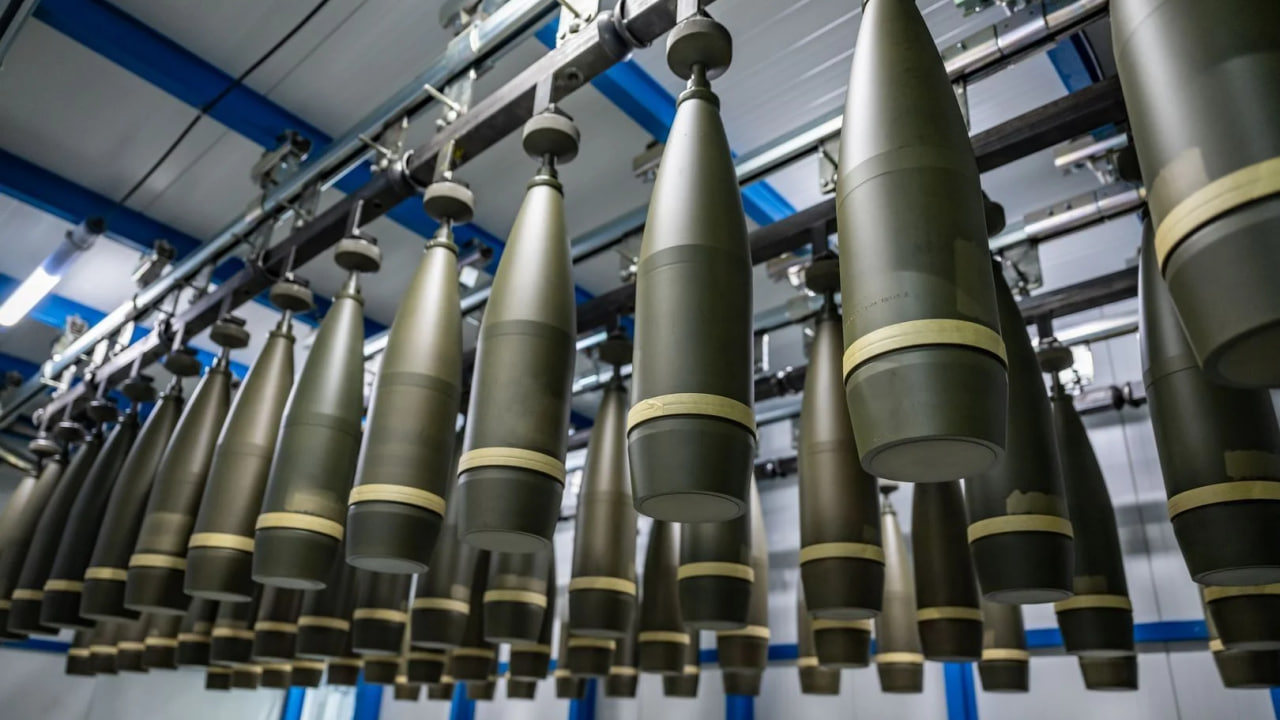
For a Ukrainian infantryman or drone operator, numbers are indifferent — what matters is whether a shell or power unit arrives on time. But behind every supply line stands business logic, and it is this logic that shows how stable this flow will be in the coming years. Fresh financial reports from Czech defense concern Czechoslovak Group (CSG) offer a rare opportunity to see this logic from the inside.
558 million euros — and not all from Ukrainian money
In the first half of 2026, CSG received 558 million euros in revenue from the Ukrainian market. The company's press service clarified that this amount includes "purchases for the Ukrainian market paid for by another state or party" — meaning that part of the weapons for the Armed Forces are actually financed by allies, not directly by the Ukrainian state.
The group's total revenue grew by 17.2% and reached 3.251 billion euros, while defense revenue increased by 27%. For comparison: CSG's H1 2026 revenue jumped 17.2% to €3.25 billion, beating forecasts, and net income surged 84.8% to €572 million. The company confirmed its annual forecast at 7.4–7.6 billion euros in revenue.
Ukraine is no longer the main driver
This is where the main intrigue of the figures lies. In 2024, according to CSG spokesman Andrey Chyrtek, Ukraine accounted for 42.8% of the entire holding's turnover. Now — only 17%. The company itself explains this directly: Ukraine's contribution to revenue continues to decline as CSG's growth expands into other markets, including the United States and Southeast Asia.
Meanwhile, about 69% of the group's revenue in the first half of 2026 came from NATO countries — CSG is deliberately diversifying its customer base, and the Ukrainian war has become a springboard for the company, not a permanent anchor.
This is not necessarily bad news for Ukraine: a supplier that scales globally is more resilient to political fluctuations in funding and able to maintain production capacity even if an individual contract falls through. But it is also a signal that competition for CSG's attention and capacity will increase — Warsaw, Ankara, or Asian partners are already in line next to Kyiv.
The donor coalition weakens in parallel
It is telling that against the backdrop of the company's growth, the very multinational ammunition financing initiative for Ukraine — in which CSG played a key role — is experiencing the opposite trend. According to Czech President Petr Pavel, the Czech ammunition supply initiative, which at its peak had the support of 18 countries, now has approximately nine financial donors. In other words, money for shells for Ukraine is increasingly flowing not through a collective fund, but through direct bilateral contracts or new mechanisms such as the EU credit program.
Betting on technology, not just quantity
Separately, CSG reminded about a strategic partnership with "Ukrainian Armored Vehicles" regarding the development and supply of power units for Ukrainian guided missiles and unmanned platforms. This is a continuation of last year's project for licensed production of ammunition of Western caliber — i.e., a step from simple supply of "hardware" to joint production of components directly in Ukraine, which reduces dependence on logistics chains and import quotas.
What this means in practice
- For the front: part of the weapons are paid for not by the Ukrainian budget, but by allies — this removes part of the fiscal burden, but ties supplies to the political will of third countries.
- For the defense industry: localization of power unit production in Ukraine through a joint venture with "Ukrainian Armored Vehicles" creates jobs and expertise that will remain in the country regardless of the duration of the war.
- For CSG's budget: Ukraine is no longer critical for the company's survival — and therefore, negotiating with it becomes more difficult, because losing a Ukrainian contract no longer hurts CSG shareholders as much.
The question for the next quarters is simple: if Ukraine's share in CSG's turnover continues to fall at this pace, and the multinational donor coalition continues to shrink, will Kyiv be able to maintain the priority of its orders in the company's portfolio, which is already simultaneously serving NATO, the United States, and Southeast Asia?