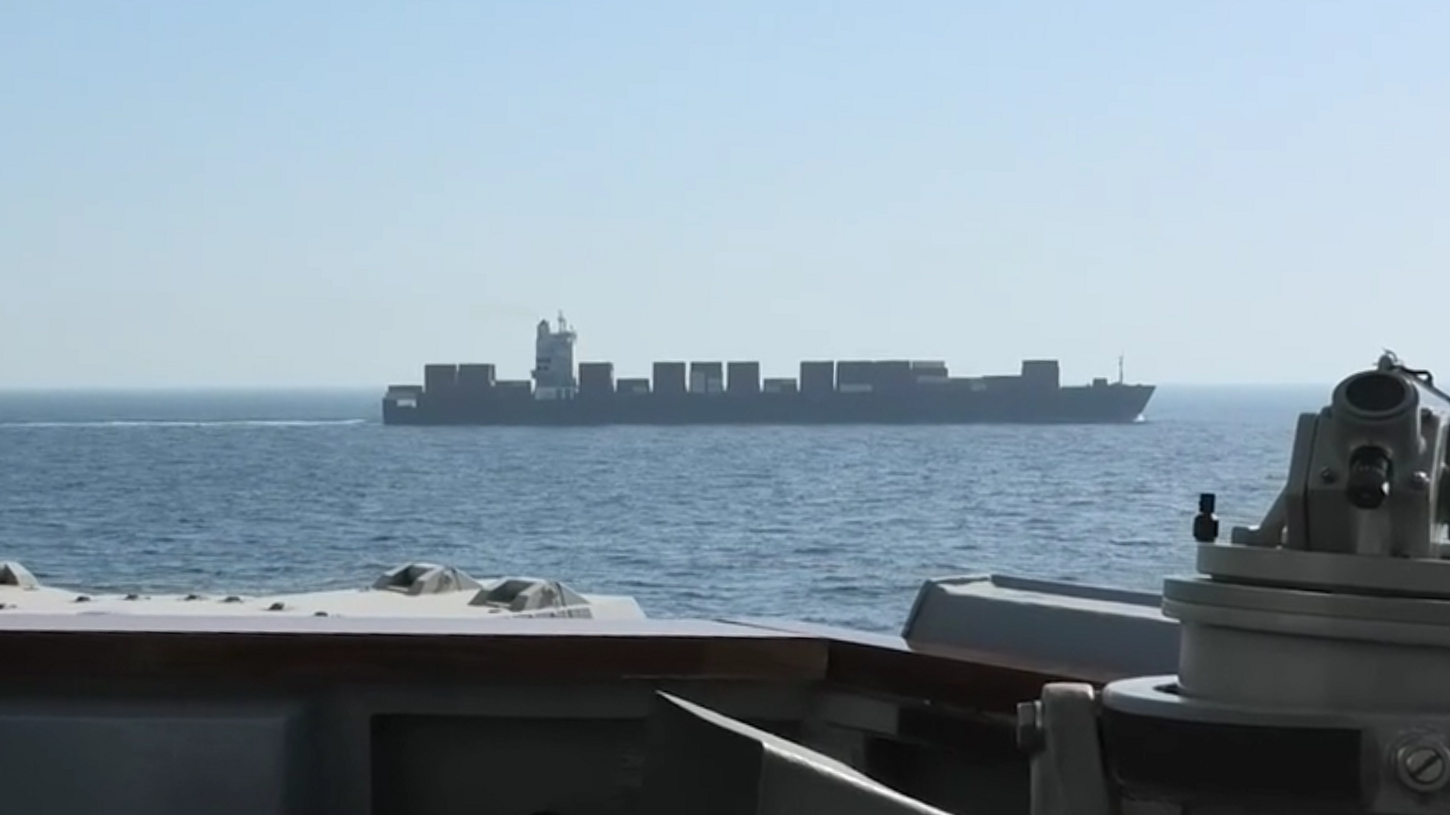
On April 19, the guided-missile destroyer USS Spruance (DDG-111) opened fire on the engine compartment of Iranian container ship Touska in the Gulf of Oman, immobilizing the vessel. US Marines from the 31st Marine Expeditionary Unit, deployed from USS Tripoli, took the ship under guard. This is the first instance of physical seizure of a vessel since the naval blockade of Iranian ports was implemented on April 13 — all previous 13 interdictions ended with vessels being turned away without boarding.
How it happened
Touska — a container ship weighing 54,851 gross tons with a length of approximately 295 meters — was traveling at 17 knots on course for Bandar Abbas. For six hours, Spruance issued radio warnings.
"Motor vessel Touska, vacate your engine room — we're prepared to subject you to disabling fire"
Radio transmission from USS Spruance sailor, published by CENTCOM
After the crew ignored the commands, the destroyer fired several rounds from its 5-inch MK 45 gun into the engine compartment. The ship lost propulsion. CENTCOM's night video shows helicopters over Touska and a Marine descending to the deck on a rope.
Why Touska was not a random choice
The ship is connected to Islamic Republic of Iran Shipping Lines (IRISL) — a state carrier under US Treasury Department sanctions since June 2020. According to OFAC, IRISL and its subsidiaries are involved in circumventing export controls and transporting cargo related to Iran's nuclear and military programs. Trump directly stated in his Truth Social post that the vessel is under sanctions "for prior illegal activity" — and promised to determine what is on board.
The blockade: what's at stake
Trump announced the blockade of Iranian ports on April 12, explaining that any vessels that have paid Iran a transit fee in yuan or cryptocurrency will be intercepted. The blockade involves over 10,000 military personnel and more than a dozen combat ships.
- The cost to Iran — according to analysts' estimates, the blockade costs Tehran approximately $400 million per day in lost revenue
- Oil market — Brent opened trading on Sunday at $95 per barrel; prices rose more than 4% following Touska's seizure and Iran's renewed closure of the Strait of Hormuz
- Strait of Hormuz — on Sunday, no tanker crossed the strait according to tracking systems; it typically carries one-fifth of the world's oil supply
- Deadline — by April 26, the blockade threatens irreversible damage to oil wells due to storage overflow
Iran responds — negotiations in question
Iran's unified command Khatam al-Anbiya called US actions "armed piracy" and a violation of the ceasefire agreement, promising retaliation — reported by Tasnim, an agency affiliated with the IRGC. Meanwhile, Tehran has again blocked most vessels from transiting the Strait of Hormuz.
The second round of peace negotiations was supposed to begin Monday in Pakistan with a delegation led by Vice President Vance. Iran has not publicly confirmed participation: some Iranian state media suggests the talks may not take place. The ceasefire, which both sides have already accused each other of violating, expires on Wednesday.
Key disagreements at the negotiations — control over enriched uranium stockpiles and conditions for opening the Strait of Hormuz — remain unresolved. If the ceasefire is not extended by Wednesday, and Touska becomes a precedent for new boardings, the question is not whether Iran will respond — but whether the response will remain in the maritime domain, or whether the conflict will escalate beyond it.







