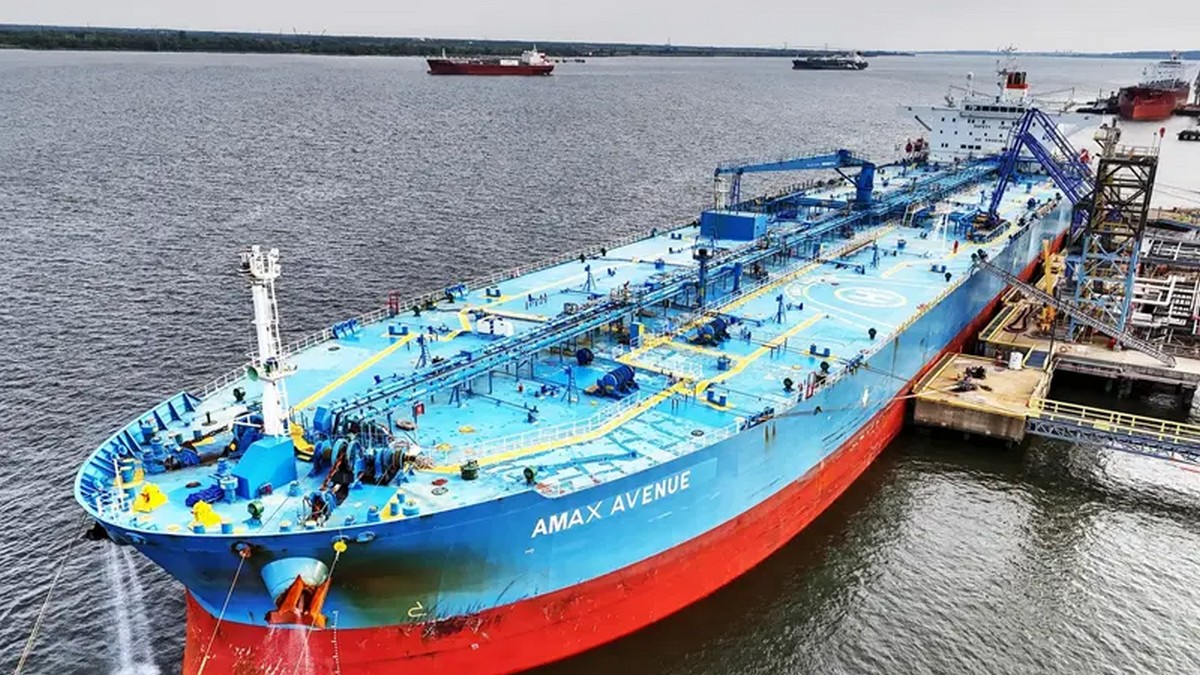
On April 4, the sanctioned Aframax tanker Jewel began loading crude oil at the Russian port of Ust-Luga on the Baltic Sea. According to Bloomberg, this is the first shipment since the end of March — since Ukraine struck the port five times in ten days.
What happened between the strikes and resumption
The attacks began on March 22. Leningrad Region Governor Alexander Drozdenko confirmed strikes on March 22, 25, 27, 29, and 31. Satellite images from Planet Labs dated March 30 documented the consequences: storage tanks at the Novatek-Ust-Luga facility were on fire. According to estimates, eight of eighteen tanks were damaged — with the oil in them valued at $160 million.
The strike on Novatek had separate strategic significance. According to Kyiv Independent, citing Ukraine's Special Operations Forces, the fractionation and transshipment complex at the port processes stable gas condensate into petroleum products with a capacity of approximately seven million tons per year — and it is from here that Russia exports them by sea, including through shadow fleet vessels.
"At least 40% of Russia's oil export capacity — approximately 2 million barrels per day — was taken offline as of March 25"
Reuters, calculations based on market data
This figure included Ust-Luga, Primorsk, and the shutdown Druzhba pipeline simultaneously. According to MarineTraffic data, at least 50 tankers were waiting in the Gulf of Finland for the resumption of operations.
Resumption — partial
The first tanker after the pause — Jewel — is part of the shadow fleet and is under sanctions. This is standard operational practice for Ust-Luga: as documented by OCCRP, such vessels service most of the port's shipments after 2022.
Transneft did not respond to Bloomberg's inquiry. Novatek has not officially confirmed the extent of the damage. The volume of resumed loading and the terminal's condition have not yet been verified from open sources.
For comparison: in 2025, Ust-Luga exported 32.9 million tons of petroleum products, Primorsk — 16.8 million tons. Together they provide Russia with approximately 2 million barrels per day of Baltic exports — a quarter of the Kremlin's budget revenues.
Tactical logic of the campaign
Five strikes in ten days — not a random rhythm. As noted by Euromaidan Press, citing analysts, the pace of attacks indicates an attempt to inflict structural, not temporary damage: not to stop shipments for a week, but to destroy infrastructure to a level requiring months of repair.
- March 25: three tankers damaged, five storage tanks, three berths, and Novatek facilities
- March 29–30: new fires confirmed by satellite imagery
- March 31: fifth strike — the governor confirmed injuries to three people, including two children
The operation was joint: SSO, SBU, GUR, State Border Guard Service — a strike from approximately 900 km from Ukraine's northern border.
If Novatek's damaged tanks truly require major repair, the resumption of one shadow tanker does not restore the terminal's capacity — it only confirms that logistics are unblocked, not that infrastructure has been rebuilt.
The real indicator of the campaign's effectiveness will become known not now, but when data appears on actual shipment volumes for April — and whether Ust-Luga reaches pre-war throughput capacity before Ukraine strikes again.







