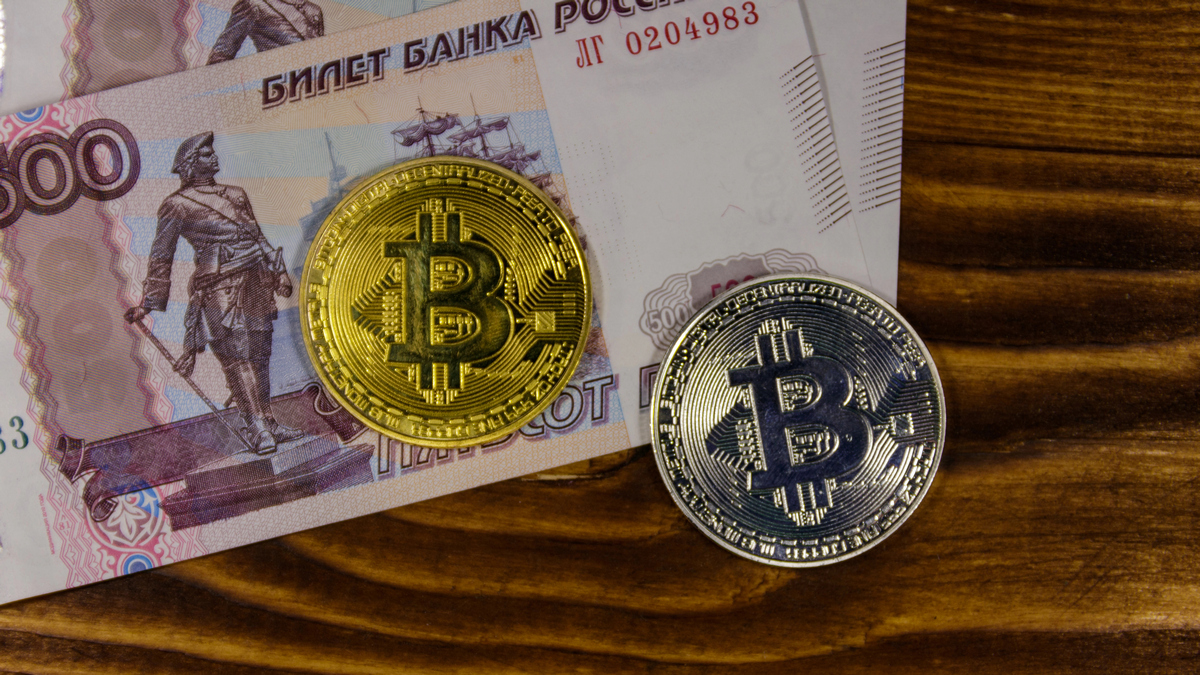
At the Eastern Economic Forum in September 2025, PSB bank chief Pyotr Fradkov and A7 CEO Ilan Shor personally reported to Putin: the first offices of the payment network in Africa have been opened — in Harare (Zimbabwe) and Lagos (Nigeria). According to Financial Times, a vacancy for a manager soon appeared for Togo as well.
So far, the actual activity of these offices has not been confirmed: their online presence is minimal, and several representatives of the crypto community in both countries told the publication that they had never even heard of the company. But the fact of the expansion itself is indicative — and the scale of the network is not immediately apparent behind it.
Who stands behind A7 — and why it's not just a startup
A7 was founded in 2024 by Moldovan oligarch and fugitive Ilan Shor, to whom Russia granted citizenship. State bank Promsvyazbank, which serves Russia's defense sector, controls 49% of the company. PSB is already under sanctions for financing Russian defense industry and circumventing restrictions, as well as for involvement in mass voter bribery in favor of pro-Russian candidates in the 2024 Moldovan elections.
A7 itself was sanctioned by the United States in August 2025. Before that, it had already been added to the sanctions lists of the EU and Great Britain. However, the restrictions only accelerated the search for new channels — and this is where its own stablecoin appears.
A7A5: minted in Kyrgyzstan, pegged to the ruble, invisible to SWIFT
A7A5 is a stablecoin pegged to the ruble, trading on Tron and Ethereum networks. It is issued under Kyrgyz rules but backed by ruble deposits in PSB. Companies can convert rubles into this asset, circumventing restrictions on ruble payments, and then instantly exchange it for popular stablecoins without personal verification — which makes it difficult to track transactions.
As of the end of July 2025, A7A5 trading volume exceeded $51.17 billion. According to Foreign Policy's assessment, the A7 network overall processed approximately $39 billion in transactions related to sanctions evasion — a sum roughly equal to Russia's pre-war annual imports of high-tech goods and dual-use items.
The appeal of USDT for Russian users is its price stability compared to the volatile ruble and its broad payment capabilities. However, centralized control over USDT, particularly the ability to freeze wallets, became a weak point after the U.S. Secret Service forcibly shut down the Garantex crypto exchange in March 2025. A7A5 appeared precisely as a response to this vulnerability.
Why Africa is not a random choice
Nigeria ranks among the world's twenty largest crypto markets by transaction volume, Zimbabwe has long used the dollar as the main means of payment due to its own hyperinflation, and Togo is a member of the West African Economic and Monetary Union (WAEMU) — a zone with a single currency and simplified capital movement. For a network seeking entry points into the dollar and regional settlement space, this geography is logical.
The EU went further than previous American and British actions, directly banning any transactions with A7A5. Financial institutions and crypto services in the EU are required to check transactions for links to A7A5 and block related funds.
"It is unclear whether A7 conducts actual operations in these offices — their internet presence is minimal. Several representatives of the crypto community in both countries reported that they know nothing about this company. Despite this, such efforts are indicative in the context of Moscow's adaptation to sanctions."
Financial Times
The main question is not whether the offices in Lagos and Harare are actually operating right now. The question is whether the financial regulators of Nigeria and Zimbabwe — both countries are under FATF pressure on anti-money laundering — will respond or silently allow the infrastructure to strengthen. If no action is taken by the end of 2025, A7 will gain a foothold that will be significantly harder to dismantle with sanctions than to block a wallet.