What it's about
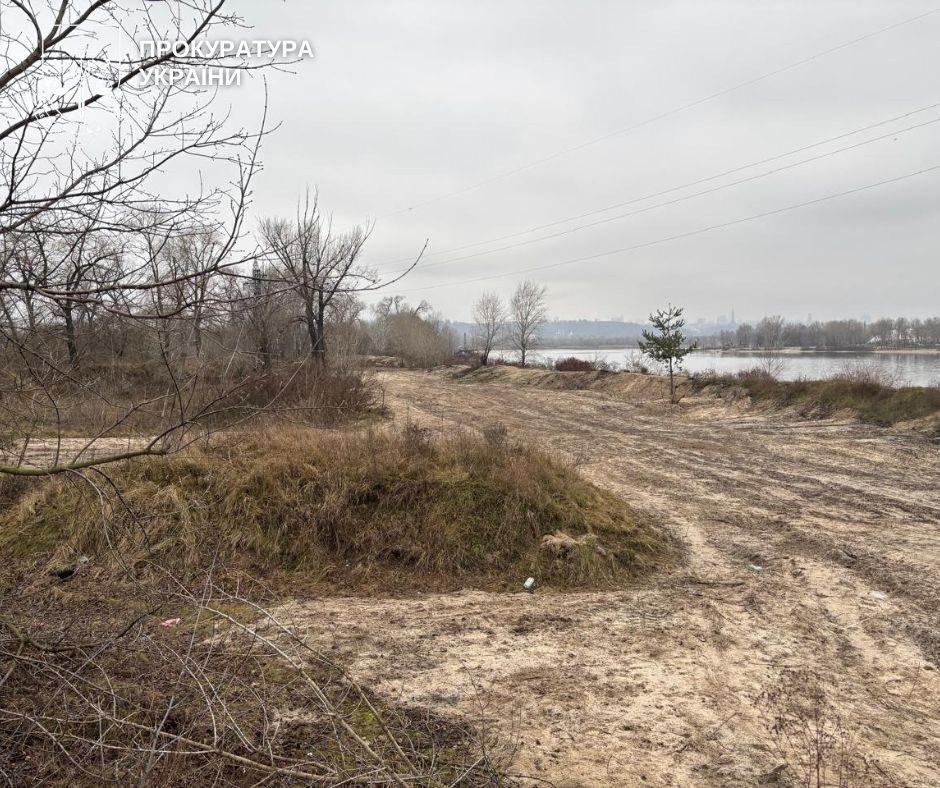
On February 10, the Commercial Court of Kyiv opened proceedings on a claim by the Kyiv City Prosecutor's Office to terminate the lease agreement and return to the city 4 ha of land in Osokorky (cadastral number 8000000000:90:141:0006) — in the area of Berkovshchyna Bay on the Dnipro embankment near the RiverStone residential complex. The claim was brought after the prosecutor's office recorded a number of violations in the use of the plot.
"The enterprise [\"Orest\"] received this land plot on lease in 2004 but never began the construction of a recreation zone. At the same time, in 2023 the lessee attempted to change the land’s designated purpose to build a multi‑apartment residential building there with retail, entertainment and market infrastructure. In addition, the enterprise systematically failed to pay rental fees, as a result of which the city budget was deprived of funds"
— Press service of the Kyiv City Prosecutor's Office
History of the dispute
This is already the third attempt by the prosecutor's office to recover the plot. In 2013 the court refused, citing that the defendant allegedly took measures to prepare for construction. Similarly — in 2021–2022 — courts at all instances dismissed the prosecutor's claims, noting the existence of design contracts, technical specifications and urban planning documents.
Who is named as involved and what has changed
Data from open registers (YouControl) indicate: the owner of PE «Orest» is LLC «Osokorky-7», and the ultimate beneficiaries are Hungarian citizen Oleksandr Kisel and Ukrainian citizen Oleksandr Konstantinovsky (the brother of former MP Vyacheslav Konstantinovsky). In 2024 the corporate rights of PE «Orest» were transferred to the Agency for the Recovery and Management of Assets (ARMA), which shifts the legal vector of the case: the focus is now not only a civil-law dispute but also signs of criminal offenses, in particular systematic evasion of rental payments.
Why this matters to the community
This is a case about access to the embankment and about how the city preserves its resources. If the plot can be returned — it would open the possibility for municipal projects or transparent privatization under competitive conditions that would secure revenues for the budget. If not — there is a risk of further loss of the waterfront area to development, as well as a precedent that would make it harder to recover assets tied to evasion of payments.
Context and precedents
Similar cases show that the transfer of corporate rights to ARMA and criminal grounds alter the chances of success in court. In September 2025 the prosecutor's office, through the courts, terminated the lease of two neighboring plots totaling 40 ha that were controlled by a company associated with Viktor Medvedchuk — a sign that asset recovery instruments can work, but the court's decision depends on the evidentiary base and the stance of law enforcement agencies.
What's next and a brief forecast
The court's decision will be a litmus test: will the prosecutor's office and ARMA have enough evidence to overcome previous court rulings that protected the lessee's interests? If so — the city could regain 4 ha of embankment and have a chance to plan it for public use. If not — the private project risks being finalized and the budget remaining uncompensated.
From a practical standpoint: the change in legal qualification to criminal and the transfer of rights to ARMA increase the chances of a successful claim. But the final outcome will depend on the court's assessment of the lessee's actual actions in 2004–2024 and evidence of evasion of payments.
Sources: press service of the Kyiv City Prosecutor's Office, court register, YouControl, ARMA information.







