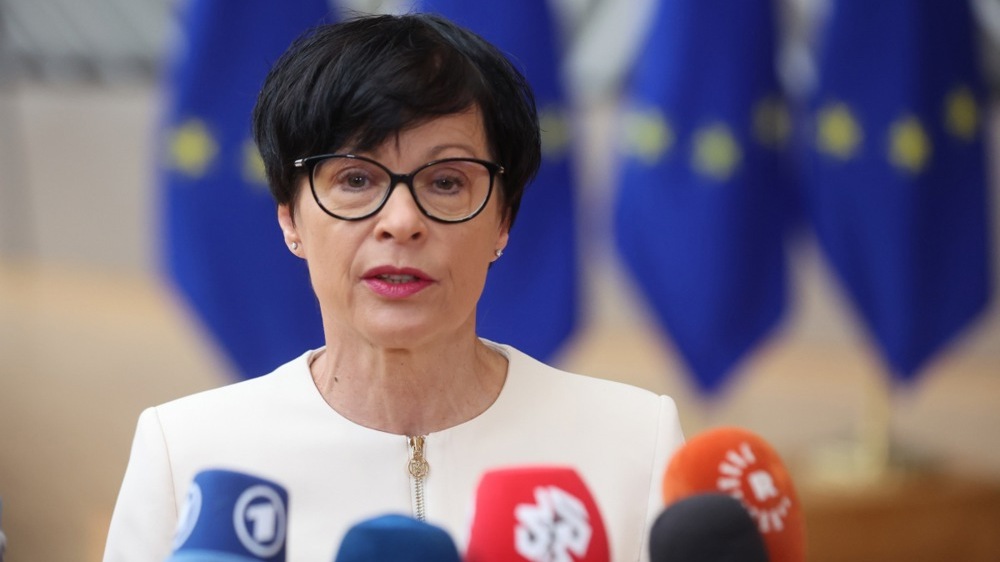
European Commission Vice-President for Enlargement Martha Kos said ahead of the EU Council meeting on foreign affairs on May 11 that Brussels expects to disburse the first tranche of a new credit package to Ukraine as soon as next week. The amount was not specified, but the context is clear — this refers to a two-year loan of 90 billion euros, finally approved by the EU Council on April 23, 2026, after Hungary lifted its veto.
What lies behind the figure
The package is divided into two unequal parts: 60 billion euros for defense needs, 30 billion euros for state budget support and economic stability. For 2026, 45 billion euros are allocated: of which 28.3 billion are for military assistance and 16.7 billion for financial support. The first purely defense tranche is expected to be approximately 6 billion euros.
President Zelenskyy has already set priorities: "We will direct the first tranche to domestic production for Ukraine's defense. These are drones and the entire miltech direction. Second is energy". In parallel, Ukraine and the European Commission have agreed on details of the so-called Drone Deal — a scheme for joint production of unmanned aerial vehicles within the same financing.
Reforms — not a wish, but a blocking condition
The budgetary component of the credit is tied to the implementation of specific reforms. Kos emphasized that Ukraine is already demonstrating progress, which is why the EU is moving toward disbursements. However, the rules are strict: any backsliding in the fight against corruption could lead to temporary suspension of aid — this is directly enshrined in the program mechanism. Among the conditions being discussed are the so-called "10 Kacka-Kos points": reforms in the rule of law, anti-corruption measures, as well as changes to the tax system, including the elimination of certain business benefits that are required by both the IMF and the EU within membership negotiations.
"These funds will allow Ukraine to protect not only the country but also Europe and European values"
— Martha Kos, European Commission Vice-President for Enlargement
Brussels also notes that the credit is financed through joint EU borrowing on capital markets. Ukraine is required to repay it after the end of the war — the mechanism is tied to receiving reparations from Russia.
What this means for people
The budgetary component means salary payments to teachers and doctors, pensions, and government administration. Without stable external financing, the Finance Ministry is forced to either cut spending or attract domestic borrowing at higher interest rates. According to the Finance Ministry, as of the end of November 2025, Ukraine has attracted over 161 billion US dollars in grants and concessional loans — the new EU credit is the largest single source in this list for the next two years.
Analysts at GMF (German Marshall Fund) note that despite its scale, the credit "will support Kyiv financially, including defense, but will not be sufficient for a war-ending strategy" — for that, they believe, frozen Russian assets should have been used, which the EU ultimately rejected.
If Kyiv fulfills the agreed list of reforms by the end of the second quarter, the first budget disbursement will be a test: whether Ukraine is capable of receiving funds not just as a state at war, but as a candidate actually moving toward EU membership.