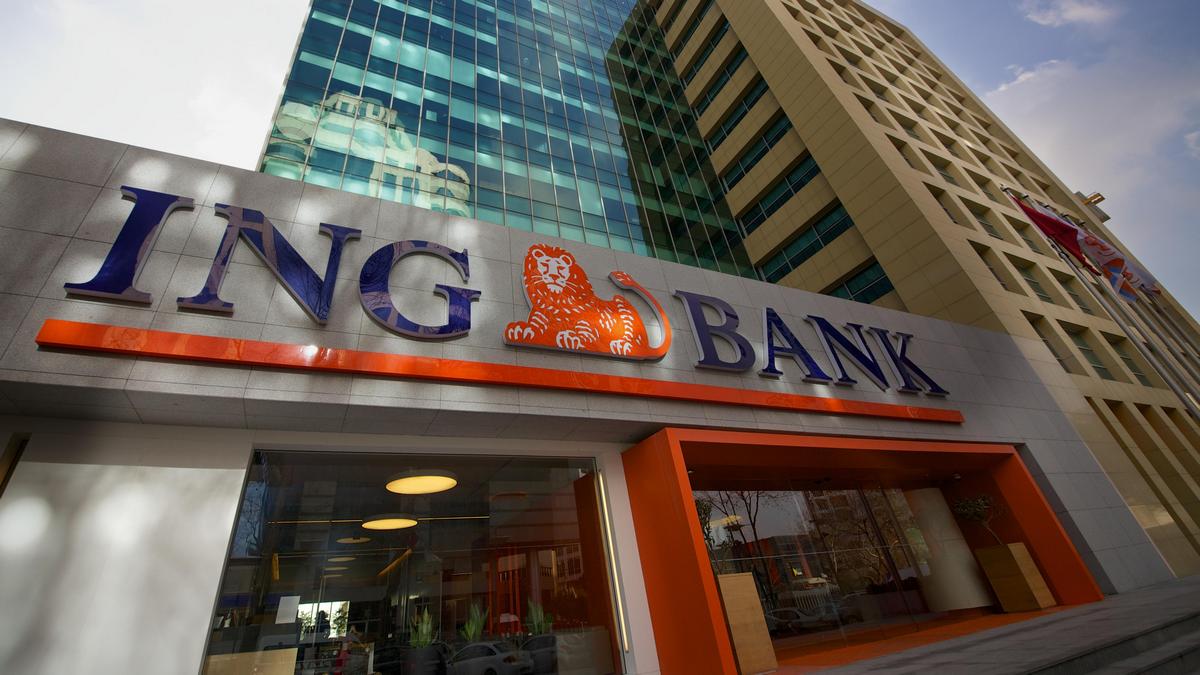
On April 7, 2026, the Dutch group ING announced the termination of the agreement to sell ING Bank (Eurasia) to Global Development. The agreement was signed on January 28, 2025 — and for over a year it remained in limbo while the buyer was unable to obtain the necessary regulatory approvals.
A year of waiting — and zero results
The deal was planned to close in the third quarter of 2025. Instead, ING will record a loss: according to the group's official press release, the financial impact will be approximately €0.8 billion after tax — roughly €0.5 billion in book losses and another €0.3 billion from currency position revaluation.
"Our position remains unchanged: we see no future for ING in Russia and remain focused on completing our exit from the Russian market"
— official ING statement
The bank notes that it is considering alternative exit scenarios with comparable financial impact. ING's offshore exposure to Russian clients between 2022–2025 has declined by nearly 90% — to €0.6 billion.
The Kremlin as a silent veto player
Formally, Russia did not ban the deal — it simply did not grant approval. This is a subtler, but more effective form of control: a foreign bank cannot either sell an asset or quickly liquidate it. Citibank experienced similar dynamics — according to KSE Institute, its Russian subsidiary only began the final stage of exit in November 2025, with a planned sale to Renaissance Capital group in the first half of 2026.
Meanwhile, Russia is simultaneously practicing direct confiscation: in early 2026, assets of Danish Rockwool and Polish-American CanPack were placed under Russian control by decisions of state bodies.
13% in three years — and the pace is slowing
The ING case fits into the broader picture documented by the Kyiv School of Economics. According to KSE Institute data, as of January 2026, only 547 international companies — or 12.8% of those operating in Russia before the full-scale invasion — have completely left the market. More than 55% continue to operate, while the rest declare suspension or intentions to leave.
In 2025, at least 80 companies left Russia — averaging 20 per quarter. This is noticeably less than in the peak years of 2022–2023. Since then, foreign business has paid dozens of billions of dollars to the Russian budget: in 2023 alone — an estimated $21.6 billion in taxes.
- 547 companies have completely exited Russia since February 2022
- Over 2,200 continue to operate there
- €0.8 billion — ING's expected loss from the failed sale
- ~90% — reduction in ING's offshore exposure to Russia over three years
For ING, the next step depends on whether the Kremlin will accept any other buyer — or allow liquidation on terms that would not turn the exit into confiscation with compensation in rubles at the Central Bank of Russia's exchange rate. If Moscow continues to block deals through silent veto, the question becomes direct: can any major Western bank exit Russia without the Kremlin itself deciding — to whom, when, and for how much.