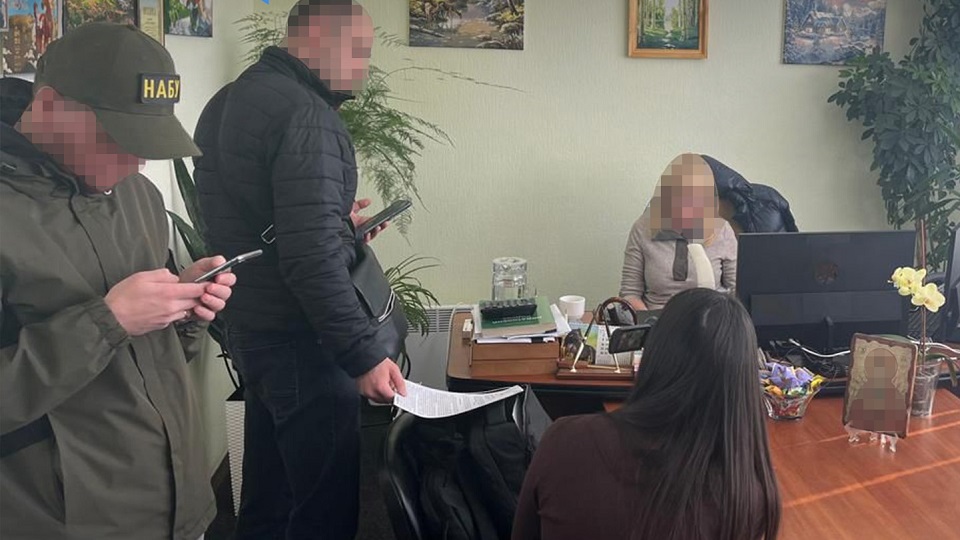
What happened
Investigators of the National Anti-Corruption Bureau and the Specialized Anti-Corruption Prosecutor's Office reported that the head of one of the divisions of the Main Department of the State Tax Service in Sumy Oblast has been notified of suspicion under Part 4 of Article 368 of the Criminal Code of Ukraine — extortion and receipt of undue benefit. According to the investigation, the official, in collusion with other employees, demanded 2 million hryvnias from a representative of a private company in a frontline territory and promised a “successful completion of the inspection” and the absence of artificial obstacles to the company’s activities. After receiving 1.5 million hryvnias she was detained.
“The tax service is interested in a comprehensive, objective and swift establishment of all circumstances of the case… and conclusions should be based on verified facts and court decisions.”
— Press Service of the State Tax Service
Why it matters
This story is not just about one sum of money. For businesses in frontline areas, every inspection is a risk of supply delays, additional costs and vulnerability to corrupt pressure. If officials use inspections as a mechanism to extort money, it undermines trust in state institutions and weakens economic stability in the zones where it is most needed.
Institutional reaction and context
The suspicions were announced by the press services of NABU and the SAP; the State Tax Service officially stated it is cooperating with the investigation. It is worth noting recent high-profile episodes in the anti-corruption sphere: on 15 March 2026 NABU reported the detention of an SBU officer while en route to Sumy — this adds to signs of tension between law enforcement agencies. Media (LIGA.net) have also drawn attention to the risk of instrumentalizing suspicions for political purposes in a number of resonant cases. This does not concern specific evidence in the current case, but it creates a broad backdrop that should be taken into account when assessing events.
What’s next
The case requires a swift and transparent investigation, court proceedings and identification of all involved parties. Investigators are already establishing other persons involved; the question of a preventive measure for the detained official is being decided. Analysts and the expert community emphasize: to restore trust, institutions must not only document facts but also make them public within the law — to show that accountability mechanisms are working.
The focus is not only on punishment but on protecting business and security in frontline regions. Whether these reports will turn into convictions will depend on the quality of the investigation and on how transparently and consistently law enforcement agencies act.