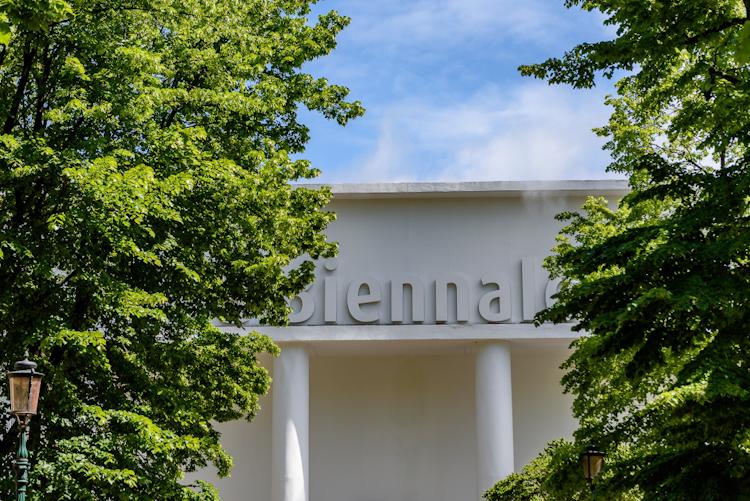
When Pietrangelo Buttafuoco, president of the Venice Biennale, announced in March 2026 the return of the Russian pavilion, he appealed to the autonomy of art. The European Commission responded in the language of budget regulations — and this language proved more effective.
What exactly violates sanctions
According to Financial Times, the European Commission sent letters simultaneously to the Italian government and the Biennale leadership. The Education and Culture Executive Agency (EACEA) pointed out: the participation of the Russian pavilion could violate the ban on "providing services" to the Kremlin, since the pavilion building has been Russian state property since 1914. A separate letter to Rome contained an additional argument — the Biennale could indirectly receive economic benefits from Russia covering the costs of its participants, which could potentially qualify as indirect financial support.
A Commission spokesperson confirmed the correspondence and stated that the Biennale has 30 days to respond. If the explanation does not satisfy Brussels — the institution will lose a €2 million grant planned through 2028.
A legal trap from 1914
According to documents from an inspection by Italy's Ministry of Culture that reached the press, Biennale organizers argue: Russia has been the legal owner of its pavilion since 1914 and cannot be stopped from using it. This is not just an argument — it is a legal trap that the authors of EU sanctions legislation did not foresee: what to do when the state property of an aggressor country is physically located on the territory of an ally?
"Cultural events financed by EU taxpayers' money must protect democratic values, promote open dialogue and freedom of expression — values that today's Russia does not uphold."
European Commission spokesperson
Chain reaction within the event
Russia's return triggered institutional collapse from within. The international jury of the 61st exhibition publicly stated it would not consider countries whose leaders are under investigation by the International Criminal Court — and resigned. In response, organizers postponed the awards ceremony from May 9 to November 22 and introduced visitor voting instead of a jury decision. In fact, the scandal changed the format of one of the world's most prestigious art prizes.
Italian Culture Minister Alessandro Giuli expressed disagreement with Buttafuoco's decision in an unconventional way: he refused to attend the opening and instead traveled to Lviv, which suffered from Russian bombardment. Vice Prime Minister Matteo Salvini took the opposite position, openly opposing "censorship from Brussels."
Where art ends and money begins
The Russian pavilion presents the project "a tree rooted in the sky" — about 30 young musicians, philosophers and poets, mostly from Russia, but also from Mexico, Mali and Brazil. The project was initiated by Mikhail Shvydkoy, Putin's special representative for international cultural cooperation — that is, an official directly reporting to the Kremlin. During the press preview on May 6–8, activists from Pussy Riot and FEMEN held a protest outside the pavilion entrance.
The compromise agreed to by Biennale leadership: the pavilion will not be open to the general public from May 9. Performances will be recorded during press days and broadcast on large outdoor screens throughout the six-month exhibition. In fact, this means: Russia is present, but on screen — and the legal conflict has not gone away.
Culture ministers from 22 EU countries in a joint letter to Buttafuoco called Russia's participation "unacceptable" amid the ongoing war against Ukraine. However, the European Commission does not yet have a precedent for imposing sanctions on a cultural institution based on third-party property rights over real estate within the EU.
If the Biennale does not find a legal justification that satisfies Brussels by early June — will this precedent become grounds for reviewing the conditions of participation of state cultural structures from sanctioned countries in any events receiving EU funding?





