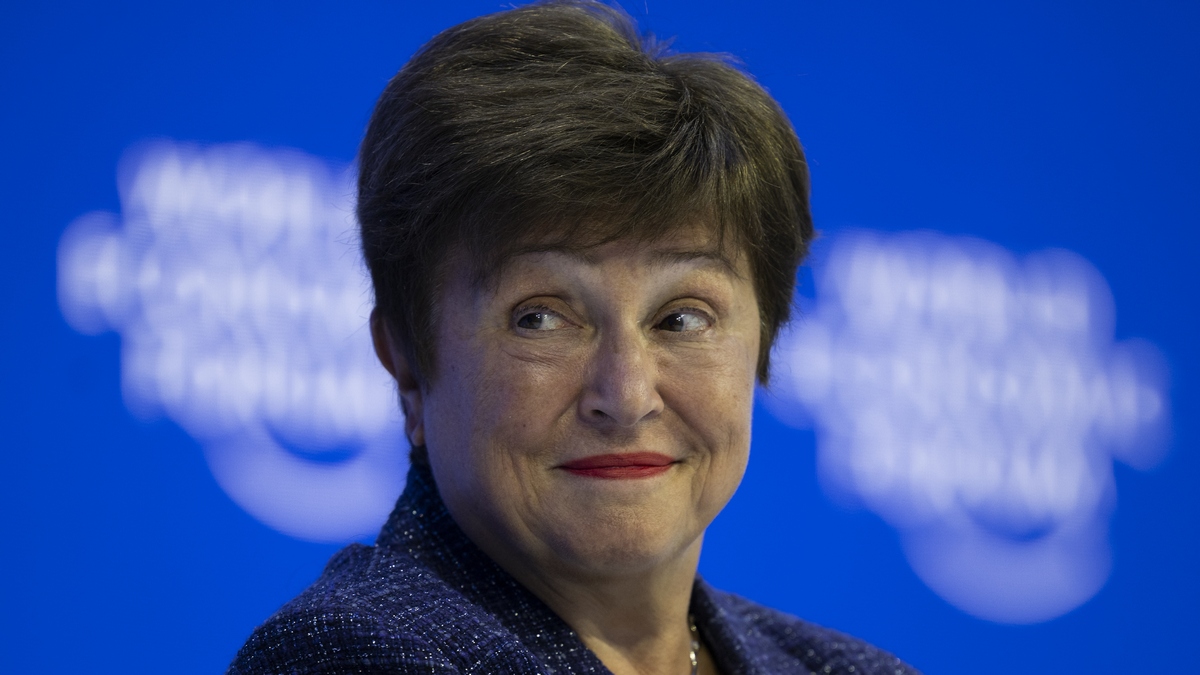
Where and what Georgieva said
IMF Managing Director Kristalina Georgieva on Monday, at a conference on emerging markets in Al-Ula (Saudi Arabia), urged not to overstate the significance of recent dollar fluctuations. Bloomberg reported on the remarks.
"We should not get carried away by short-term exchange rate movements. I do not see changes in the role of the dollar in the near term."
— Kristalina Georgieva, IMF Managing Director
Why the dollar weakened
The Bloomberg dollar index fell by 8.1% over the past year — its worst showing since 2017 — and in 2026 the decline continued by a further 1.3%. The Fund cites several key factors: the tariff policy of the Trump administration, deteriorating fiscal discipline in the US, and increased caution among international investors. Separately, regulators in China advised financial institutions to reduce holdings of US Treasury securities because of concentration and volatility risks.
What this means in practice — for the global system and for Ukraine
First, Georgieva emphasizes: short-term fluctuations are not equivalent to a change in a currency's reserve role. The dollar's reserve status is based on market liquidity and the depth of financial instruments — factors that do not change instantly.
Second, a weaker dollar can provide real relief for economies with large external dollar-denominated obligations: the cost of servicing debt will fall, although this depends on the structure and maturities of borrowings. For Ukraine, this is a potential channel to reduce pressure on foreign exchange reserves and budget expenditures, but not a guarantee: much depends on the currency composition of specific obligations and the terms set by creditors.
Third, the risk of volatility remains. Reduced reliance on a single instrument (including following the advice of Chinese regulators) could accelerate the process of reserve diversification and changes in the portfolios of large investors, creating both risks and opportunities for emerging markets.
Context: macro forecasts
The IMF also upgraded its world economic growth forecast for 2026 to 3.3% (update as of January 19), which adds to the argument that a weaker dollar does not necessarily signal a global recession and may accompany a moderate recovery in activity.
Summary
Georgieva's remarks are a call for a rational assessment of risks: there have been many shocks in the currency market, but the dollar's fundamental advantages remain. For Ukraine the key is to use a potential temporary weakening of the dollar to reduce the vulnerability of external borrowings and continue work on diversifying finances, rather than treating the fluctuations as an unequivocal threat.