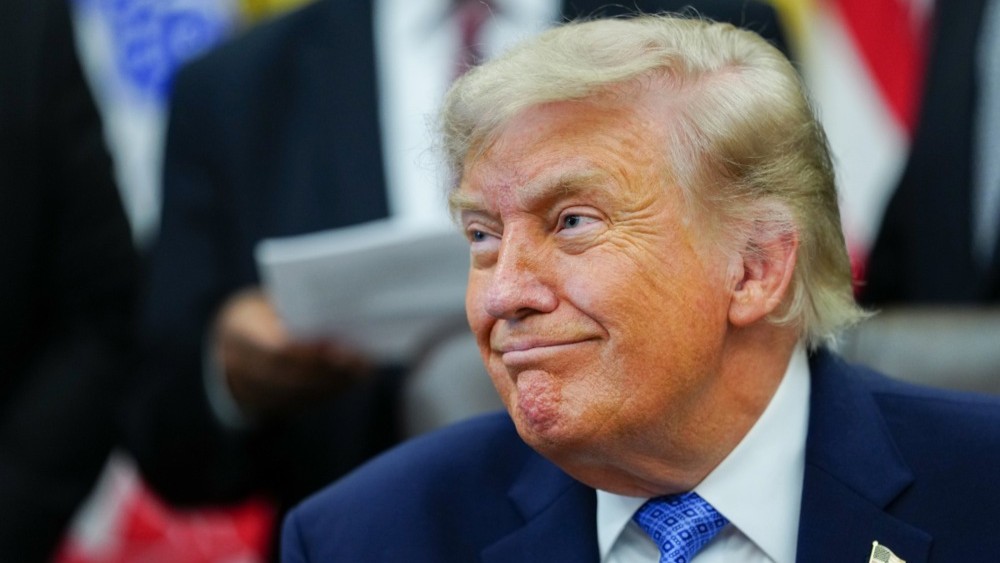
At the beginning of 2025, just days before the inauguration, Donald Trump launched the memcoin $TRUMP on the Solana blockchain. By the end of the year, it turned out to be his most profitable decision throughout his presidential career.
What the declaration showed
Trump reported at least $1.4 billion in cryptocurrency income for 2025 in his final federal financial disclosure — royalties from memecoins and sales of tokens from his family's crypto venture made up the bulk of the amount. To put the scale in perspective: this sum exceeds his earnings from real estate, licensing, and resort business combined.
The largest item — $635 million in royalties tied to CIC Digital LLC, the company behind the $TRUMP memcoin. An additional $236 million came from the sale of cryptocurrency tokens, and more than $65 million from the sale of a stake in World Liberty Financial.
World Liberty Financial — a decentralized finance (DeFi) platform, among whose founders are members of the Trump family and Stephen Witkoff, one of the key diplomats in the administration.
"Trump and his family have fully immersed themselves in the cryptocurrency market — memcoins, bitcoin mining, crypto reserves"
ABC News
Regulator and beneficiary in one person
On July 18, 2025, Trump signed the GENIUS Act — the first major federal statute creating a national regulatory framework for dollar-backed stablecoins. World Liberty Financial is precisely developing its own stablecoin, USD1.
Opponents of the law, including consumer rights advocates and some Democrats, argue that the GENIUS Act is dangerously liberal and does not address potential conflicts of interest related to the president's crypto investments.
Senators Merkley and Warren characterized the deal between the UAE's state investment company MGX, the Binance exchange, and World Liberty Financial as a "stunning" conflict of interest that may violate the Constitution and expose the government to foreign influence.
Arguments in defense
- The White House insists there is no conflict of interest: the president's assets are held in a trust managed by his children.
- The administration's counterargument: the president's holdings are fully disclosed, and the administration has provided long-awaited regulatory certainty for the crypto industry.
- For comparison: the declaration runs 927 pages — versus 8 pages of Obama's final declaration and 11 pages of Biden's.
Why this matters now
The declaration emerged as crypto companies are pouring record funds into American politics ahead of the 2026 midterm elections, cementing the industry's growing influence in Washington. The vote on the GENIUS Act and the parallel enrichment through World Liberty Financial draw a clear triangle: legislation → regulatory clarity → growth in the president's assets value.
The next key moment is the OCC's (Office of the Comptroller of the Currency) decision on World Liberty Financial's application for a federal banking license, submitted in January 2026. If the license is granted, the sitting president's family crypto company would gain the status of a full-fledged bank under federal oversight — the very same oversight determined by the Trump administration. Whether Congress will have the leverage to block this depends on how many Republicans consider this precedent acceptable ahead of the 2026 elections.