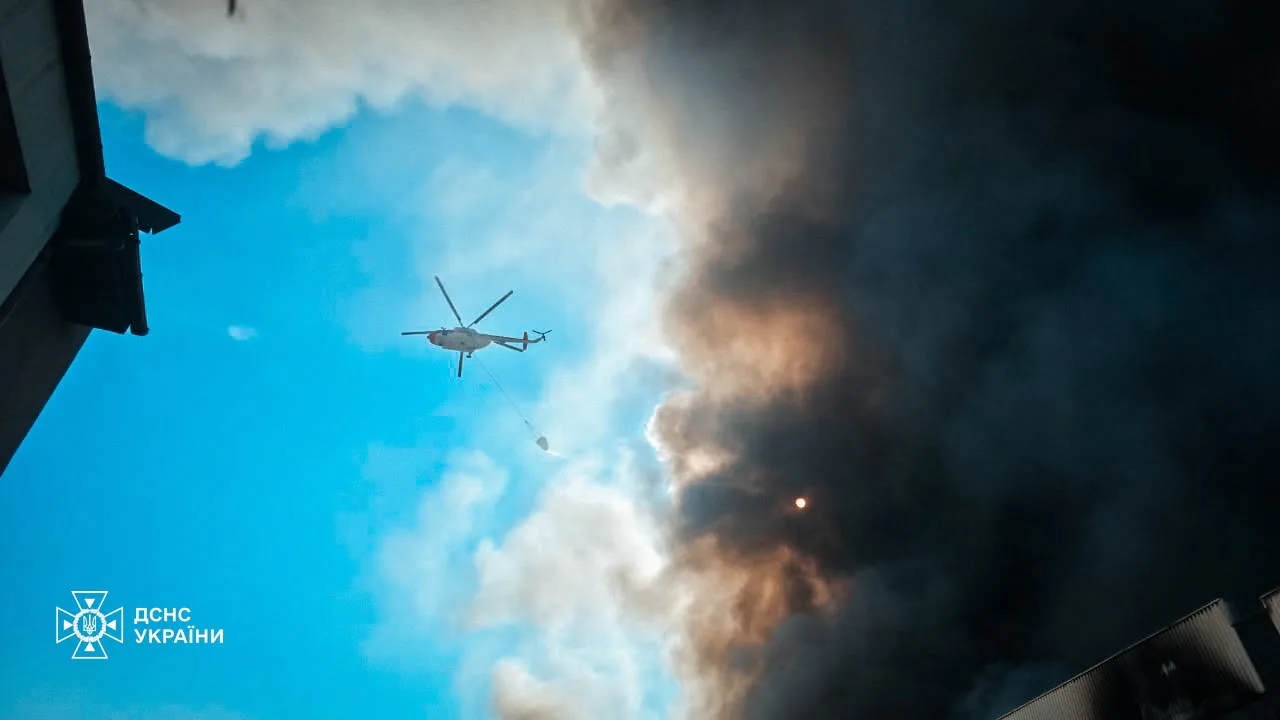
On the night of July 2, Russia launched 570 air attack weapons against Ukraine — 74 missiles and 496 drones of various types. Kyiv bore the brunt of the strike: damage was recorded in all districts, fires broke out in residential areas. By the end of the day — 20 killed, at least 90 wounded. Mayor Klitschko declared July 3 a Day of Mourning.
Where the defense collapsed
Ukrainian air defense intercepted 524 out of 570 targets — mostly cruise missiles and drones. But ballistic weapons passed through almost unimpeded. According to Yuri Ihnat, a representative of the Air Force, Russia used Iskander-M, S-400 air defense missiles in ballistic mode, and hypersonic Zircon missiles — everything that attacks steeply and on a sharp trajectory.
"This is the classic Iskander-M, and S-400 air defense guided missiles are also used as ballistic weapons. The enemy has been using them as ballistic missiles since the first days of the war. And also anti-ship missiles Zircon — they also attack as ballistic weapons, entering targets at high speed."
Yuri Ihnat, representative of the Air Force of Ukraine
The problem is systemic: only Patriot systems work effectively against ballistic and hypersonic weapons, which Ukraine chronically lacks. Cruise missiles are intercepted by both aircraft and other air defense systems — but not by what flies vertically at speeds exceeding the speed of sound.
Frequency and logic
According to military expert Oleg Zhdanov's assessment, Russia is capable of maintaining a pace of two to three massive combined attacks per month — that is, the strike cycle is approximately 10–14 days. This coincides with the actual calendar: large-scale strikes have been recorded regularly throughout 2025.
Meanwhile, the New York Times recorded a new pattern in September 2025: strikes are increasingly tied to the diplomatic calendar. According to the publication, the day after Trump and Putin's phone call on July 3, Russia launched 550 unmanned aircraft and missiles — twice the average daily figure for the first half of the year (118 munitions per day).
"The purpose of these attacks is to strengthen Moscow's position in negotiations, and so far the Kremlin has not faced additional sanctions from the United States for escalating its strikes."
The New York Times, September 9, 2025
Analysts, including Zhdanov, clarify: Russia is trying to influence not only Kyiv, but also Washington and Brussels — demonstrating that it can raise the stakes at any moment.
What this means in practice
- Ballistic weapons — structural vulnerability. Without additional Patriot batteries, Ukraine will not close this segment of defense regardless of how many Shahed drones are intercepted.
- Combined tactics persist. Decoy drones and simulators saturate air defense, clearing a corridor for missiles — this is already standard, not an exception.
- Civilian infrastructure — a conscious target. From February 2022 to mid-2025, more than 228 people died in Kyiv, over 3,000 buildings were damaged.
If the West does not deliver enough Patriot systems to Ukraine before the next diplomatic round, Moscow will likely repeat the strike at the same moment — and for the same purpose.







