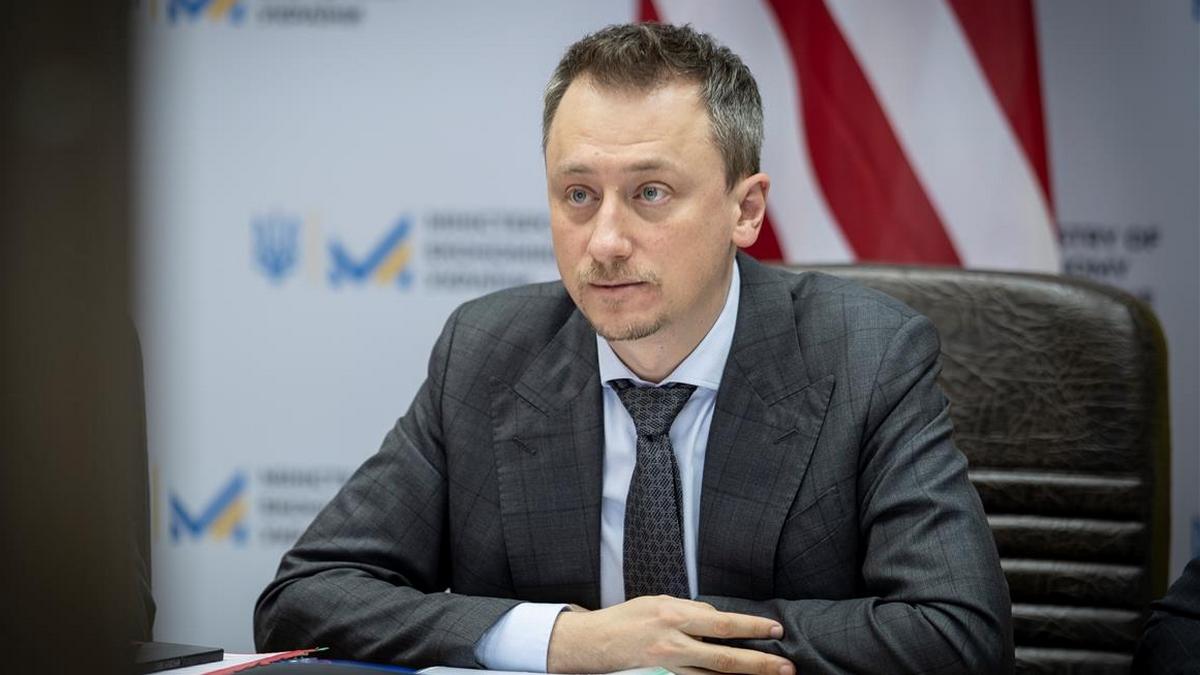
The Ministry of Economy is preparing a revision of its macroeconomic forecast downward. The GDP growth indicator set in the 2026 state budget at 2.4% will be reduced — this was confirmed by Minister Oleksiy Sobolev in an interview with RBC-Ukraine.
What happened with the figures
According to the Ministry of Economy's assessment, in January–February 2026, Ukraine's real GDP contracted by 1.2% compared to the same period in 2025. The Institute for Economic Research and Policy Consulting (IER) records an even tougher figure for January: minus 1.4% year-on-year. Based on the results of the entire first quarter, the State Statistics Service recorded a decline of 0.5% year-on-year — for the first time since 2023.
To understand the scale: Ukraine completed 2025 with real GDP growth of 1.8%. The two-month decline at the beginning of 2026 effectively wiped out two-thirds of this growth.
«We are currently preparing a revision of the macroeconomic forecast. It was prepared for the budget before winter, so of course it will be revised. The forecast will be lowered because we had negative GDP in January and February».
Oleksiy Sobolev, Minister of Economy, interview with RBC-Ukraine
Why the economy fell
The reasons are specific. According to data from the Ministry of Economy and IER, the main factor was intensified Russian attacks on energy infrastructure combined with an abnormally cold winter. Ukraine, according to Reuters estimates, lost approximately 40% of its generating capacity during the period from October 2025 to February 2026.
Consequences for specific sectors:
- Mining industry — down approximately 17% year-on-year in January due to lower gas and coal extraction
- Electricity and gas production and distribution — decline of 16%
- Construction — suffered due to extreme frosts that physically prevented work at construction sites
At the same time, there are exceptions: domestic trade grew by 13%, construction (measured cumulatively for the quarter) showed plus 3%, and manufacturing is also in positive territory. But this was not enough to compensate for the collapse in the energy sector.
What independent forecasts say
Even before these figures became known, Dragon Capital analysts warned of a similar scenario. The company's chief economist Olena Bilan directly linked the slowdown to the absence of an energy ceasefire: «There are no grounds to expect that we will have an energy ceasefire. This would provide an additional 1% GDP growth». Dragon Capital's updated forecast for 2026 is growth of only 1–1.5%.
The NBU revised its forecast in April to 1.3%. The World Bank in its updated report lowered expectations for Ukraine from 2% to 1.2%, citing damage to energy and industrial infrastructure, labor shortages, and increased economic uncertainty as key factors.
Why revising the forecast is more than just statistics
The macroeconomic forecast is the foundation of the state budget. Lower GDP means a lower base for calculating revenues from VAT, corporate income tax, and personal income tax. In wartime conditions, when defense spending is fixed and cannot be cut, either the budget deficit grows or additional sources of financing must be sought — primarily external ones. In 2026, Ukraine is already dependent on international aid in amounts that cover more than half of the budget deficit.
An open question: The NBU and Dragon Capital agree that the state of the energy system remains the key factor for recovery. If Russia continues attacks on generation with the same intensity through autumn 2026, the 1.3% forecast will prove to be just as optimistic as the 2.4% indicator embedded in the budget.