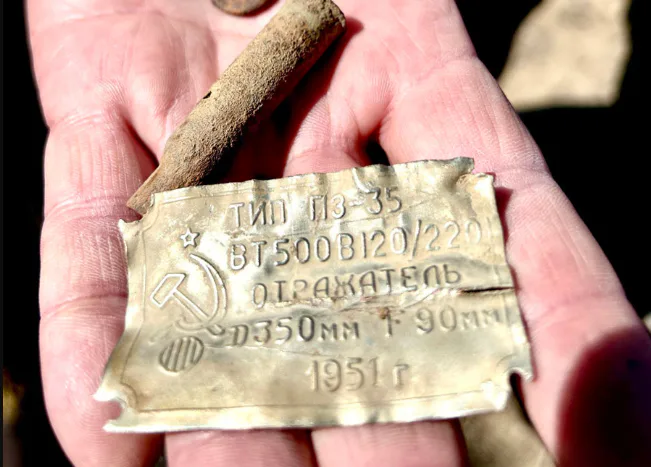
Soviet bureaucracy left behind mountains of papers: orders, reports, closure acts. For decades, historians studied the GULAG based on these documents — and precisely because of that, the picture that emerged was the one the authorities wanted to show. Now a team from West Bohemia University and the organization Gulag.cz has found a way to verify the archives on the ground: to dig into the soil where Soviet officials could no longer rewrite anything.
The setting is Steplag near Zhezkazgan in Kazakhstan, a special camp for political prisoners through which over 20,000 people passed from 1948 to 1956. According to the archives, the camp was closed in 1956. End of story, next page.
A Witness and Glass Tell a Different Story
A local resident told archaeologists that women continued to be held in the camp until at least 1959 — already beyond the official date of Steplag's existence. Oral testimony can always be dismissed as faulty memory or confusion of dates. But the archaeologists dug deeper — literally.
During excavations, they found bottle fragments dated 1959 and 1960. A bottle doesn't keep personal records and doesn't report to superiors — it simply lies where it was broken or thrown away. And if glass from three to four years after the official closure date appears on the territory of an allegedly closed camp, it means one thing: people were still living there and someone was still drinking something.
The findings confirm that relying solely on official Soviet archives when studying the history of camps cannot be done, the researchers emphasize.
Why "Closed" Didn't Mean "Empty"
On the territory of Steplag, traces of at least three rows of massive barbed wire fences, watchtowers, and solitary cells have been preserved — infrastructure that can't simply be dismantled in one season. The formal closure of a camp on paper and the physical release of people may be two different dates, separated by years, while the system was gradually winding down or simply failing to report upward.
The Czech team has already documented similar discrepancies between archive and reality in Siberia and Uzbekistan, where they found the first material evidence of Soviet camps' existence. Each such case is not just a correction of a date in a textbook, but a signal: the number of people who passed through the Soviet system of forced labor may have been negligently higher than the official figures that researchers still cite today.
The question now is simple yet complex: how many more such camps "closed on paper" actually continued operating — and will we be able to find evidence underground before the last living witnesses take their memories with them?