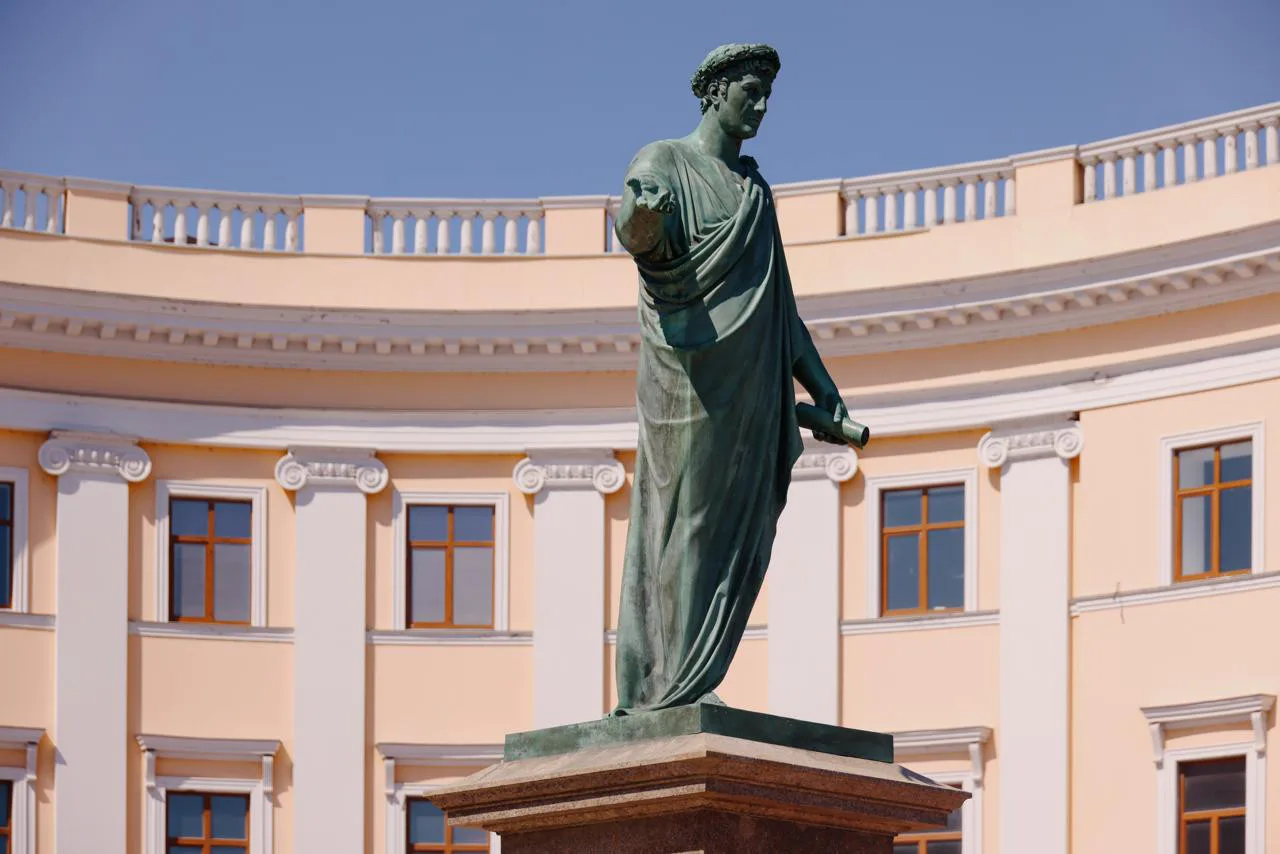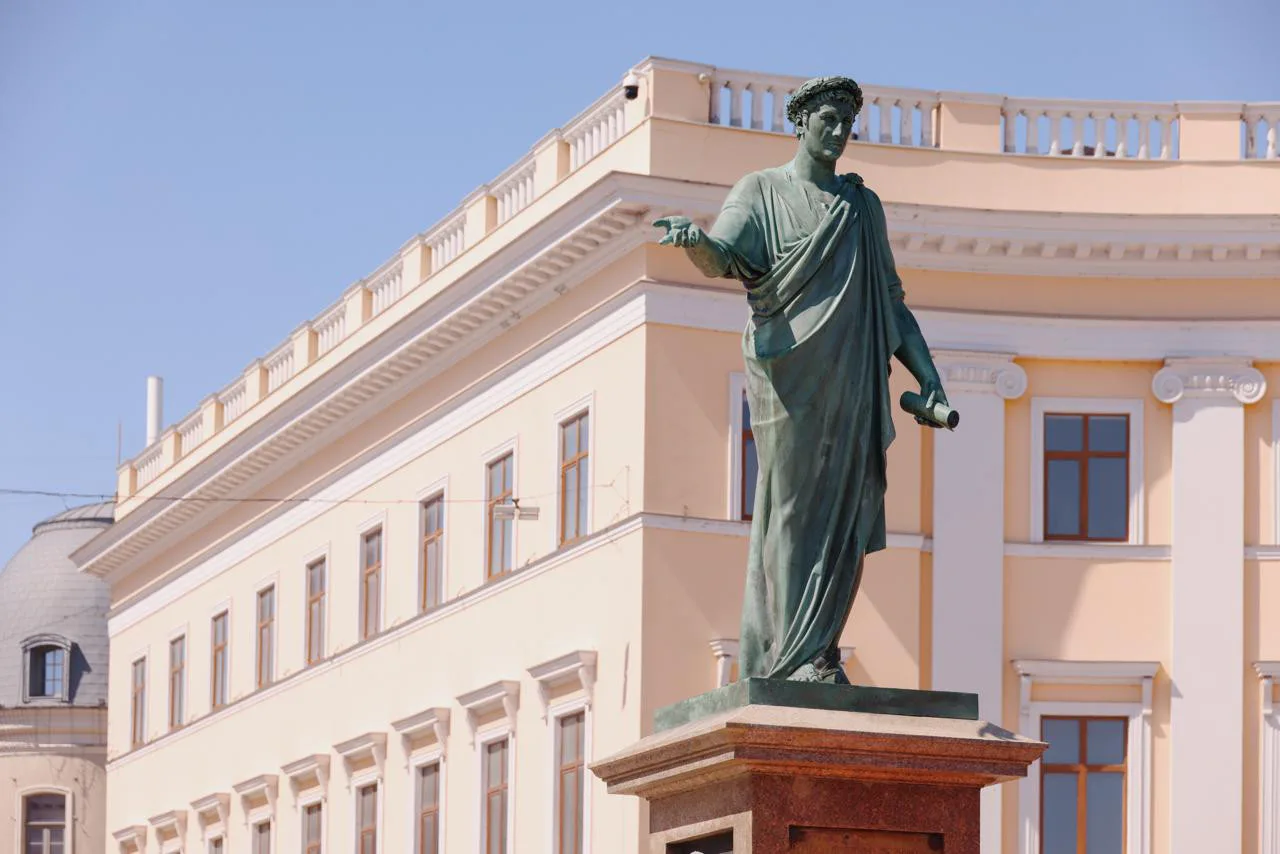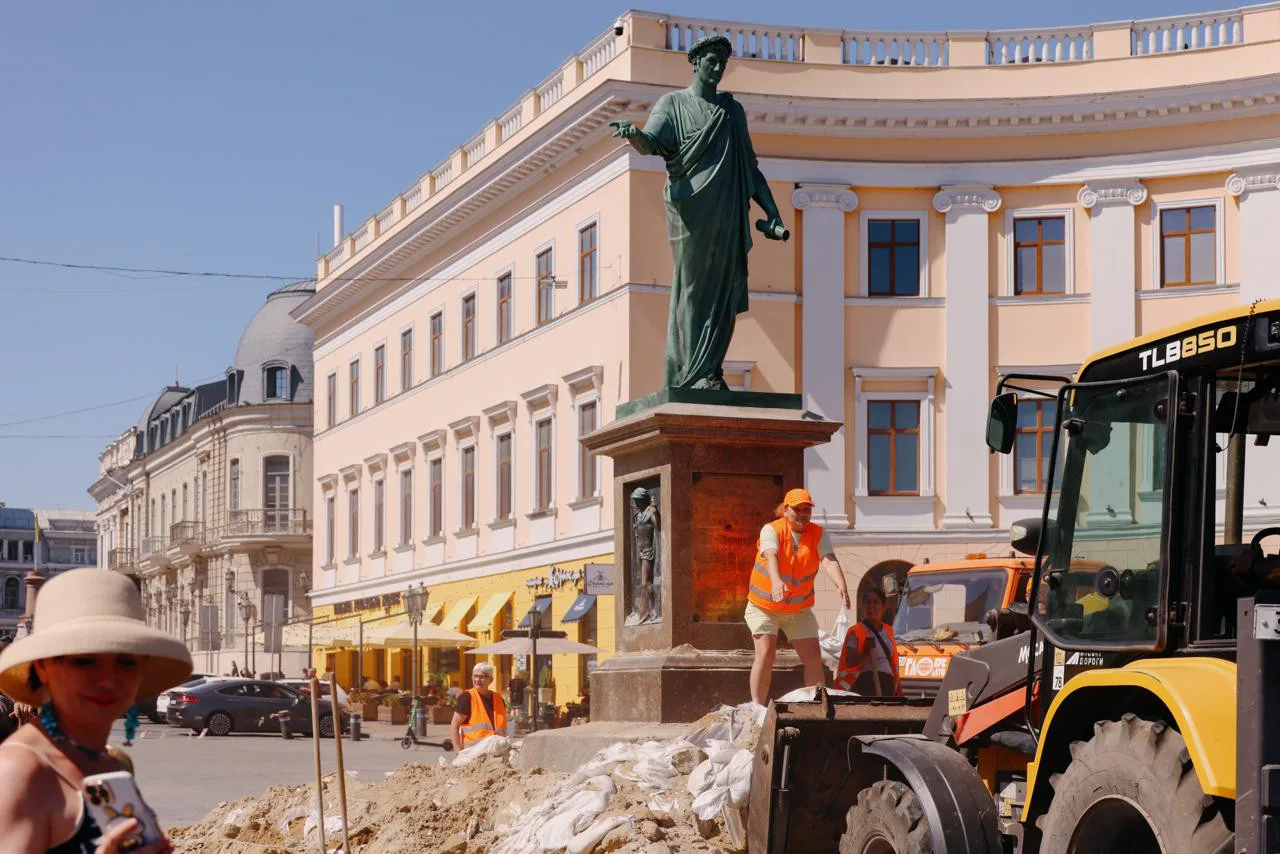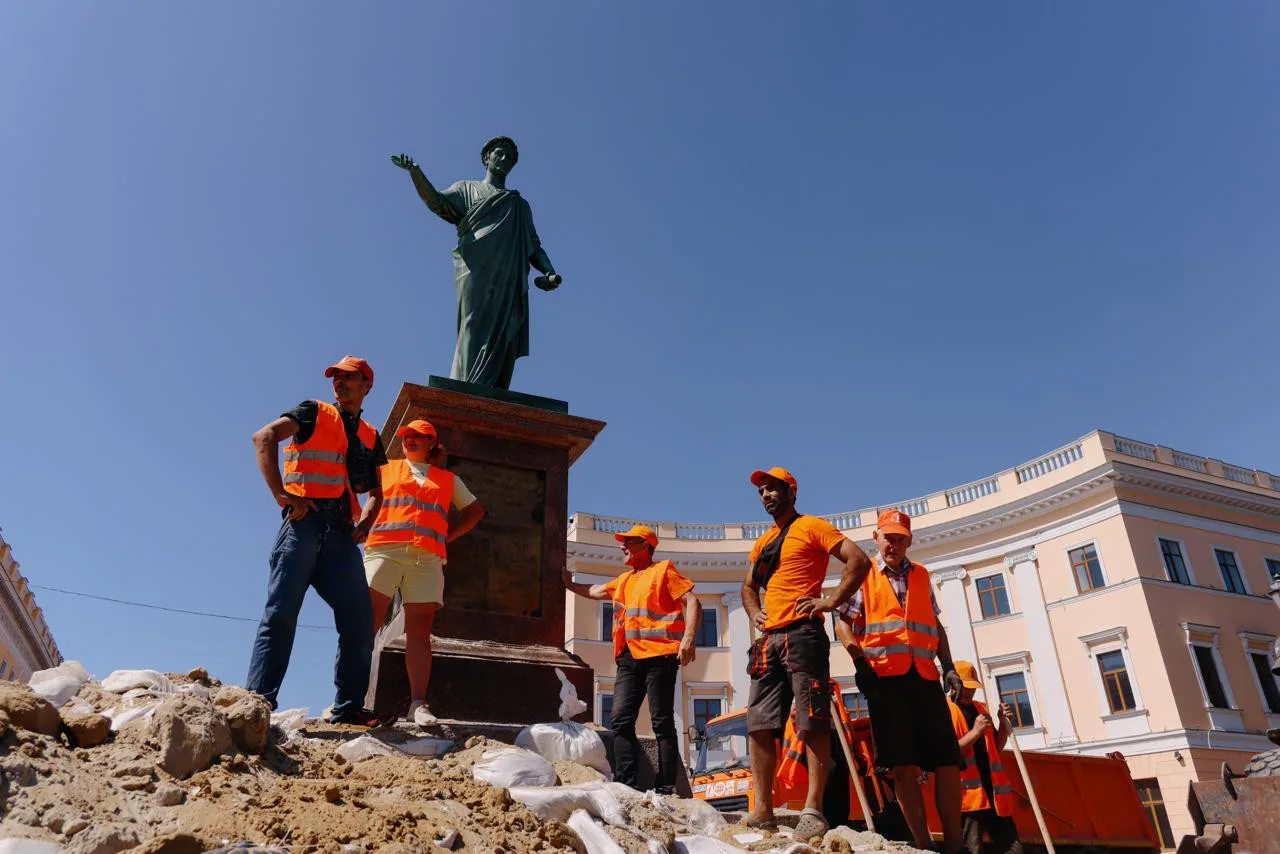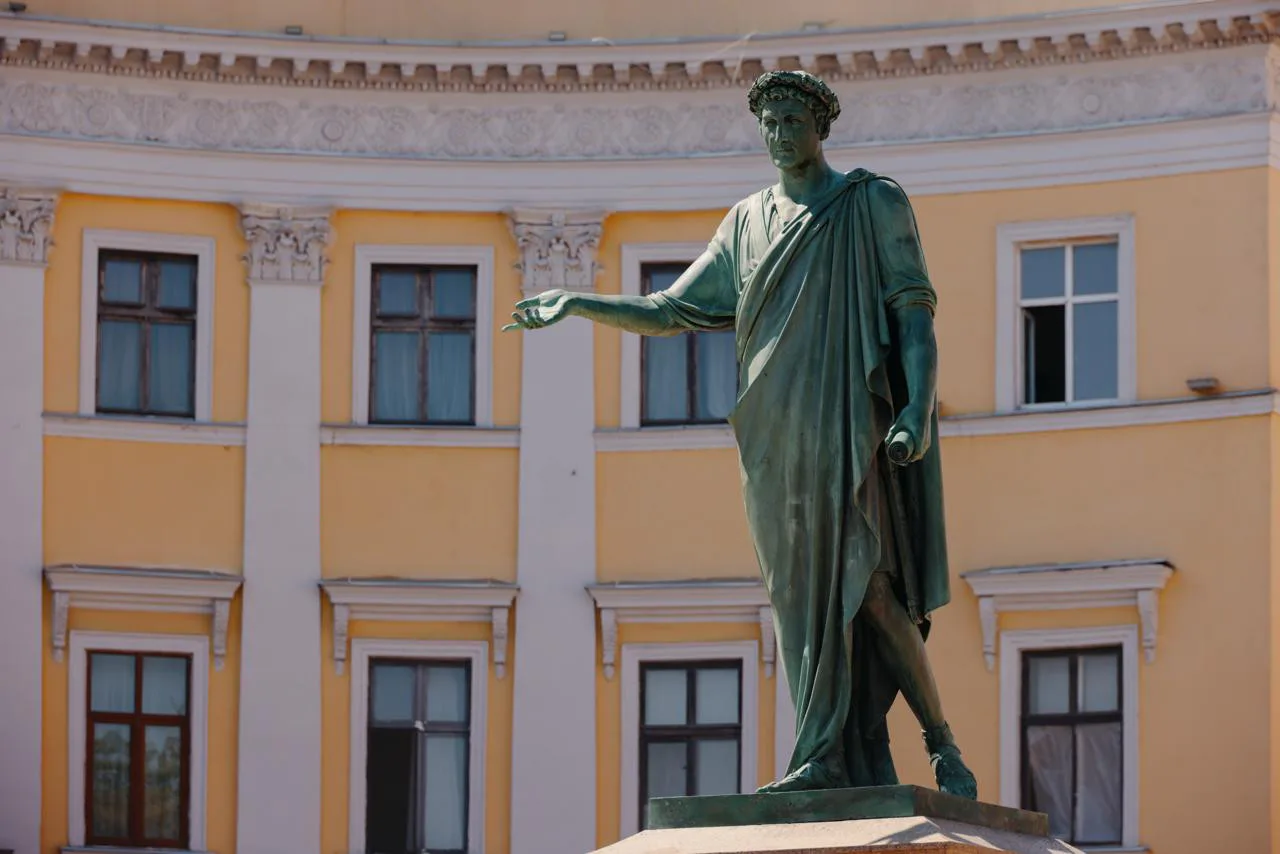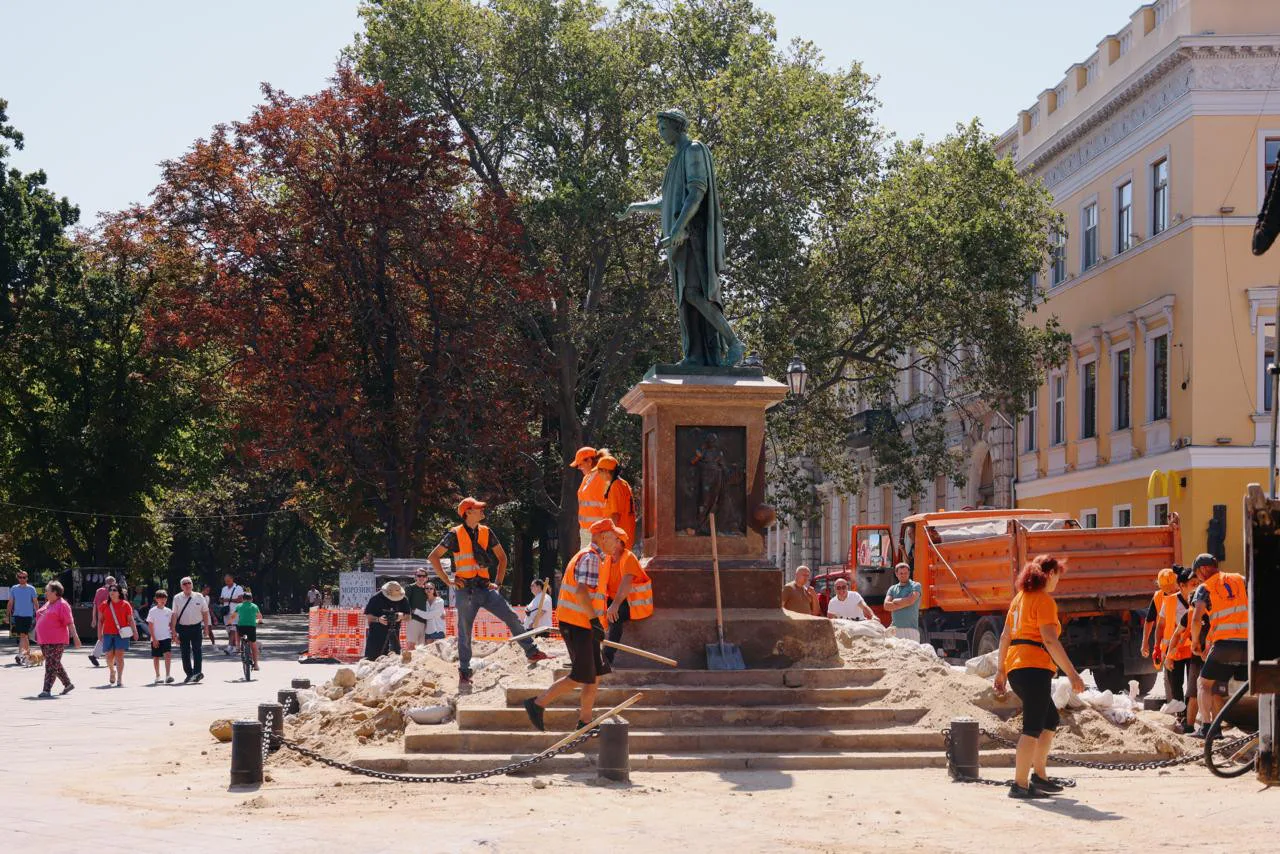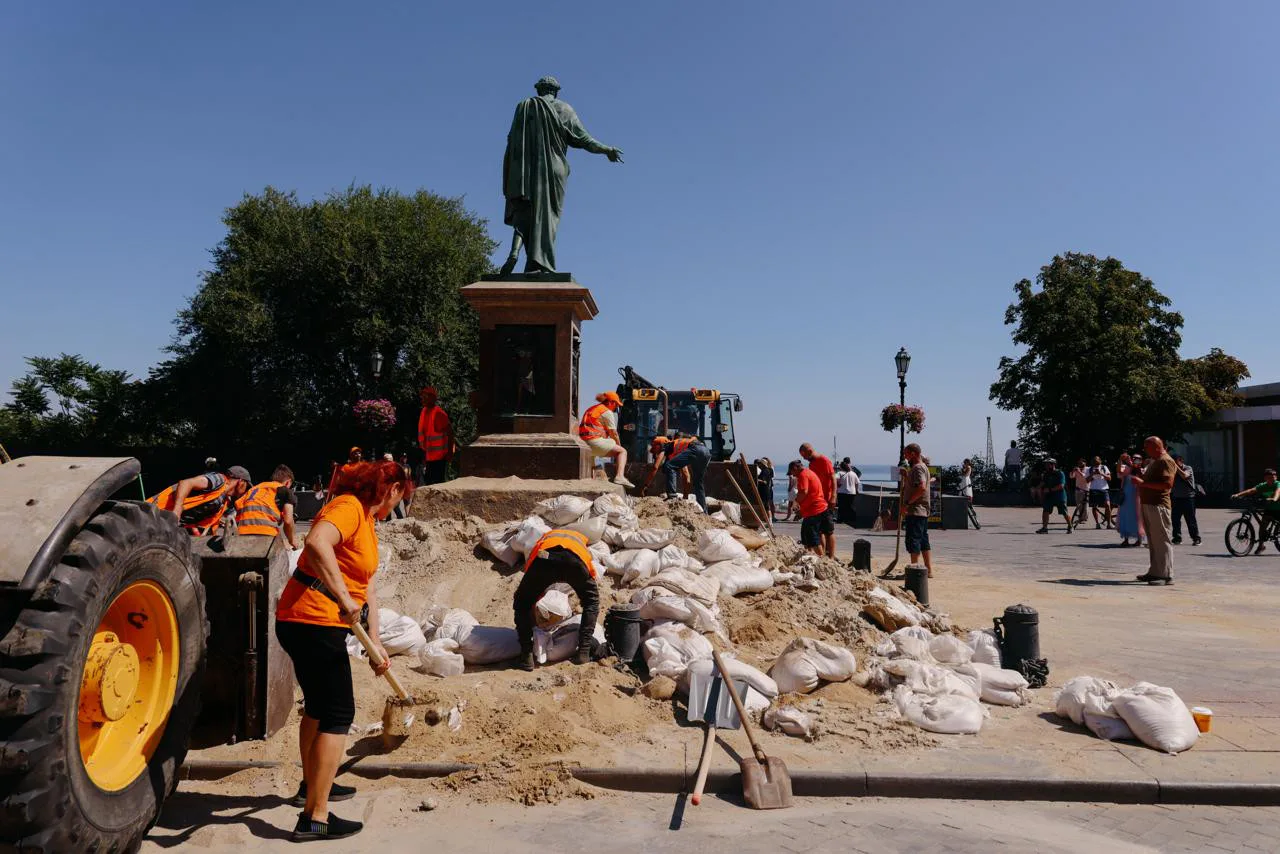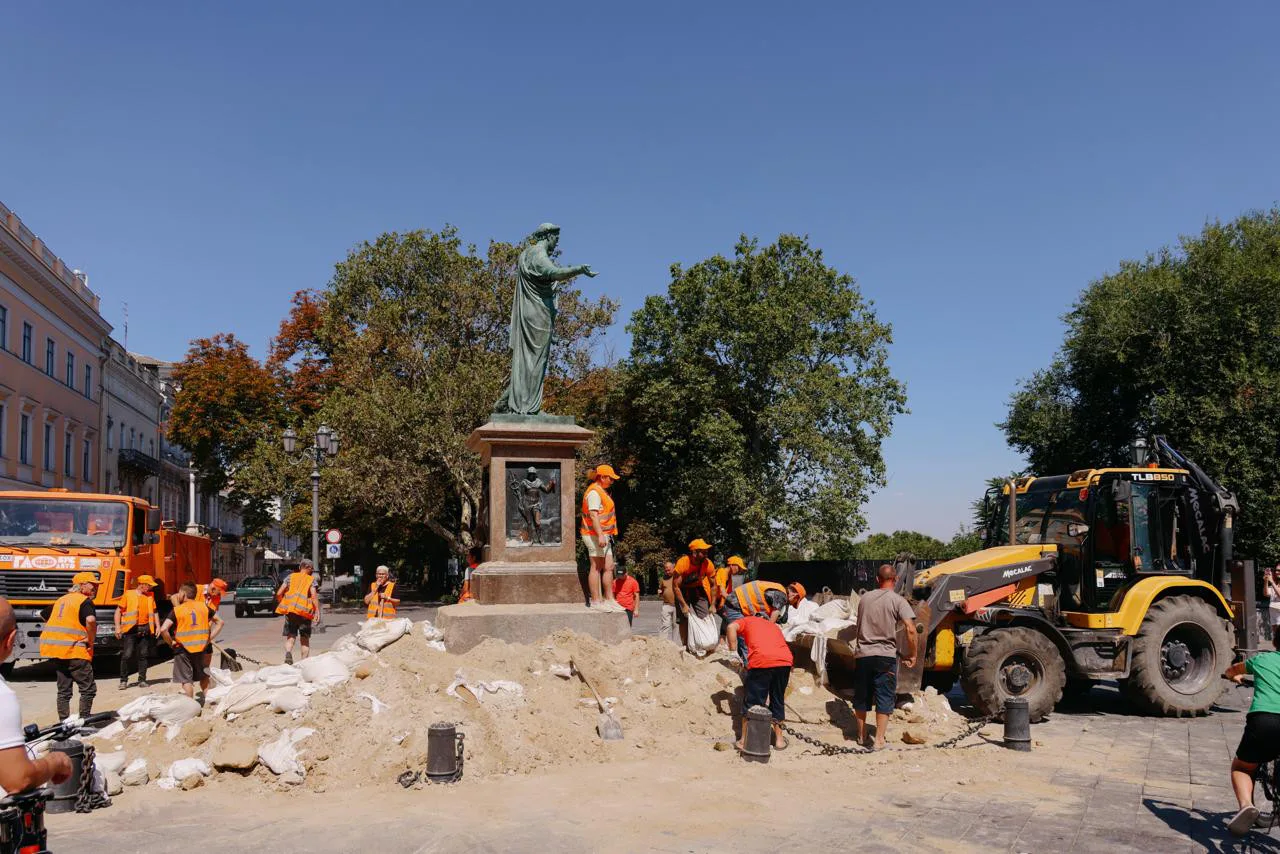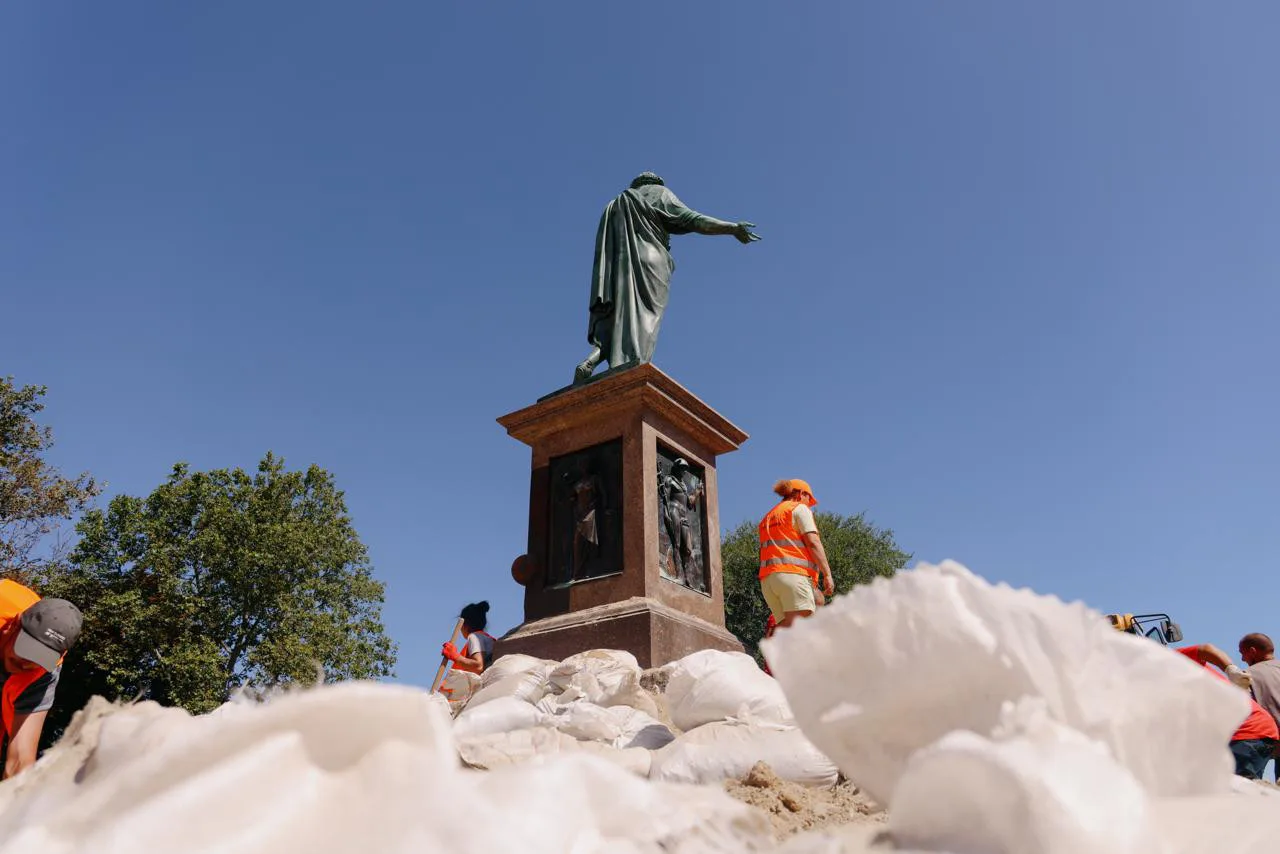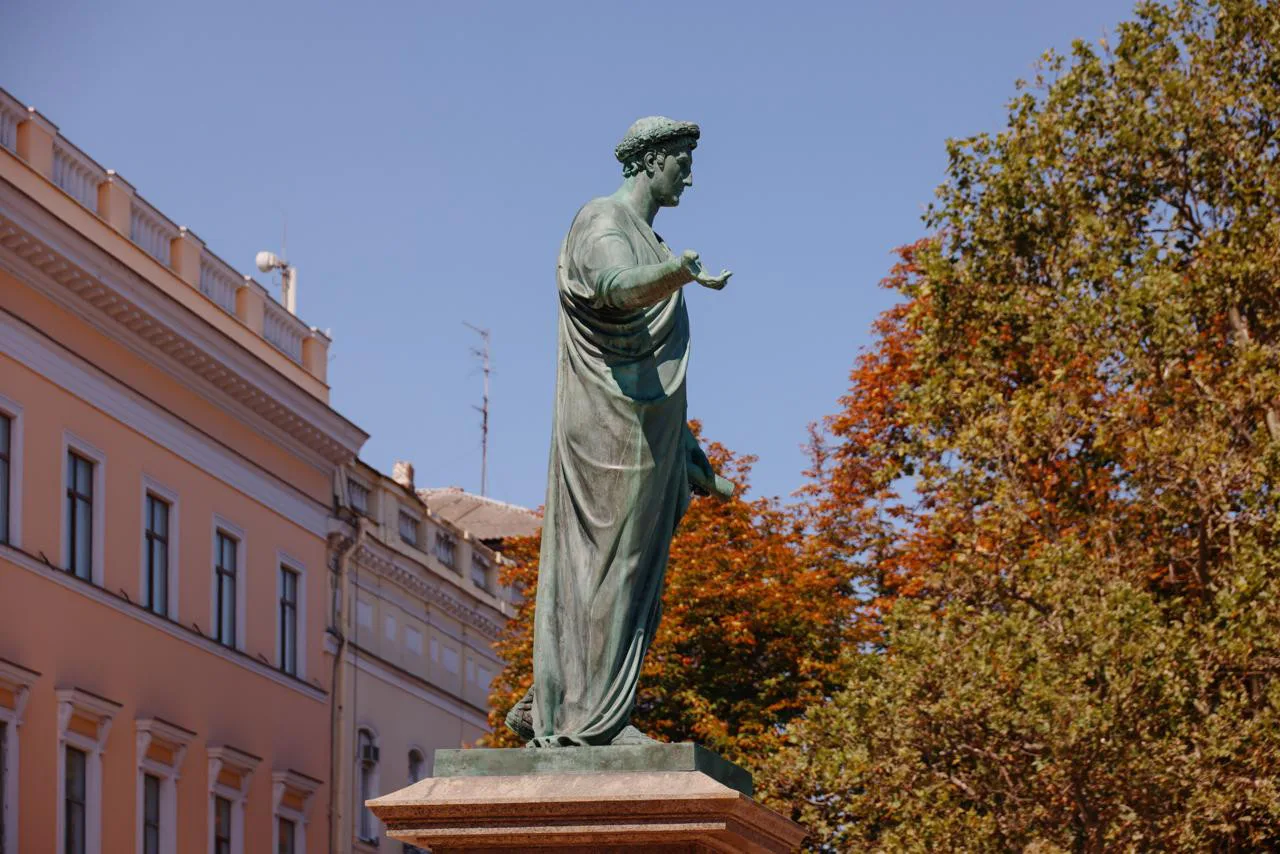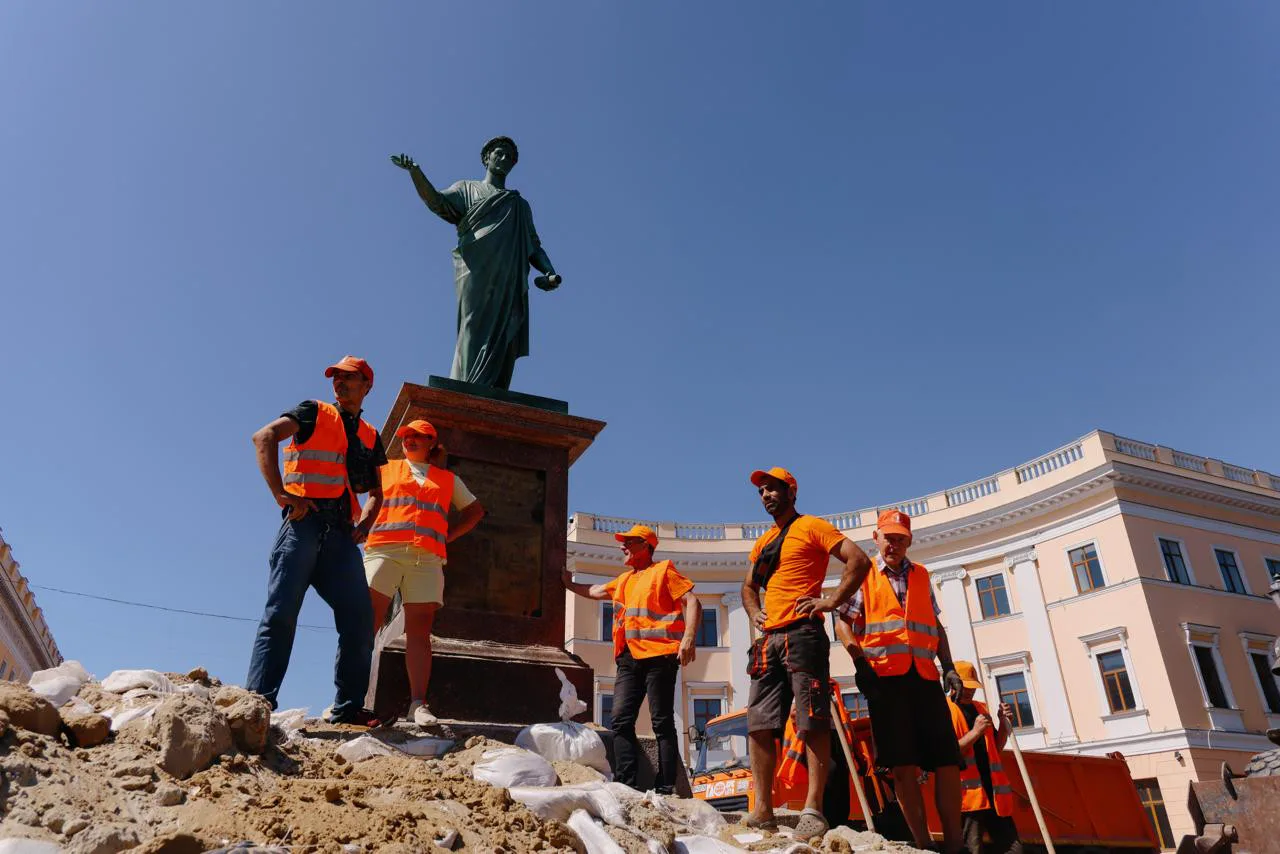
For three years, one of Odesa's most recognizable figures — the Duke of Richelieu on Prymorskyy Boulevard — stood wrapped in sandbags, like hundreds of other monuments across Ukraine. Now the protection has been removed, and the city faces an unexpected question: what comes next when the threat of shelling hasn't gone away?
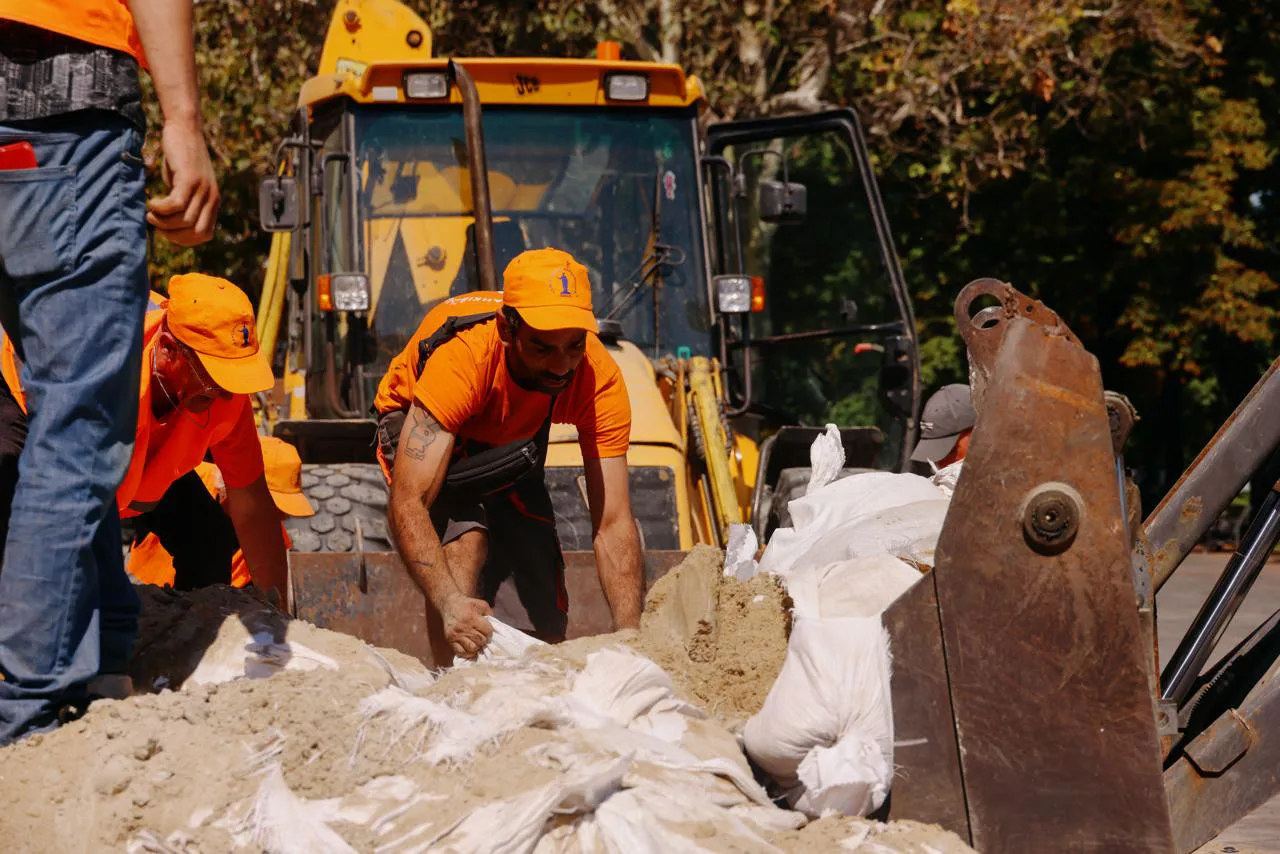
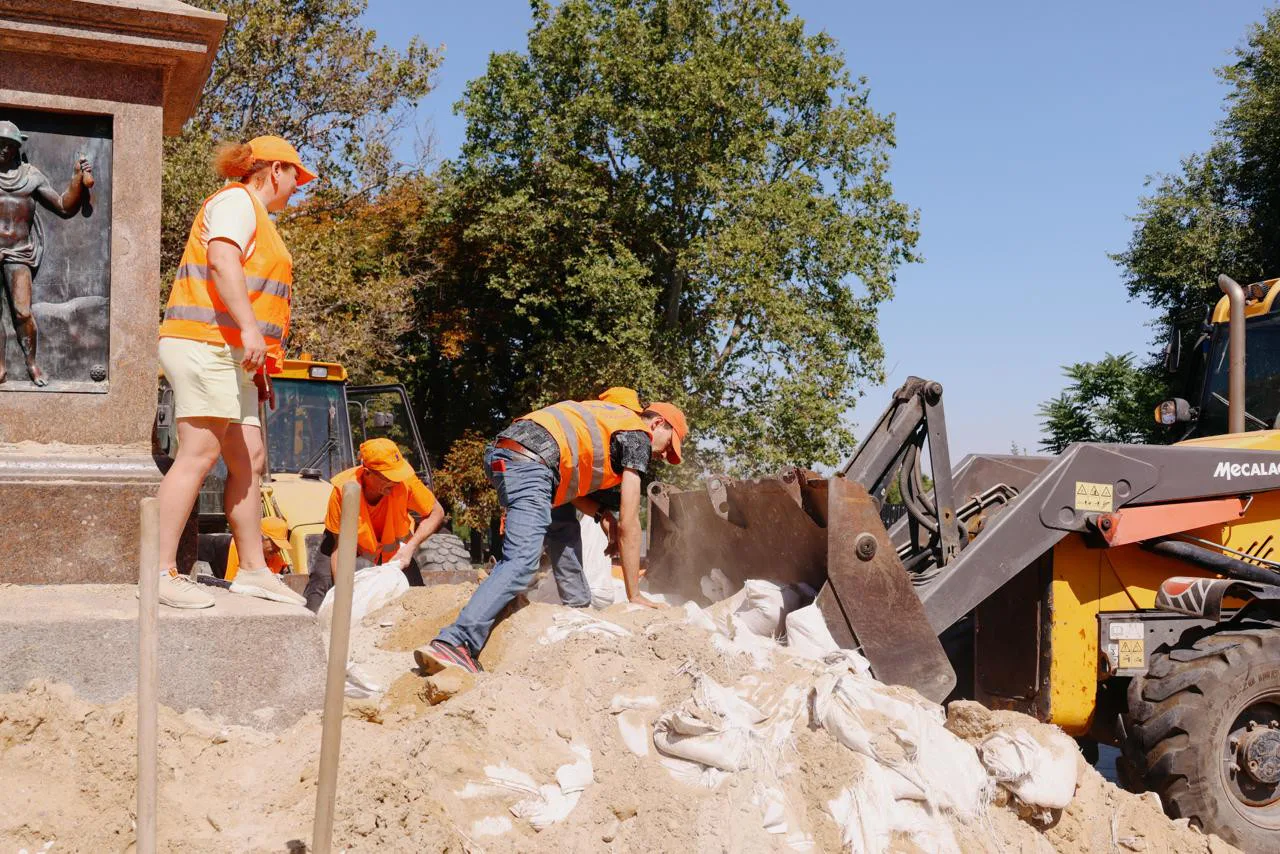
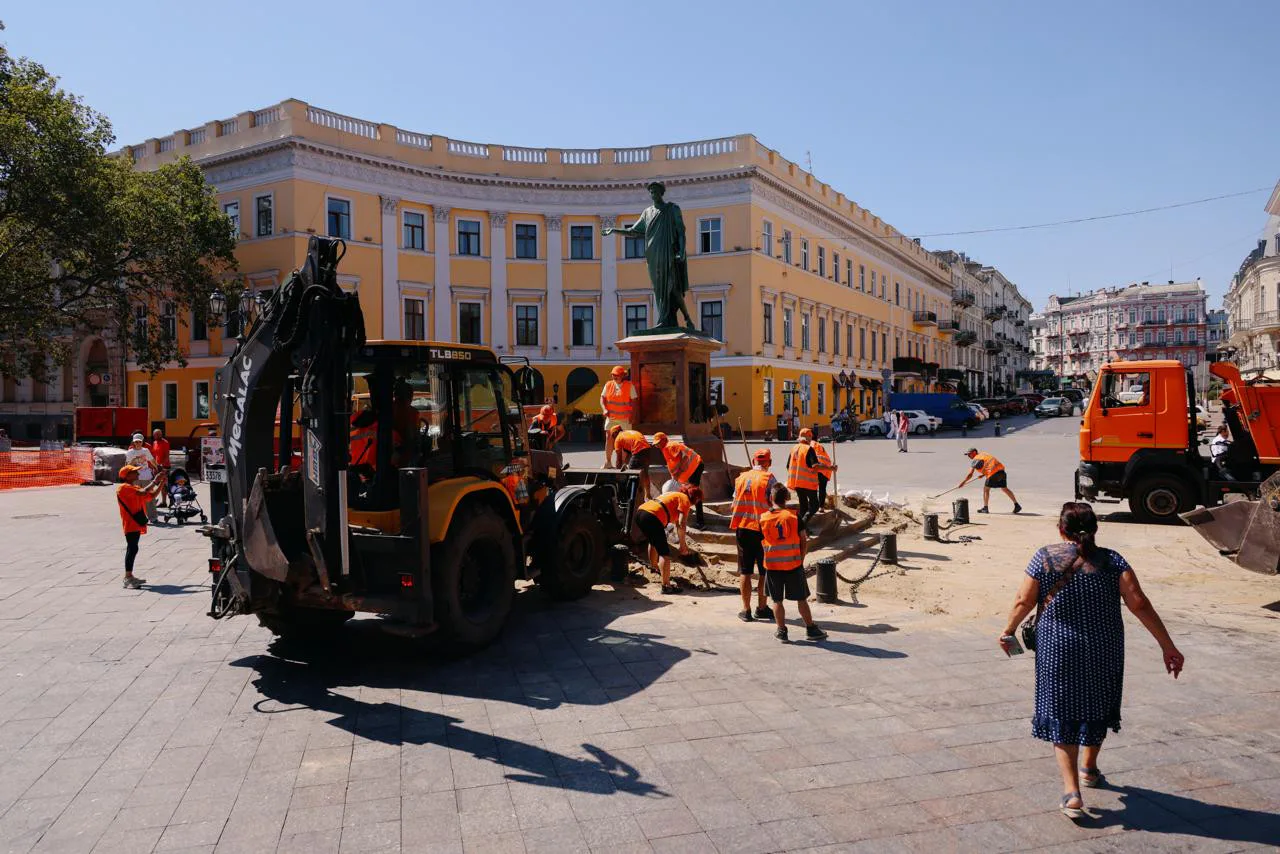
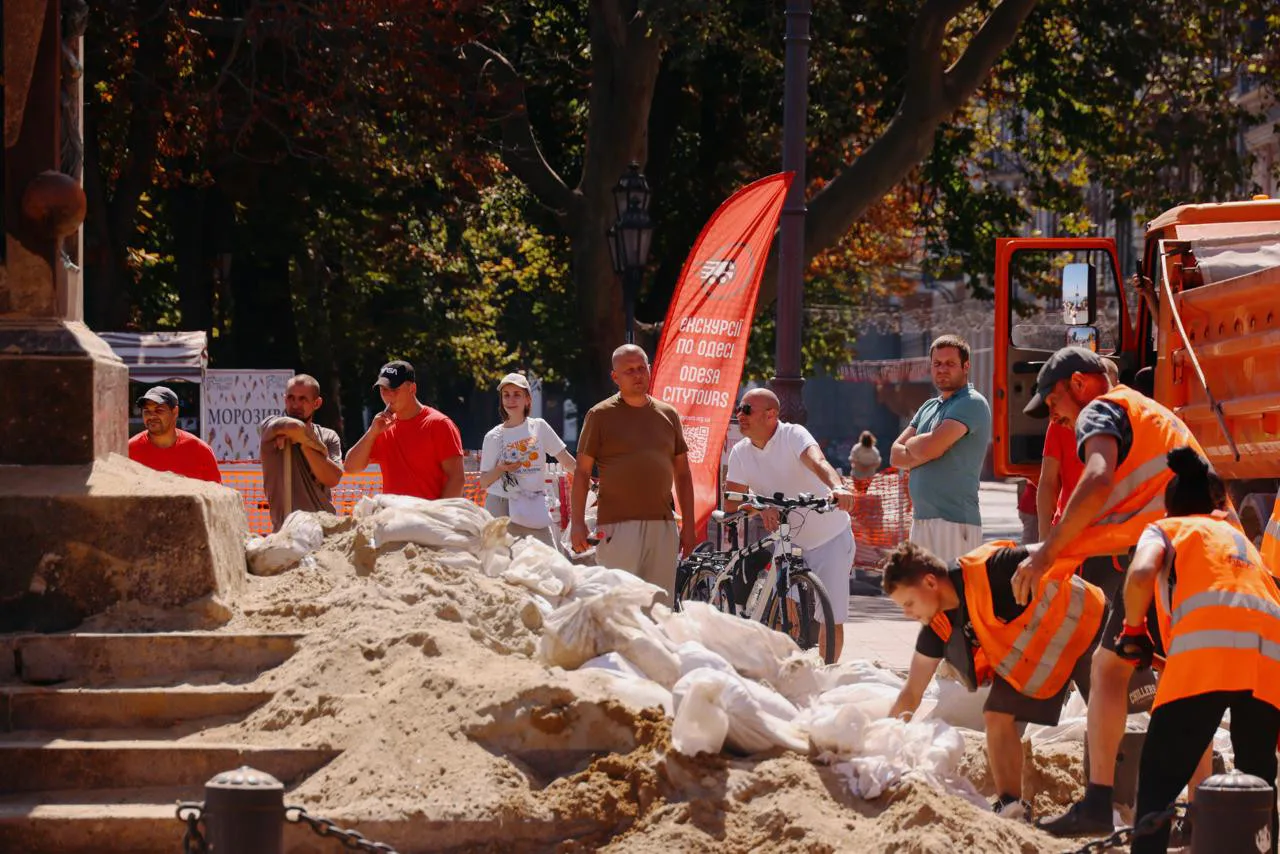
The work was carried out at the initiative of deputies of the Odesa City Council — they removed the bags that had covered the sculpture from the first days of the full-scale invasion to protect it from shrapnel and blast waves. Municipal services are cleaning sand and debris around the pedestal.
Why remove protection if the war is still ongoing
The reason is not a symbolic gesture but a technical necessity. Fedir Stoyanov, head of the department for UNESCO affairs and the protection of Odesa's cultural heritage, explained: after several years under sandbags, a logical question arose about the condition of the metal sculpture itself. Sand, moisture, lack of ventilation — all of this could have imperceptibly damaged the bronze or pedestal.
"The Duke of Richelieu is one of the symbols of our city. It is important for us to preserve it for future generations," said Fedir Stoyanov.
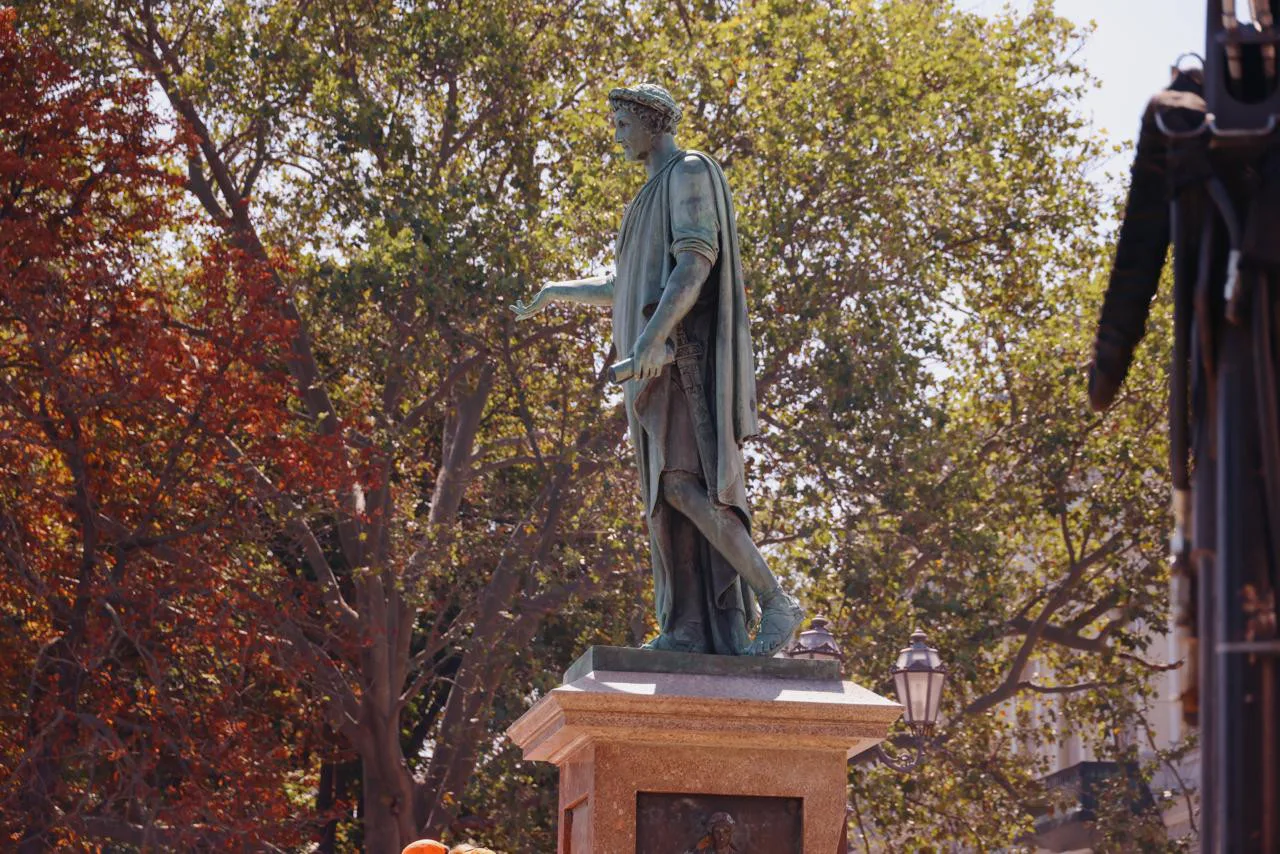
An initial visual inspection revealed that the sculpture is in satisfactory condition — without deformations or signs of dangerous processes. However, this is a preliminary conclusion: in the coming days, the monument will be examined by specialists from the building academy and cultural heritage protection experts.
A dilemma for cities: protecting the monument or its material
The situation in Odesa highlights a problem that concerns not only the Duke. Protective structures made of sandbags or metal boxes save monuments from direct hits by shrapnel, but during years of conservation they can damage the material itself — corrosion, moisture, lack of air access.
A similar process recently occurred in Kyiv, where protective structures were removed from the Lesya Ukrainka monument. This may suggest that cities are gaining experience: periodic inspections of the condition of protected monuments are becoming as necessary a procedure as the protection itself.
Based on the results of the Odesa inspection, further measures will be determined — several options for restoring or updating the protective structure have been preliminarily developed. The final decision will be made only after expert assessments.
What's next
If the inspection confirms the sculpture is in satisfactory condition, Odesa will have to solve an engineering problem: create protection that saves from shrapnel but doesn't damage the metal during prolonged use. This question is relevant for dozens of monuments across the country, and the answer will determine in what condition the cultural heritage will meet the post-war years.